Our Verdict
Great TV for mixed usage, the X940E has excellent picture quality in most environments. It has some motion blur that might bother people more sensitive to it though.
- Very deep and uniform blacks
- Very bright
- Exceptional local dimming
- Image degrades when viewed at an angle
- Fast moving objects often have visible trails
Excellent TV for watching movies. The X940E has some of the best local dimming available, bringing it close to OLED for most scenes. It's also able to turn off black bars found in movies completely which is great.
Very good TV for TV shows. The X940E's upscaling of lower resolution content is as good as it gets, and it gets more than bright enough to be enjoyed in most environments.
Good TV for watching sports, the screen is uniform and bright, leading to no major issues with clarity, but the X940E does have some issues with motion which can cause fast moving objects to have long trails following them.
Good TV for playing video games. Input lag is low in 4k, which is great for keeping the TV responsive. The size and picture quality helps keep the experience very immersive. Some motion blur is present though, which can cause issues with clarity, but it can somewhat be circumvented by using a flickering feature.
The X940E does exceptionally well with HDR movies. It's one of the brightest TVs currently available, and the great local dimming and handling of gradients produce great dynamic range. It doesn't have the widest color gamut available, but it's wide enough to give a strong visual impact.
Very good TV for HDR gaming. Little lag is present with a 4k HDR input which is essential, and the overall HDR performance is some of the best we've seen.
Good TV for use as a PC monitor. Supports all the relevant resolutions, even 120hz for better PC gaming. The input lag is also low, which makes navigating the desktop great. Unfortunately though, it does have a fairly narrow viewing angle, and long trails can be seen following moving elements such as scrolling text or the mouse cursor.
Changelog
- Updated Jun 12, 2018: A note for Xbox One X and Xbox One S owners: 1080p @ 120 Hz from the Xbox is only supported on this TV when the Xbox's connection type is changed from Auto-detect (Recommended) to HDMI, but unfortunately in this mode 4k and HDR aren't supported.
- Updated Mar 12, 2018: Converted to Test Bench 1.2.
- Updated Jan 23, 2018: High-end Sony TVs have now been updated with Dolby Vision through a firmware update (PKG6.2818.0075NAA). The input section has been updated.
- Updated Dec 11, 2017: Google Assistant has now been added to Android TV on Sony TVs, and it brings a lot of new features to the voice control. The remote score has been increased to reflect the new fuctionality.
Check Price
Differences Between Sizes And Variants
We tested the 75" (XBR75X940E), the only size available at the moment.
If someone comes across a different type of panel or if their Sony XBR-75X940E doesn't correspond to our review, let us know and we will update the review.
| Size | Model | Alternative Name | UK Model |
| 75" | XBR75X940E | XBR-75X940E | KD-75XE9405 |
Popular TV Comparisons
The X940E is a great LED TV, but it faces steep competition in its price range from OLED TVs. It does have the advantage of being larger than average though. See our recommendations for the best TVs and the best LED TVs.
The Sony X940E and X900E are very similar and offer nearly identical performance. The X940E has better dark room performance due to the improved local dimming feature and better black uniformity. The X900E has a much better response time and motion looks much smoother with very little motion blur. The X940E has been updated with support for Dolby Vision.
The Sony X930E is a bit better than the Sony X940E. The X940E has a more advanced full array local dimming feature and better black uniformity, so it performs better in a dark room. The X940E has a better black frame insertion feature to help clear up motion, but the X930E has a much better response time, so motion is smoother overall and has much less blur trail. The X930E is brighter with SDR and HDR content.
The Sony Z9D is marginally better than the Sony X940E. Overall performance is very similar, but the Z9D is a bit brighter and supports 3D. The Z9D handles fast moving scenes better than the X940E, since it has a faster response time and less motion blur. The Sony X940E is more consistent in its ability to remove judder from 24p sources.
The Sony X900F is marginally better than the Sony X940E. The X900F has a much faster pixel response time, so motion looks much smoother with very little motion blur. The Sony X940E has a poor response time, but it has a better black frame insertion feature that improves motion blur. The X940E has better dark room performance, with a better local dimming feature and better black uniformity.

We buy and test dozens of TVs yearly, taking an objective, data-driven approach to deliver results you can trust. Our testing process is complex, with hundreds of individual tests that take over a week to complete. Most of our tests use specially designed test patterns that mimic real content, but we also use the same sources you have at home to ensure our results match the real-world experience. We use two main tools for our testing: a Colorimetry Research CR-100 colorimeter and a CR-250 spectroradiometer.
Test Results
Older Test Bench: We tested this product using an older TV test methodology before a major update. Some of the test results below aren't directly comparable with other TVs. Learn more
for pictures & test results

The design of the X940E is familiar to any Sony fans due to the minimalist and industrial look. It has a small, central stand which supports the TV well and can still fit on most table tops. The TV provides excellent cable management with guidance out the back of the stand, and has excellent build quality.

for pictures & test results

The back looks similar to the X930E. It has many panels which reveal a great cable management system. Due to the design of the plastic back the panels aren't noticeable when attached.
for pictures & test results

The borders have an average thickness, but look and feel good with a metal edge.
for pictures & test results

The TV is quite thick when viewed from the side. Due to the size of the TV, this isn't really noticeable if wall-mounted though.
for pictures & test results
The X940E never gets more than a little warm, and the heat is well distributed across its surface.
for pictures & test results

The build quality of the X940E is excellent. The rear of the TV is all plastic but feels high-end and all of the parts fit together very well.
for pictures & test results

The Sony X940E has a great native contrast ratio. Hovering near 5000:1, the X940E can display dark scenes very well with deep blacks. This high contrast ratio is especially good when the TV is set in a dark environment.
When the Local dimming is activated, the contrast ratio goes up to an outstanding 11634:1, which is one of the highest contrast ratios we have measured for an LED TV.
for videos & test results

The local dimming feature on the X940E works extremely well and looks about as good as the Sony Z9D when compared side-by-side. The X940E can display our moving highlight very bright while keeping the rest of the screen really dark and with limited blooming. The time reaction is also very fast and the turning on and off of the dimming zones is not really noticeable.
Outstanding SDR peak brightness. The TV's local dimming helps to make highlights in dark scenes incredibly bright, but even the TV's worst case brightness, the 100% white window where local dimming can't be used, is still pretty bright. The TV's brightness does decrease a little as it warms up; our measurements were done after the TV had warmed up. Overall the TV is a bit less bright than its cousins, the X930E and Z9D. A plot of brightness over time is shown here.
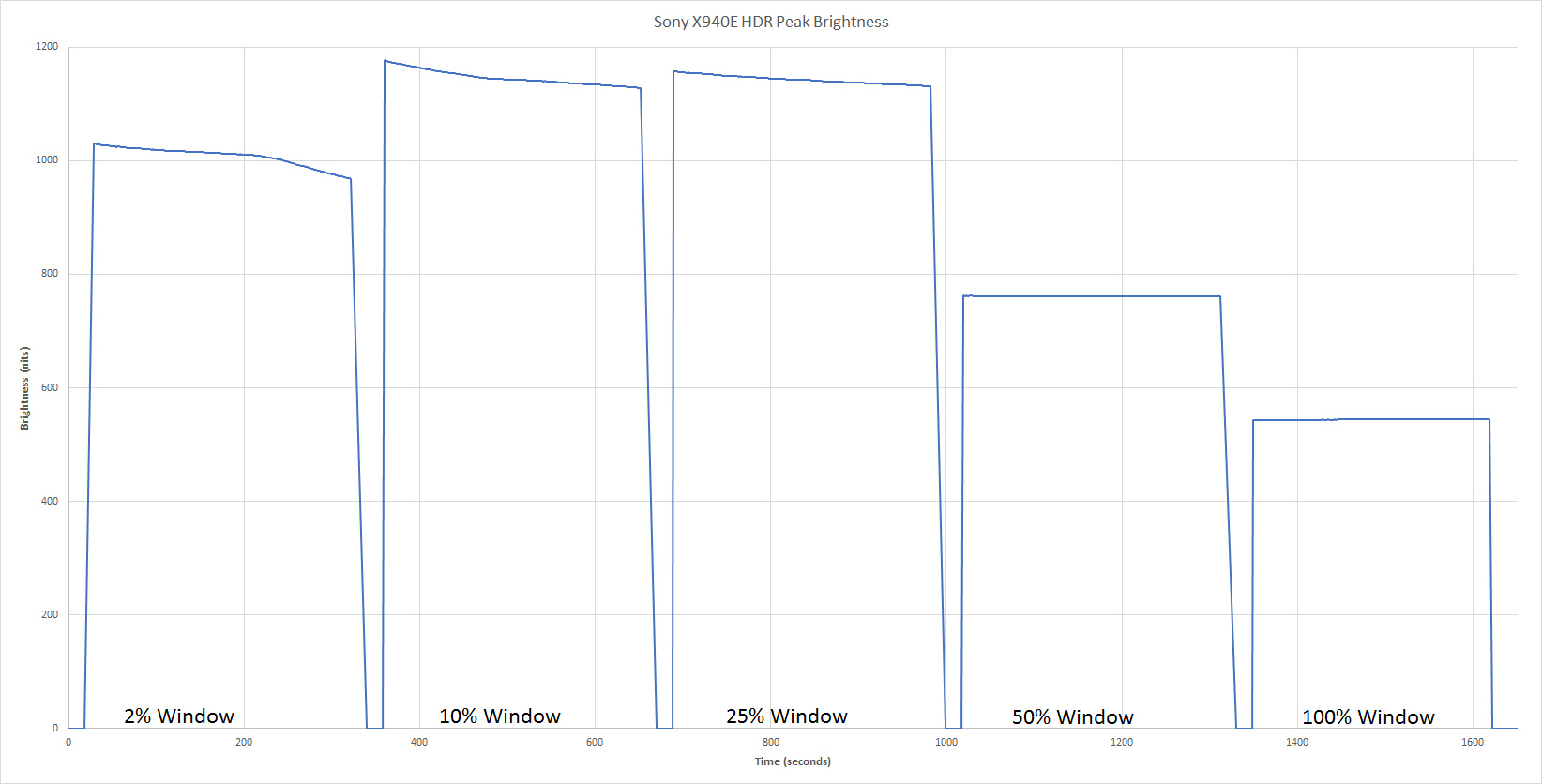
Outstanding HDR peak brightness. The TV's brightness in the real scene test is close to its best case brightness, indicating that the TV's local dimming is effective even in more realistic scenes. However the TV isn't as bright during extremely bright scenes like our 50% and 100% white window tests, because local dimming isn't as effective here, but even in these worst case scenes the TV is still pretty bright. The TV did decrease its brightness a little as it warmed up; our measurements were taken after the TV was warmed up. Overall the TV is a bit less bright than the X930E and Z9D. A plot of brightness over time is shown here.
for pictures & test results

for pictures & test results

The gray uniformity of the X940E is ordinary and it is situated in the same ballpark as the X930E and the 2016 Z9D. It suffers from the same problems with darker edges and corners. The middle of the screen is fairly free of imperfections, which is a good since dirty screen effect is kept to a minimum.
Looking at our test picture of the 5% gray, the X940E is a bit worse looking than on the X930E. The bottom edge of the screen is a lot brighter than the rest of the screen and we confirmed this by measuring the luminosity of the screen in that region and it was clearly brighter than the middle or top of the screen. There are also large horizontal bands that seem darker than the rest of the screen. Both of those issues could be noticed during dark scenes and especially when the TV is set in a dim lit room.
Surprisingly, the local dimming strongly influences the gray uniformity. When the local dimming is set to 'High', the uniformity looks much more better as you can see here, but if set to 'Low' then the large bands that are visible on our 5% gray picture (local dimming set to 'Off') are much more visible, as you can see here. We recommend not to use the 'Low' setting of the local dimming as it can introduce some banding in dark scenes.
for videos & test results
for pictures & test results
for pictures & test results
for pictures & test results
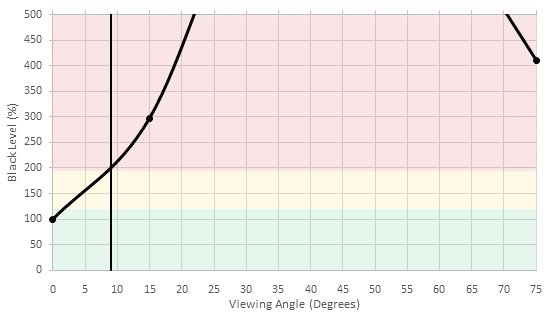
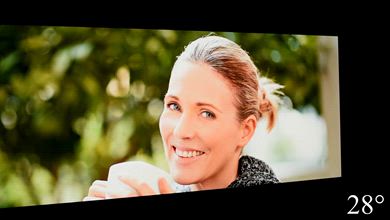
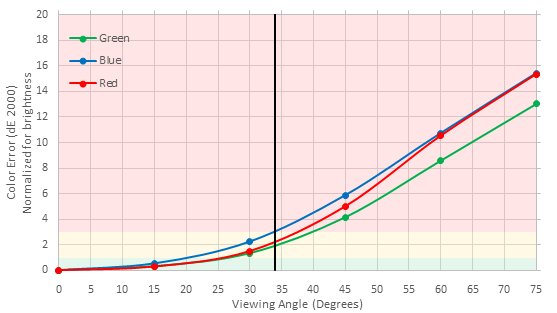
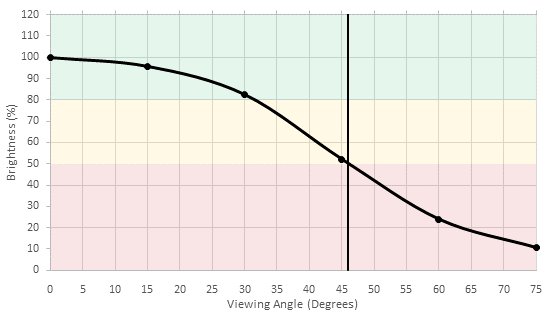
Disappointing viewing angle. Colors shift when viewed from a small angle, while brightness decreases and blacks become grey at moderate angles. This is a better viewing angle than many other TVs with VA panels, but still not as good as IPS or OLED panel TVs.
for pictures & test results

for pictures & test results

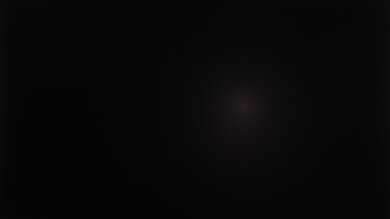
The X940E has an excellent native black uniformity with some minimal clouding in the upper right side of the screen, but this is not really visible while looking at normal TV content.
With local dimming turned on, the black uniformity becomes almost perfect and no issues can be seen. This is a very good example of how effective the local dimming is on this TV.
for pictures & test results

for pictures & test results
for pictures & test results

The X940E is great at handling reflections. Unlike the X930E, it has a glossy finish which works well to reduce the intensity of direct reflections. Unlike the glossy A1E, it doesn't have much of a purple tint so reflections appear natural. This is a good result even for a bright room.
for pictures & test results

for pictures & test results

for pictures & test results

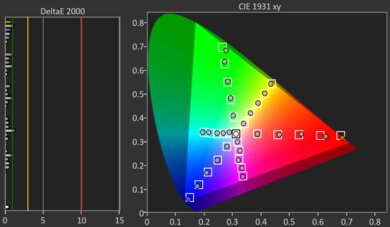
The XBR75X940E is pretty accurate out of the box. There is a bit too much red and blue toward the higher end in the white balance, but even then we are still hovering close to a dE of 3, which it still very acceptable for home use. The gamma is almost spot on and the Color dE is very acceptable. This is in line with other Sony TVs tested before, as they tend to be very accurate out of the box.
for pictures & test results

for pictures & test results

for pictures & test results

After calibration, which was pretty easy and fast to do, the X940E performed extremely well. The white balance was easily corrected via the 2 point and 10 point calibration setting and as a result, the gamma was flattened to track almost perfectly to our 2.2 target. As with other Sony TVs, there is no color management system to further correct the color accuracy even though the color dE was brought down via the corrections applied to the white balance. In the end, the Sony X940E is really accurate.
You can see our recommended settings here.
for pictures & test results

Low quality content such as DVDs are upscaled well. Details are preserved and the image isn't too soft, although some halo artifacts are noticeable along edges.
for pictures & test results

720p content such as cable is upscaled well. There is no loss of details.
for pictures & test results

1080p content such as Blu-rays look great and the image remains clear.

for pictures & test results
for pictures & test results
for pictures & test results
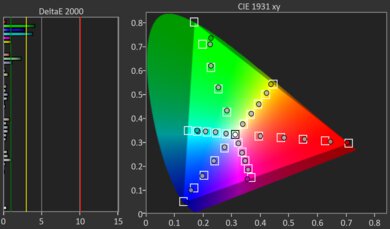
Wide color gamut, though not as wide as on some other high end TVs like the Samsung Q7F, KS8000 or Sony's A1E. The TV is fairly accurate for most of its color range, but like many other TVs it struggles with reproducing deep greens in HDR content, which also ends up hurting its cyan performance.
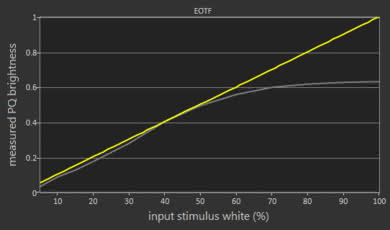
The TV's EOTF almost flawlessly follows the HDR PQ curve up to where it clips at its peak brightness. This EOTF was measured in the Custom picture mode, the EOTFs for the Cinema Pro and Game modes are shown here and here.
for pictures & test results

for pictures & test results

Decent color volume. The TV shows its wide color gamut remarkably well for both extremely bright and dark colors, though dark P3 greens and reds become a little undersaturated. Its color volume is only really limited by its gamut.
for pictures & test results
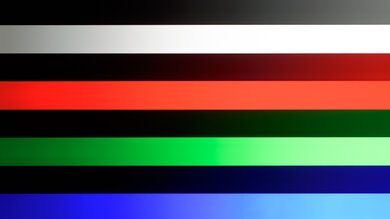
The Sony X940E can display our gradient test image without any problems, as you can see on our test picture. From the light to the dark shades, everything is smooth, even the grayscale. Note that this test what was done with the 'Smooth gradation' feature turned off.
for pictures & test results

The Sony X940E does present some image retention right after the 10-minute burn-in scene of our test clip, but the retention looks very dim and it fades really fast. After 2 minutes of recovery, nothing could be picked up by our analysis process, which is a good result. Even though it has some very minor image retention, this isn't a problem.
We don't expect VA panels to experience permanent image retention, as the VA panel in our long-term test appears immune.

for pictures & test results

for pictures & test results
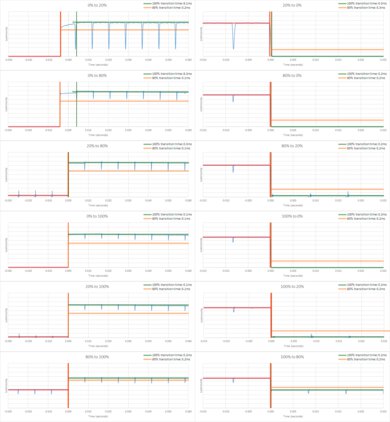
The response time of the 75" X940E is bad, resulting in a long (but faint) trail following moving objects. This isn't noticeable in all content, and isn't an issue for watching movies but does cause visible blur behind 60 fps games or sports.
for pictures & test results

The Sony X940E uses PWM at 720Hz to dim the backlight, starting at 13/50 backlight setting, but at that frequency it is not noticeable. Lowering the setting reduces the amplitude, while duty cycle remains constant.
for pictures & test results
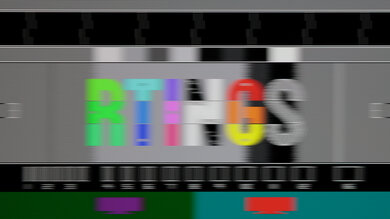
for pictures & test results
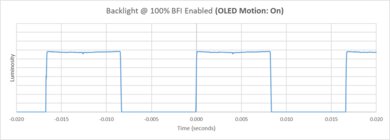
It is possible to decrease the X940E's flicker frequency to 60Hz and clear up motion, for those who don't mind visible flicker. To do so, set 'MotionFlow' to 'Custom' and increase the 'Clearness' slider.
for pictures & test results

for pictures & test results

The X940E can interpolate lower frame rate content up to the panel's native refresh rate of 120Hz. To do so, set 'MotionFlow' to 'Custom' and increase the 'Smoothness' slider. For 30fps content it is also necessary to set 'CineMotion' to 'Medium' or 'High'.
The Sony X940E provides extremely smooth motion, even when watching low frame rate content such as 24 fps movies. Even when watching movies the image doesn't remain static for long periods of time due to the slow response time. Higher frame rate content such as sports also appears extremely smooth.
The Sony XBR75X940E can only display 24p movies playing via 24p sources like DVDs and Blu-rays player smoothly. 24p movie playing via 60p/60i sources like cable or satellite boxes play at the correct cadence with 'Motionflow' set to 'True Cinema' and 'Cinemotion' set to 'High'.
Update 07/18/2017: The TV has been tested with the newest firmware update (PKG6.2648.0065NAA). The 24p playback remains the same.
Update 10/17/2017: With the latest firmware (PKG6.2669.0070NAA) the judder over 60Hz signals has been fixed.
The X940E has a 120Hz panel, and doesn't support any variable refresh rate features.
Low input lag for a 4k input, which should please all but the most competitive gamers; but higher input lag for a 1080p input. This should be good enough for most people but may disappoint competitive gamers. Both the Game and Graphics picture modes have low input lag, and can show 4:4:4 color properly. Overall the input lag is very similar to the X930E and Z9D, which also use the Sony x1 Extreme processing engine.
Update 07/18/2017: The TV has been tested with the newest firmware update (PKG6.2648.0065NAA). The input lag remains the same.
Update 09/20/2017: Tested 1080p @ 120 Hz input lag using our new input lag tool. It is much faster than the 1080p @ 60 Hz input lag, likely due to the TV bypassing some processing when it detects such an unusual signal.
Update 11/10/2017: Retested input lag with the latest firmware (PKG6.2669.0070NAA); there was no significant change.
All the common input resolutions are supported. 4k @ 60 Hz @ 4:2:2 or 4:4:4 color is only supported on HDMI inputs 2 and 3, and only when 'HDMI Enhanced Format' is enabled. 4:4:4 color is only properly displayed in the Game or Graphics picture modes.
When using the TV as a PC monitor, 1080p is listed as the default resolution. 1080p @ 120 Hz is properly supported but must be added as a custom resolution, because it isn't listed by default.
Update 06/12/2018: A note for Xbox One X and Xbox One S owners: 1080p @ 120 Hz from the Xbox is only supported on this TV when the Xbox's connection type is changed from Auto-detect (Recommended) to HDMI: (Xbox > Settings > Display & sound > Video fidelity & overscan > Display > Connection > HDMI). Unfortunately in this mode 4k, HDR, 50 Hz and 24 Hz aren't possible, so this mode is only recommended when the higher refresh rate of 120 Hz is more important to you than these other features.
Update 06/18/2018: Correction, 24 Hz and 50 Hz are in fact possible with the Xbox's connection type set to HDMI.


HDMI 2.0 full bandwidth is only possible on HDMI inputs 2 and 3, and only when 'HDMI Enhanced Format' is enabled.
Dolby Vision support will be added in a future update.
Update 01/23/2018: The update enabling Dolby Vision compatibility is now available.
for pictures & test results

Decent Frequency response. The X940E produces a response relatively close to target, but it like most Sony TVs has some amounts of pumping and compression at higher volumes. Aliasing of higher frequencies is also present.
for pictures & test results
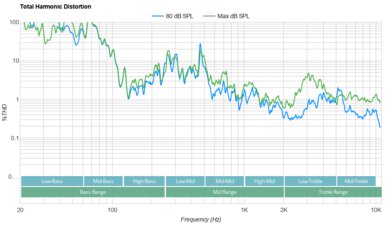
Below average distortion performance. The X940E has reasonable THD at a lower volume, but it steeply rises as levels are raised.
for pictures & test results

The TV has no ads in its main interface, but third party apps can have ads. There is an option in the TV's settings to opt-out of personalized advertising for these ads.
The first row of the home page is filled with suggested content. In the 'Home' section of the TV's settings you can opt out of all sources of suggested content until all that's shown is a line saying 'No recommendations available at this time'. After the TV has been restarted more sources may appear but can also be disabled.
for pictures & test results
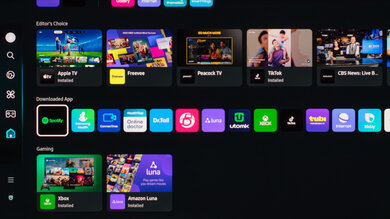
Many popular apps come preinstalled, such as Netflix, YouTube and Amazon Video. Other apps can be downloaded from the Google Play Store, which has more apps than many other smart platforms.
for pictures & test results

The remote is rather large with a lot of buttons. Fortunately most of the commonly used buttons are clustered within easy reach around the navigation pad in the center, except the power and input buttons at the top which are hard to reach. The remote has a built in remote for Android's voice search, which only searches for content and lacks the advanced voice command features found on other smart platforms such as Samsung's Tizen. The remote is identical to those of the X930E and X900E (same model number).
Update 12/11/2017: Google Assistant has now been added to Android TV on Sony TVs, and it brings a lot of new features to the voice control: commands like 'open Netflix', 'switch to HDMI 1', 'pause video', 'how's the weather' and 'turn off TV' all work well, though commands to change picture settings like 'set the brightness to 20' and 'switch to Game mode' don't work. The remote score has been increased to reflect the new fuctionality.
for pictures & test results
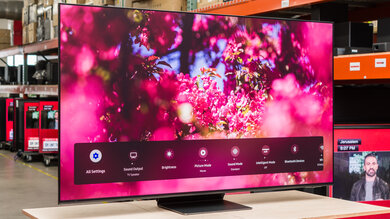
Update 09/12/2017: Sony has a remote app called 'Video & TV SideView' that's better than the Android TV app in most ways. The score and data fields have been updated to reflect the Sony app.
Update 07/11/2018: Sony's Video & TV SideView remote app has been retested on version 5.5.0. The remote app can now stream video files and can only directly launch apps. The data fields have been updated.
Update 10/12/2018: The remote app can directly launch both apps and inputs, even on version 5.5.0; "Apps Only" was a mistake. The value has been corrected to "Both".
for pictures & test results

The TV has three buttons. The center button switches between volume, channel and input, while the (+) and (-) buttons increment the setting. The center button also serves as the TV's power button.