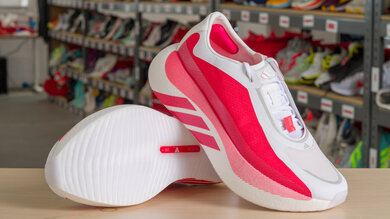
The adidas Hyperboost Edge is a high-stack, unplated daily trainer for runners who want plenty of cushioning for long runs and steady mileage. Its plush midsole provides outstanding impact protection and a bouncy ride that stays enjoyable over distance. It also rolls well once you settle into pace, making it a very good option for recovery runs and longer efforts. However, it's only reasonably stable and not especially snappy, so it's not the shoe for those with dedicated support needs or who want a speedy racer.
| ❌ Skip If: |
|
|
Our Verdict
The adidas Hyperboost Edge is primarily designed as a training shoe, but it is still a capable option for marathon racing. Its highly cushioned platform, lively foam, and forgiving ride make it a good fit for runners who want something protective and energetic without the harsher, more aggressive feel of many dedicated marathon racers. It feels especially well-suited to those who value comfort and bounce over maximum snap and nimbleness. However, the geometry is better suited to runners who land closer to the forefoot, so heel strikers, or runners whose form starts to break down as the miles add up, may find the minimal heel bevel less ideal.
Exceptional impact protection.
Very lively midsole that feels fun and bouncy underfoot.
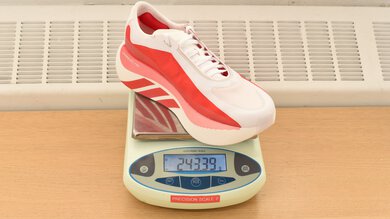
Quite heavy and bulky for faster racing efforts.
The adidas Hyperboost Edge is not built for 5K and 10K racing. Its foam still feels energetic enough to help you move quickly, but the soft forefoot and unplated design keep it from delivering the crisp, snappy toe-off that's the norm for short, fast efforts. It is better for uptempo training and longer efforts at lower intensities.
Soft forefoot lacks a crisp toe-off.
Quite heavy and bulky for faster racing efforts.
The adidas Hyperboost Edge is a very good long-run shoe. The remarkable cushioning stays protective deep into longer efforts, while the very good rocker stiffness helps it roll smoothly as the miles build. However, the tall platform is only reasonably stable, so those who need a very secure platform underfoot may find it a bit wobbly when fatigued.
Remarkable cushioning protects your legs over long distances.
Protection holds up exceptionally well as the miles build.
Stiff rocker helps shoe maintain smooth roll.
Tall platform can be hard to handle when fatigued.
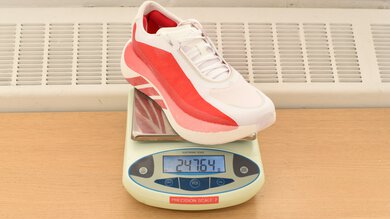
The adidas Hyperboost Edge is a very good daily trainer. The remarkable cushioning makes regular mileage highly protective, while the energetic midsole keeps the ride lively enough for steady and progressive runs. However, its weight and only reasonable stability make it less suited to runners who want a lighter, more secure daily option.
Remarkable cushioning protects your legs over daily miles.
Ride is very lively.
Tall platform might be too wobbly for those with dedicated support needs.
Changelog
-
Updated Aug 12, 2026:
We've added text to the new usage boxes after converting this shoe to the latest Test Bench. We also updated the Introduction to make the usages clearer, and added a link to the newly reviewed adidas Zenboost in the Popular Comparisons section.
-
Updated Jul 29, 2026:
We've updated the Popular Comparisons section to add a link to the newly reviewed Saucony Paramount Max.
- Updated Jul 16, 2026: We've converted this review to Test Bench 0.15, which replaces Responsiveness with three specific performance usages: Bounciness, Snappiness, and Roll. To read more about the changes, see the changelog.
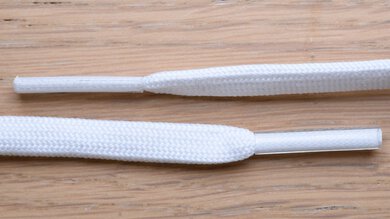
- Updated Jul 09, 2026: We've converted this review to Test Bench 0.14, which adds new lace-specific results. We've included a close-up photo of the laces, as well as details including lace type, width, thickness, and stretch. To read more about the changes, see the changelog.
- Updated Jun 30, 2026: We've converted this review to Test Bench 0.13, which identifies the different foams used in the shoe's midsole. We've included a microscopic image of the foam cells to give you an idea of what the microstructure looks like. To read more about the changes, see the changelog.
- Updated Jun 25, 2026: We've converted this review to Test Bench 0.12, which fixes how we measure firmness, a component of the Stability and 5K/10K Racing usages. There may be inconsistencies between the text and the scores for these usages, but the scores should still be considered valid. We've also brought back the Energy Return score and added two new usages: Daily Training and Long Run. To read more about the changes, see the changelog.
- Updated Jun 23, 2026: We've converted this review to Test Bench 0.11, adding two new rocker measurements to the Design section, and three new responsiveness tests to the Performance section. The Energy Return usage score has been replaced with Responsiveness. Check out the details in our changelog.
-
Updated May 13, 2026:
We added a link to the newly published 'Best adidas Running Shoes' article in the Popular Running Shoe Comparisons section of the review.
- Updated Apr 16, 2026: Review published.
- Updated Apr 13, 2026: Early access published.
- Updated Mar 27, 2026: Our testers have started testing this product.
- Updated Mar 27, 2026: The product has arrived in our lab, and our testers will start evaluating it soon.
- Updated Mar 17, 2026: We've purchased the product and are waiting for it to arrive in our lab.

We've bought and tested more than 300 running shoes. Every pair purchased with our own money, never supplied or sponsored by brands. Our data-driven tests are designed to go beyond marketing claims, and since every shoe goes through the exact same methodology, you can directly compare results to find the right pair for your needs.
Test Results
Energy Return
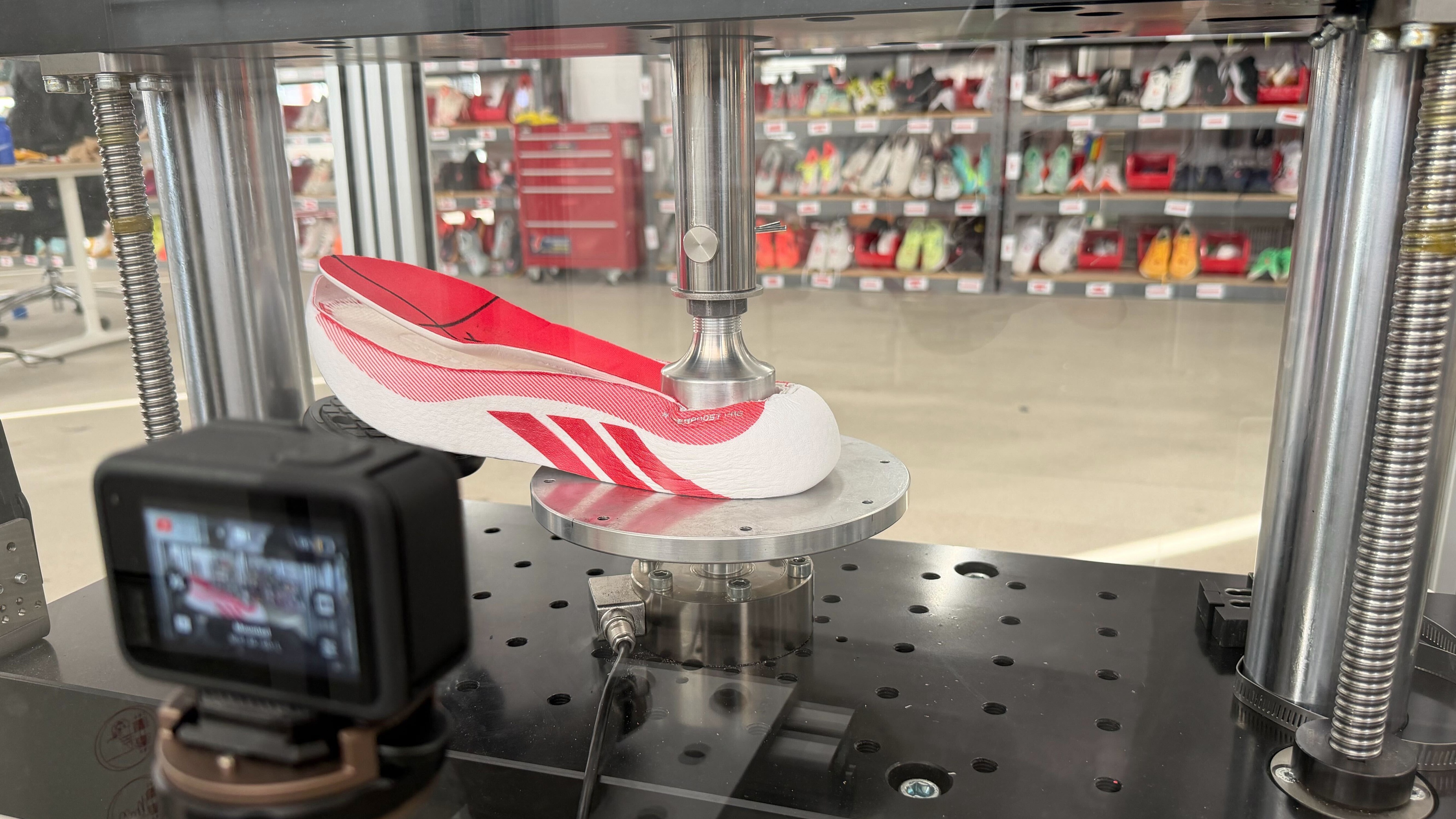
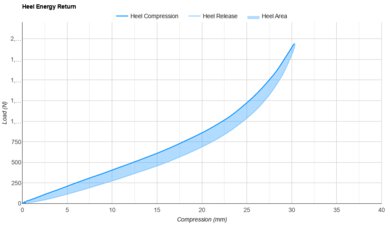
The adidas Hyperboost Edge has very good energy return. Both the heel and forefoot give plenty back after landing, keeping the ride energetic across different strike patterns.
Very good rebound across the whole midsole.

Stability
The adidas Hyperboost Edge is reasonably stable for such a tall, soft unplated shoe, as its broad outsole helps keep you feel grounded and secure. Still, the soft foam and less-than-ideal lockdown allow more side-to-side movement than firmer, more planted trainers, especially when cornering or once fatigue starts to affect form. It feels best cruising in a straight line rather than handling sharp directional changes or very aggressive efforts.
Broad outsole helps keep the platform fairly steady.
Tall, soft platform can feel wobbly.


Cushioning
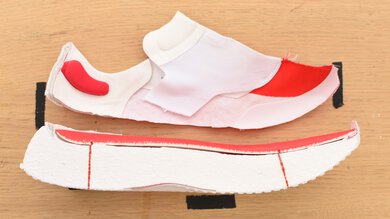
The adidas Hyperboost Edge offers outstanding protection underfoot, with a deeply cushioned heel and an especially plush forefoot. It does a remarkable job softening impact over all force levels, making it a very comfortable option for daily mileage and longer sessions where you're trying to preserve your legs. Runners who like a lot of foam underfoot will appreciate how plush and protective it feels.
Exceptional impact protection.


Bounciness
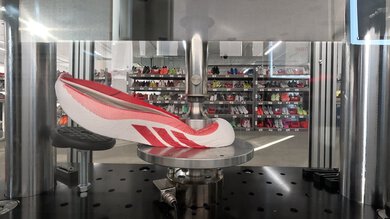
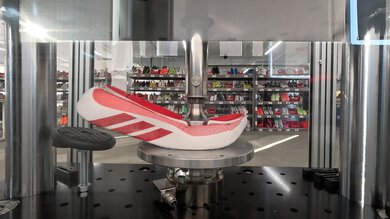
The adidas Hyperboost Edge has good bounciness overall. The forefoot compresses deeply and rebounds very well, giving the front of the shoe plenty of spring. The heel returns energy well, too, though it doesn't compress as deeply, so it's not as bouncy as the forefoot.
Good forefoot compression creates plenty of spring.
Very good rebound keeps the ride lively.
Rearfoot landings are less bouncy than forefoot.


Snappiness
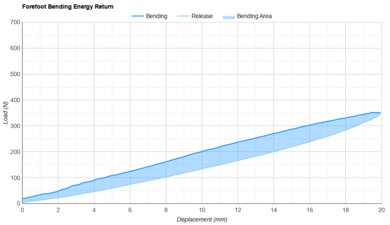
The adidas Hyperboost Edge has reasonable snappiness. Its stiff forefoot returns a lot of energy when it unbends, so toe-off is very responsive, but the forefoot is quite soft, and the shallow rocker angle limits how quick and propulsive it can be.
Toe-off is responsive as lots of energy is returned when unbent.
Shallow rocker angle limits propulsion.
Roll
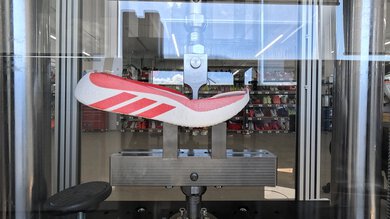
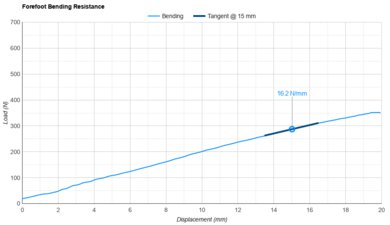
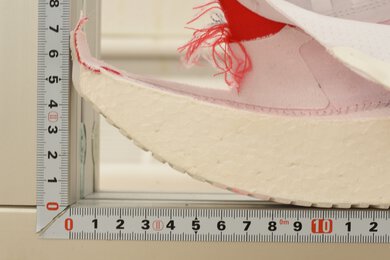
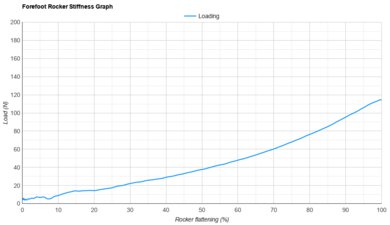
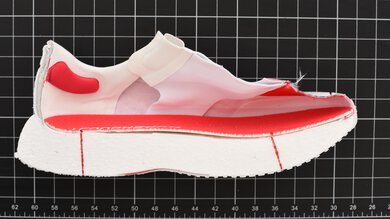
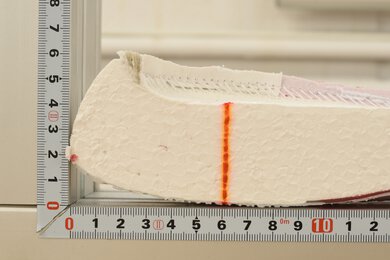
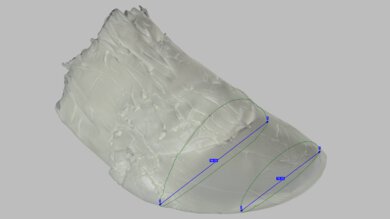
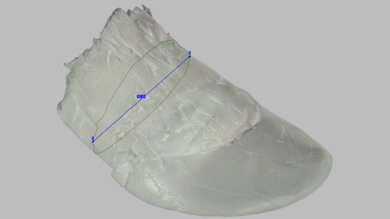
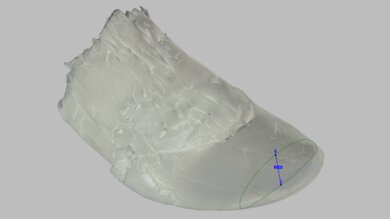
The adidas Hyperboost Edge rolls very well. The very good rocker stiffness and good forefoot geometry help guide the shoe smoothly through the stride, while the tall forefoot supports the transition into toe-off. However, the heel rocker is only mediocre, so heel strikers get less assistance from landing into midstance.
Stiff rocker helps make transitions smooth.
Forefoot geometry is very assistive.
Heel rocker is less assistive than forefoot.
True To Size
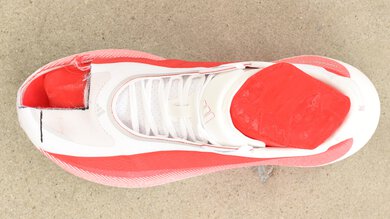
The adidas Hyperboost Edge fits true to size overall, so sizing is straightforward for most runners. The forefoot width and length are quite accommodating, helping it avoid feeling overly cramped at the front of the shoe. Also, the upper sits fairly high around the ankle, which can affect lockdown. It largely comes down to preference, but some runners may find this design a bit bothersome or experience rubbing or pressure points.
True-to-size length.
Fairly accommodating forefoot width.
Low forefoot volume can feel a bit shallow over the toes.

Popular Running Shoe Comparisons
The adidas Hyperboost Edge is a deeply cushioned trainer designed to absorb a superb amount of impact over long runs and daily miles. It's a fantastic pick for most runners wanting the most cushioning underfoot. However, if you'd rather sacrifice some cushioning for a lighter, more versatile shoe you can even use for speedwork, get the adidas Adizero Evo SL. If you're looking for the best bang for your buck, and only run short distances fast, the lower-stack adidas Zenboost is a solid pick, though it's much harsher and far less protective than both of those other shoes.
If you're looking for more options, check out our recommendations for the best running shoes, the best adidas running shoes, and the best long-distance running shoes.
The adidas Hyperboost Edge is a better shoe than the Nike Vomero Plus for most runners. With a softer, bouncier feel and a lighter weight, the adidas handles long runs and daily miles comfortably while still managing the occasional faster workout. The Vomero Plus is the steadier of the two, though, and its more rockered heel will appeal to heel strikers who want smooth landings and fluid transitions. The Nike shoe is also available in wide versions.
The ASICS SUPERBLAST 3 is a better long-run shoe than the adidas Hyperboost Edge. It's lighter and slightly more cushioned, with less bulk underfoot. The adidas is bouncier, so it's the better option if you want a springier ride, though the upper material can cause some friction on the foot.
The adidas Hyperboost Edge and ASICS MEGABLAST follow a similar concept of high-stack, unplated performance trainers, but they diverge in key ways. The Hyperboost Edge leans more toward a softer, more comfort-oriented ride, holding onto a slightly more cushioned feel over longer runs and feeling less chaotic overall, which makes it more suited to easier paces. The ASICS feels a touch more cushioned initially and a bit more bouncy, and its lighter build makes it more efficient and easier to use at faster paces, even making it a viable unplated option for racing.
The adidas Adizero Evo SL is a better choice than the adidas Hyperboost Edge for faster running. It's lighter, more responsive, and more efficient when you pick up the pace, though it can feel harsh at easy paces. The Hyperboost Edge is softer, more cushioned, and more protective, making it more forgiving for easy cruising.
The adidas Hyperboost Edge and R.A.D UFO share a lot of similarities, with futuristic designs, comparable geometry, bouncy foams, and similar weight. The Hyperboost Edge leans more into cushioning, delivering a softer, more cushioned ride, but that comes at the expense of stability. The R.A.D feels more planted thanks to its wider platform, and its midsole returns a bit more energy, giving it a slightly bouncier but stable feel underfoot.
The Saucony Paramount Max and adidas Hyperboost Edge provide similarly outstanding cushioning for daily training and long runs. The adidas is much lighter, though, with a smoother ride that suits progressive efforts better. The Saucony offers significantly more energy underfoot, however, and the most bounce, while its assistive heel rocker makes it the better choice for heel strikers.
The adidas Hyperboost Edge is a better daily trainer than the adidas Zenboost. Its much deeper cushioning keeps legs protected over everything from easy runs to marathon efforts, and it rolls much more smoothly, making it easier to maintain your stride as the miles build. However, it's also significantly heavier, less stable, and much more expensive, so the Zenboost is the better pick if you're running short distances and want an affordable shoe that sits lower to the ground.
The HOKA Skyward X 2 and adidas Hyperboost Edge are both premium high-stack trainers with excellent cushioning, but they feel different underfoot. The HOKA is taller and heavier, with a convex carbon plate that helps control its huge stack rather than making it feel especially fast. The adidas is lower, lighter, and slightly more responsive, with better energy return under both the heel and forefoot. Both are highly cushioned, but the adidas is the better pick if you want the comparatively livelier ride, while the HOKA suits runners who want a taller, plated cruiser.
Differences Between Sizes And Variants
We bought and tested the adidas Hyperboost Edge in a men's U.S. size 9, as noted on the label for our pair. The pair we purchased is the Cloud White / Pure Ruby / Zero Metallic colorway, with additional color options expected to release in the near future, depending on the region. Both the men's and women's versions are only available in a standard width. The design section applies only to the exact model we tested, but we expect other sizes and gender variants to perform similarly.
