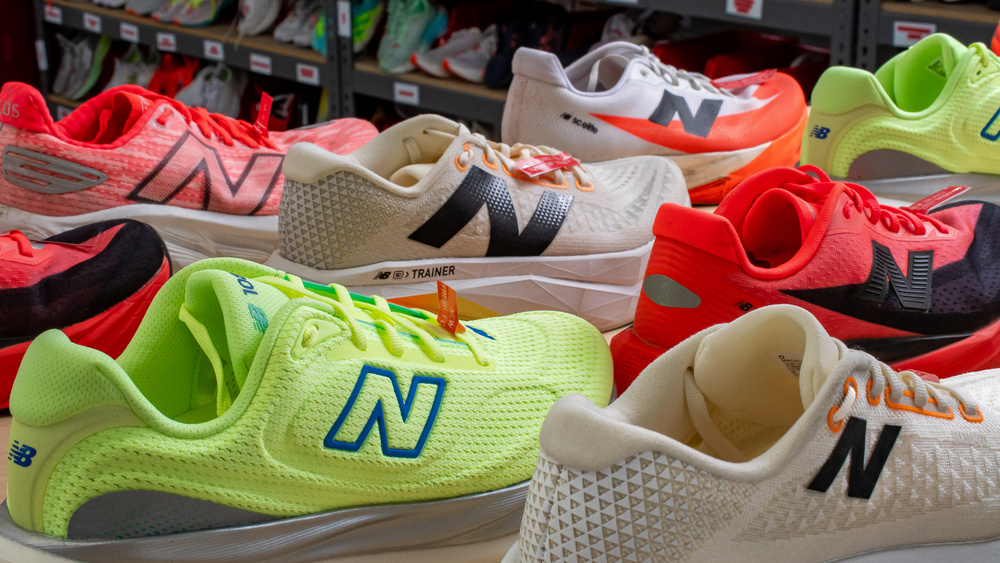
New Balance makes some of the best running shoes for runners who value comfort, fit, accessibility, and they have a broad lineup that ranges from easygoing daily trainers to modern plated racers. That emphasis on fit and support goes back to the brand's roots, as its first model, the Trackster, was the first running shoe offered in multiple widths. That focus on accessibility still shapes the lineup today, even as New Balance has expanded into more modern performance categories with FuelCell trainers and SuperComp racers.
With so many New Balance running shoes now available across different categories, it can be hard to know where to start. We've bought and tested more than 200 running shoes overall (take a look at our top picks), including 14 New Balance models, so we can help narrow the lineup and point you toward the best option for your needs and budget. Here's a quick rundown of what to look for using our lab testing and scoring:
- Cushioning: This measures how well the shoe's midsole absorbs impact. A score of 7.5 or higher is good overall, but more powerful runners may want to look at the Heel Cushioning and Forefoot Cushioning tests in each review, which show how the shoe performs under higher force levels.
- Responsiveness: This measures how effectively the shoe converts the force you apply into forward propulsion. For daily training, a score of 6.5 or higher is adequate. For racing, look for a score of 8 or higher.
- Lateral Stability: A score of 7.5 is good for daily use. Max-cushioned shoes often score lower because of their higher stack heights, while race shoes can also feel less stable due to their narrower, more streamlined platforms. These shoes require better running form.
- True to Size: This measures how closely the shoe's length and volume match a standardized true-to-size baseline. A score of 9 or higher means you can confidently buy your normal size. Shoes between 7.5 and 9 are still generally good, but it's worth checking the individual fit components if you have specific concerns, like wide arches or tall toes.
Below are our recommendations for the best New Balance running shoes you can buy. If you want to learn more about our testing process, read about our lab tests.
Updates
- 04/15/2026New Balance Ellipse reviewed
- 02/13/2026New Balance Fresh Foam X 880v15 reviewed
- 02/06/2026New Balance 1080v15 reviewed
- 01/05/2026New Balance Fresh Foam X 1080v14 reviewed
- 12/08/2025New Balance Fresh Foam X Balos v1 reviewed
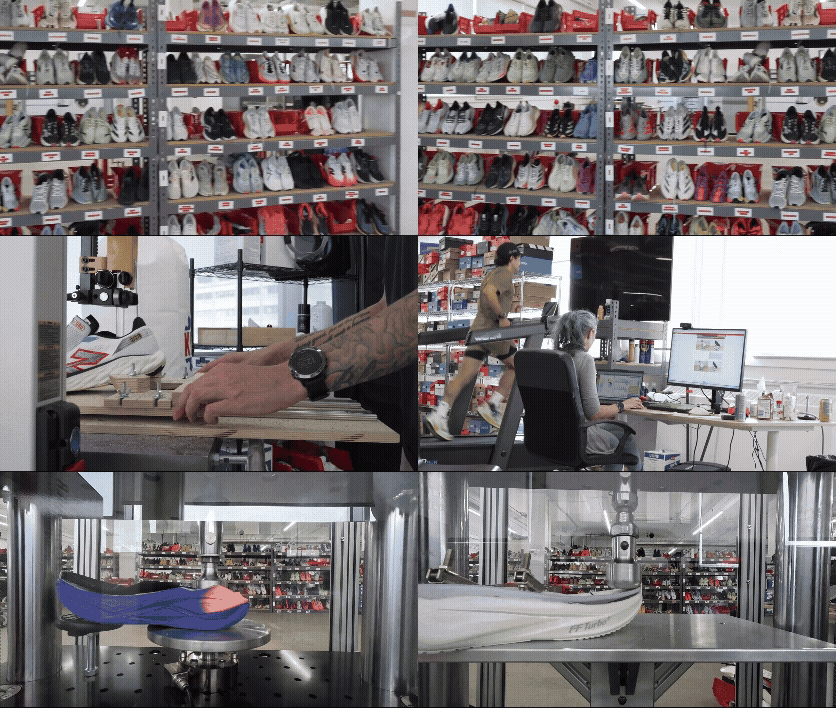
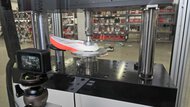
We buy and test running shoes with a very data-oriented approach. While we're just getting started, our methodology already has dozens of tests to help you make the right purchasing decision for your needs. Not only do we use high-end equipment to gather objective data, but we also order multiple sizes of the same shoes so team members can log in miles. This real-world testing is conducted at various paces and conditions, across different types of workouts, to cover all the bases. This allows us to verify our results and ensure they align with what you might feel with a specific pair.
-
Best New Balance Running Shoes
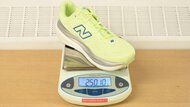
 Marathon Racing7.35K/10K Racing6.7Responsiveness6.4Cushioning8.0Lateral Stability7.6True To Size8.6Weight:250.3 g (8.83 oz)Heel-To-Toe Drop:7.8 mmSee all our test resultsPlate:None
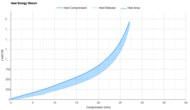
The best New Balance running shoes we've tested are the New Balance 1080v15. It's a comfort-oriented trainer with enough bounce to keep daily miles fun, and this well-rounded feel is what makes it our top pick for most runners. It's the shoe for you if you want a reliable, comfortable ride you can depend on for regular training day after day. The brand took some risks with this iteration, replacing the Fresh Foam that long defined the 1080 series with a new midsole compound called Infinion. This new foam provides very good cushioning without becoming mushy, adds a decent amount of bounce, and gives the shoe a stable, easygoing ride. Some New Balance models are lighter and faster, but the 1080v15 offers the best overall balance of weight, cushioning, responsiveness, and stability in the lineup.
-
Best Mid-Range New Balance Running Shoes
Marathon Racing6.85K/10K Racing6.9Energy Return6.3Cushioning7.3Lateral Stability8.1True To Size9.4Weight:227.3 g (8.02 oz)Heel-To-Toe Drop:7.0 mmSee all our test resultsPlate:NoneThe New Balance FuelCell Rebel v5 is a relatively lightweight running shoe and a strong mid-range option for runners who want a daily trainer that still feels nimble enough for strides or light tempo intervals. The slightly lower stack height means there's less cushioning than in the New Balance 1080v15, and the FuelCell foam doesn't give as much energy back as the Infinion in the 1080v15. Runners who land with a lot of force might find that it struggles to absorb heavier impacts.
-
Best Budget New Balance Running Shoes
Marathon Racing6.55K/10K Racing7.2Energy Return6.6Cushioning6.5Lateral Stability8.2True To Size9.6Weight:273.2 g (9.64 oz)Heel-To-Toe Drop:6.8 mmSee all our test resultsPlate:PlasticThe New Balance FuelCell Propel v5 is a great budget option for runners who want a stable shoe for easy miles. It's both heavier and less well-cushioned than the New Balance 1080v15, so it won't feel plush or nimble, and it becomes increasingly harsh the longer you run, making it better suited to shorter efforts. That said, the FuelCell foam in this shoe does have reasonable energy return, and the midsole also has a plastic plate, but this is more for stability than propulsion.
Runners looking for a good deal from New Balance and wanting more cushioning than energy return from their running shoes can often find the New Balance Fresh Foam X 1080v14 on sale. It's a rather different shoe, as it has the older, less lively FreshFoam. If you need a shoe that can handle slightly longer runs, and you're not trying to go too fast, it's still a solid option.
-
Best New Balance Running Shoes For Cushioning
Marathon Racing6.15K/10K Racing4.9Energy Return4.1Cushioning8.6Lateral Stability7.4Weight:302.3 g (10.66 oz)Heel-To-Toe Drop:4.7 mmSee all our test resultsPlate:NoneThe New Balance Fresh Foam X More v6 is the best New Balance running shoe for runners who want a true max-cushion cruiser for recovery days. It isn't as strong of an all-around daily trainer as the New Balance 1080v15, though, since it has less bounce and a lot more weight, making it feel more cumbersome underfoot. Still, it makes a lot of sense when your legs feel beat up, and your top priority is lacing up something protective and comfortable. Its tall stack of foam creates a big buffer that absorbs impact well, even for runners who apply a lot of force when hitting the ground. The plush, luxurious upper also adds to that comfort-first feel, making it especially pleasant for easy jogs.
-
Best New Balance Running Shoes For Racing
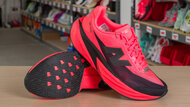
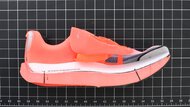
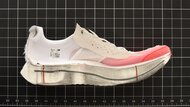
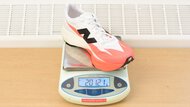
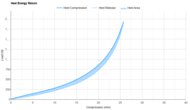
Marathon Racing8.45K/10K Racing8.4Responsiveness8.2Cushioning7.6Lateral Stability6.9True To Size8.8Weight:200.5 g (7.07 oz)Heel-To-Toe Drop:8.9 mmSee all our test resultsPlate:Carbon FiberThe New Balance FuelCell SuperComp Elite v5 is the brand's premier road racing shoe, and one of the most approachable super shoes on the market today. It features many of the elements that make a good racing shoe, such as a carbon plate, a rockered midsole, and lively PEBA-based foam. What sets it apart from the pack is its well-padded and accommodating upper, which makes it feel much more comfortable than a typical racing shoe. Another rarity among super shoes: this one is available in a wide version for both men and women. This isn't a shoe you can run in every day, as it's not as stable as a daily trainer like the New Balance 1080v15, and it's not built to withstand the grind of everyday use. But if you want an ace up your sleeve that you can pull out on race day, this is the best New Balance has to offer.



Compared To Other Brands
-
Widest range of widths.
New Balance was the first running shoe brand to offer a running shoe in multiple widths, and the brand remains an industry leader in this regard. Their most popular models are usually available in Wide (2E for Men, D for Women) and Extra Wide (4E for Men, 2E for Women) sizes. The SuperComp Elite series is one of the few racing shoes to come in a Wide version, though not yet an Extra Wide. At the other end of the spectrum, New Balance also makes Narrow versions (2A for Women and B for Men) of their daily trainers.
-
Very approachable fit and geometry.
New Balance's running shoes are designed to accommodate a broad range of runners, and their fit and geometry are very beginner-friendly. While some of the brand's performance-oriented shoes do incorporate a rockered midsole, it's usually much less aggressive than those of other brands. New Balance's running shoes also tend to feature an inherently stable design, which further inspires confidence among less experienced runners.
-
Lack of innovation between iterations.
While consistency is key in running, New Balance's shoes sometimes feel stuck in a rut. Although they do make tweaks between iterations, the changes are often slow and not necessarily improvements; the SuperComp Trainers feel particularly tired and behind the curve. The brand has also been known to launch products that bear new names but seem like rebranded versions of older product lines; the New Balance Ellipse, for example, was launched with a lot of clever marketing but ultimately seems similar to the discontinued New Balance Fresh Foam X 1080v14.
-
Foams feel stale.
New Balance uses several different foams. The FreshFoam used in many of New Balance's daily trainers is notorious for sinking underfoot, and the feeling is often described as running on quicksand. This is fine if you just want soft cushioning, but it feels sluggish when you try to pick up the pace. The FuelCell foam used in the brand's performance-oriented shoes is livelier than FreshFoam, but it still trails well behind most other brands' premium race foams. New Balance has now dropped the FreshFoam compound from its popular 1080 series, resulting in much better energy return, but many of the brand's running shoes still prominently feature the less lively foam.
New Balance vs HOKA
New Balance and HOKA are two brands that are popular in large part because of the everyday comfort of their running shoes. As such, both brands have models that straddle the line between walking and running shoes, though the numbering system of some New Balance models (e.g., 880, 1080) makes it a bit easier to determine which shoe is most appropriate for which goals. New Balance's sizing tends to be more accommodating, as some HOKA models run narrow, and New Balance offers more models in Extra Wide sizes. Although both brands are very comfort-oriented, HOKA's cushioning in its running shoes is usually better than that of its closest equivalent in New Balance's lineup.
New Balance vs PUMA
New Balance and PUMA are two brands that come from opposite sides of the ocean and, in many ways, approach running shoes from opposite directions. New Balance's roots lie in making comfortable shoes for workers who stand on their feet all day, and their running shoes belie a clear emphasis on comfort. PUMA, on the other hand, has a long history of making track racing shoes, and those influences are still clear, from the snug fit of many of its road-running shoes to the more aggressive geometry in their performance-oriented models. PUMA's running shoes are also known for having good traction thanks to their patented PUMAGRIP. If you have wider feet or just prioritize softness, you'll find more options in New Balance's lineup. If you want faster options, PUMA is generally the better brand.
New Balance vs Nike
Nike and New Balance are two of the most iconic and immediately recognizable American running shoe brands. Nike has staked much of its reputation on cutting-edge engineering and its elite performance shoes, while New Balance is much more focused on the middle of the pack. Unsurprisingly, Nike offers much better options for racing and speed training shoes, and each of the "Flys" (Vaporfly, Alphafly, Streakfly) is much more specialized than New Balance's generalist SuperComp Elite series. Both brands have a robust selection of daily trainers and comfortable shoes that can double as walking and running shoes. New Balances often feel softer when you first step in, but the cushioning doesn't hold up as well as Nike's over long distances.
New Balance vs Skechers
New Balance and Skechers are two stereotypical "dad shoe" brands, but they both make shoes you can actually run in! New Balance has been making running shoes for much longer, so its lineup is much more comprehensive and offers many more options. Because Skechers is still trying to establish itself in the running shoe game, their shoes tend to be more competitively priced. Skechers' running shoes have good grip, thanks to their Goodyear rubber outsole, but this also makes them a bit heavier. The ArchFit in Skechers 'Aero' models is nice if you need arch support, but it can pinch if you have wider feet, whereas New Balance's shoes are generally wider through the heel and arch.
New Balance has built a loyal following not because their running shoes are the most innovative or most interesting, but because they are consistently comfortable. Their models tend to have lower heel-to-toe drops than other brands', and although virtually every running shoe's stack height has increased in recent years, New Balance's aren't quite as inflated as those of many other brands.
Lineup
New Balance organizes its road-running shoes into distinct categories: support shoes, daily trainers, plated super trainers, and race-day super shoes. As a general rule of thumb, Fresh Foam models sit on the comfort-first side of the lineup, FuelCell models usually cover the lighter and more energetic side, and SuperComp marks the plated performance range. Newer models like the Ellipse try to break away from that naming structure, but it feels more like a marketing strategy, since all shoes ultimately fit naturally into the categories outlined here.
Support Shoes
New Balance's support shoes are designed to help manage overpronation through guidance, while still offering some comfort and multiple width options.
- Fresh Foam 860: The main stability daily trainer. It combines Fresh Foam cushioning with Stability Plane guidance technology, so it's the go-to option if you want dependable support for regular mileage.
- Fresh Foam 1540: The support shoe with the highest level of structure that makes the most sense for runners or walkers who want maximum rearfoot guidance and a very secure platform.
Daily Trainers
This part of New Balance's lineup is quite crowded, with several shoes overlapping in role. Most fall under either the Fresh Foam or FuelCell umbrella, though there are now a few exceptions, like the 1080 dropping the Fresh Foam for its newer Infinion midsole and the Ellipse not carrying Fresh Foam branding despite still using it in the midsole.
- Fresh Foam 880: The more classic daily trainer. Recent versions lean more toward actual running than older 880s did, but it still suits runners who want a straightforward, stable workhorse rather than anything really exciting underfoot.
- 1080: The premium daily trainer and the main anchor of the lineup, sitting as an intuitive all-around pick for comfortable daily mileage.
- Fresh Foam More: The max-cushion cruiser. It's taller and more cushioned than the 1080, so it makes the most sense for easy runs, recovery days, and runners who want as much protection as possible.
- Fresh Foam Balos: A premium, rocker-driven option that offers a cushioned and enjoyable ride for daily training.
- Ellipse: The newest comfort-focused daily trainer. New Balance positions it as a soft, welcoming option for everyday running and all-day wear, but right now it feels more mainstream and a lot less rebellious than before.
- FuelCell Rebel: Historically, this is New Balance's lightweight trainer line with a lower profile and more exciting ride. Recent versions have become heavier and more cushioned, though, making the line feel more normalized than before.
- FuelCell Propel: A daily trainer that includes a plastic plate to provide great stability. It's a more affordable take on the plated trainer concept, but it feels less performance-oriented than a true super trainer and is still mainly built for easy miles.
Performance Models
New Balance's performance-oriented models cover plated training and racing shoes built around energetic FuelCell foam, with a stronger focus on speed, propulsion, and efficiency than the long-term durability expected from the rest of the lineup.
- FuelCell SuperComp Trainer: The steady long run and workout companion to the SuperComp Elite super shoe. It borrows plated tech from the race lineup, but with more structure and durability, so it can handle repeated training use more comfortably.
- FuelCell SuperComp Elite: The brand's main racing super shoe. It's very lightweight and responsive, but it still feels more approachable than most rivals and even comes in a wide version, which is uncommon in this category.
- FuelCell SuperComp Pacer: A modern take on the racing flat, built for shorter races if you prefer something minimal, snappy, and closer to the ground.
Recent Updates
May 27, 2026:
We updated this article to clarify our recommendations, better explain the top pick and its tradeoffs, and make it easier to understand which shoe is best for each type of runner.
Apr 27, 2026:
We've included the New Balance Fresh Foam X More v6 as the upper mid-range pick, and we've added a full New Balance lineup section to the article.
Conclusion
New Balance has an extensive lineup of running shoes that caters to a wide range of runners. Their shoes are not necessarily the most innovative, but they're almost always comfortable. If there's a New Balance model you want us to test, you can vote for it to help decide what we buy next. To learn more about each model, check our full list of the best New Balance running shoes in the table below.