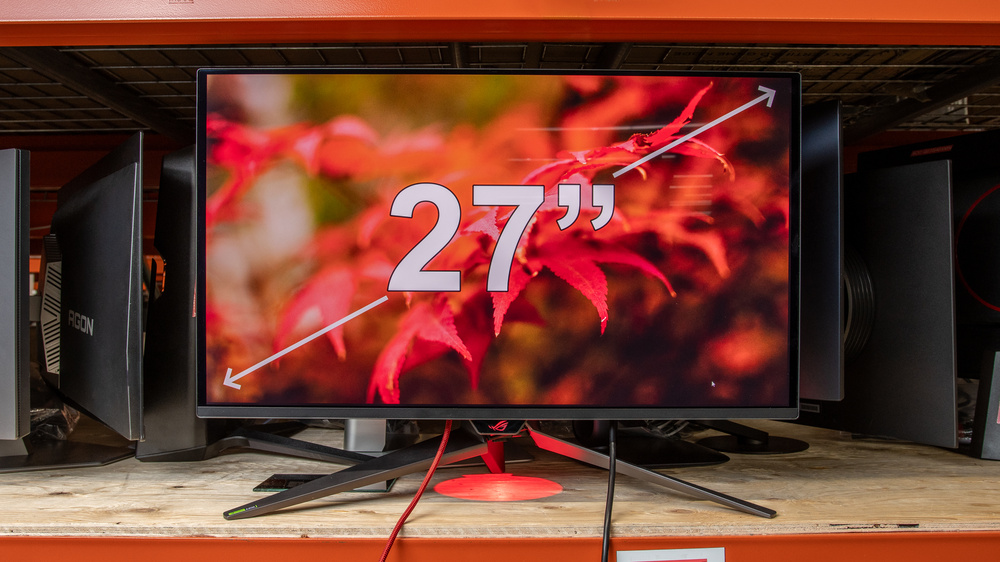
One of the most common monitor sizes is 27 inches. An advantage of this size is that it isn't so big that it's overwhelming on your desk. It also offers enough screen real estate to place two windows side by side, especially compared to smaller screens. There's a wide range of 27-inch monitors available with various resolutions, refresh rates, panel types, and features, catering to different usages. These monitors are also available at different price points, so you can find something no matter your budget.
Most are good enough for everyday use, and many even include gaming features like HDMI and DisplayPort 2.1 bandwidth to take advantage of the latest graphics cards and gaming consoles. That said, if you don't need gaming features and prefer something for productivity, many have extra features like USB hubs to connect different devices and ergonomic stands, which are useful for sharing your screen with people next to you. Plus, having a high resolution and pixel density helps result in sharp text clarity. Although there's no perfect solution for everyone, you should consider what type of monitor you need for your use.
We've bought and tested over 405 monitors, and below are our recommendations for the best 27-inch monitors you can buy. Also, check out our recommendations for the best 27-inch gaming monitors, the best work monitors, and, if you want other sizes, the best monitor sizes for gaming. You can also learn more about 27- vs 32-inch monitors.
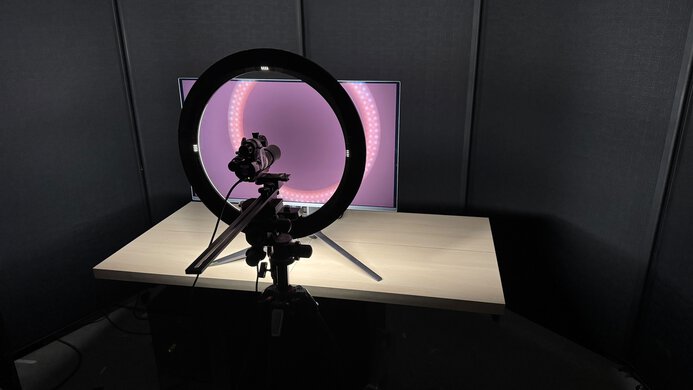
We buy and test more than 30 monitors each year, all of which we purchase ourselves, without cherry-picked units or samples. We put a lot into each unbiased, straight-to-the-point review, and there's a whole process from purchasing to publishing, involving multiple teams and people. We do more than just use the monitor for a week; we use specialized, custom tools to measure various aspects and deliver objective, data-driven results. We also consider multiple factors before making any recommendations, including the monitor's cost, its performance compared to the competition, and whether it's easy to find.
-
Best 27-Inch Monitor
 OfficeEditingPC GamingConsole GamingBrightnessResponse TimeHDR PictureSDR PictureColor AccuracySize27"Panel TypeOLEDSub-TypeQD-OLEDMax Refresh Rate240 HzSee all our test resultsNative Resolution3840 x 2160
The best 27-inch monitor we've tested is the ASUS ROG Swift OLED PG27UCDM. Although it's designed for gaming, it's versatile for different uses thanks to its fantastic picture quality. It has an OLED panel that has no haloing around bright objects against dark backgrounds. It displays deep blacks in a dark room, but blacks look purple in bright rooms. Small highlights also get bright enough to pop for a vivid viewing experience in HDR when watching content or gaming, though larger highlights are more muted. It even has fantastic motion handling, so fast-moving objects look very crisp.
Besides that, it has features to enhance productivity, including a 4k resolution that makes text look sharp. It delivers up to 90W of power to a laptop over USB-C, which is enough to keep most laptops fully charged when you're using them. It has a KVM switch, which lets you switch between sources and use the same keyboard and mouse with both. It also comes with an ergonomic stand and has a wide viewing angle that helps if you need to share the screen with someone next to you. However, it's not something you should get only for work because it risks burn-in with constant exposure to the same static elements over time. That said, this is less of a concern if you change up what you do, like if you game when you aren't working.
-
Best Upper Mid-Range 27-Inch Monitor
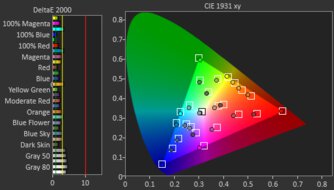
OfficeEditingPC GamingConsole GamingBrightnessResponse TimeHDR PictureSDR PictureColor AccuracySize27"Panel TypeLCDSub-TypeIPSMax Refresh Rate120 HzSee all our test resultsNative Resolution3840 x 2160If you find the ASUS ROG Swift OLED PG27UCDM too expensive or don't want an OLED for work, considering its risk of burn-in with constant exposure to the same static elements over time, check out the Dell U2725QE. It's another 4k option, with many different features. One main difference with the ASUS, though, is that this monitor has worse picture quality. Despite having a decent native contrast ratio, blacks look gray against bright highlights. It also has a terrible edge-lit local dimming feature that causes haloing around bright objects in dark backgrounds. It at least has good accuracy before any sort of calibration, which helps if you're a content creator, and it gets bright enough to fight glare in most well-lit rooms.
Instead of focusing on gaming with a high refresh rate and incredible motion handling, it offers many perks to boost your productivity. This includes a large USB hub with five USB-A and five USB-C ports, so you can connect all kinds of devices directly to the monitor. It also supports Thunderbolt 4 with 140W of power delivery, which is ideal if you have a power-hungry laptop that requires Thunderbolt, like a MacBook. Similar to the ASUS, it even has a KVM switch to easily change between sources and use the same devices.
-
Best Mid-Range 27-Inch Monitor
OfficeEditingPC GamingConsole GamingBrightnessResponse TimeHDR PictureSDR PictureColor AccuracySize27"Panel TypeLCDSub-TypeIPSMax Refresh Rate320 HzSee all our test resultsNative Resolution3840 x 2160Should the Dell U2725QE still be out of your budget, and you want something versatile at a lower cost, check out the Acer Nitro XV275K P5biipruzx instead. Although it has the same 4k resolution as the Dell, it differs in a number of ways. For example, it has a smaller USB hub, doesn't support Thunderbolt, and has lower power delivery over USB-C. That said, it's useful for work, as it still has a small USB hub with DisplayPort Alt Mode and 90W of power delivery over USB-C. Like the Dell, it even has a KVM switch, which is helpful if you want to connect more than one computer to the monitor.
It has advantages over the Dell when it comes to gaming. It has a higher native 160Hz refresh rate and better motion handling, so there's less blur behind fast-moving objects. It even has a dual-mode feature to boost it to a 320Hz refresh rate with a lower 1080p resolution, which helps if you like playing different types of games. Plus, it delivers good HDR picture quality thanks to its Mini LED backlighting with fairly deep blacks and bright highlights, but there's black crush that mutes details in dark scenes. You can't use its local dimming outside of HDR, though, so blacks look gray, and it doesn't deliver the same vivid viewing experience.
-
Best Lower Mid-Range 27-Inch Monitor
OfficeEditingPC GamingConsole GamingBrightnessResponse TimeHDR PictureSDR PictureColor AccuracySize27"Panel TypeLCDSub-TypeIPSMax Refresh Rate120 HzSee all our test resultsNative Resolution3840 x 2160If you want to save some money without necessarily getting a budget monitor, look into the Dell S2725QC instead. It's a 4k display like the Acer Nitro XV275K P5biipruzx, so it displays the same sharp text and has similar features that help with productivity. It has a USB hub and 65W of power delivery, but it doesn't have a KVM switch. It also has worse picture quality than the Acer because it lacks local dimming and has a low contrast ratio that makes blacks look gray. This means it's a bad choice for HDR, which is what you have to expect at this price point. However, its picture quality is similar outside of HDR since you can't use the Acer's local dimming with those signals.
Although this model is meant for office work, it includes some gaming features that make it versatile. It has a 120Hz refresh rate and HDMI 2.1 bandwidth. So, you can use it with a modern gaming console, but it has worse motion handling than the Acer. If you don't need these gaming features and you prefer something with an extra USB port and more power delivery, you can also check out the ASUS ProArt Display PA279CRV. It's another great 4k work monitor that also has better color accuracy for content creation, but it costs more.
-
Best Budget 27-Inch Monitor
OfficeEditingPC GamingConsole GamingBrightnessResponse TimeHDR PictureSDR PictureColor AccuracySize27"Panel TypeLCDSub-TypeVAMax Refresh Rate180 HzSee all our test resultsNative Resolution2560 x 1440If you're on a tight budget, then check out the AOC Q27G3XMN. It's a step down from the Dell S2725QC in terms of features because it doesn't have any USB ports. You can't connect devices directly to the monitor, and it also has a lower 1440p resolution, so images and text aren't as sharp and detailed. This means it's worse for work, but that's what you have to expect from a budget monitor. Instead, it has some gaming features, like a 180Hz max refresh rate, so it's a good choice if you're a casual gamer.
What makes it better than most other 27-inch budget monitors is that it has Mini LED backlighting that works quite well. This helps it display deep blacks in dark scenes, and it also gets very bright. This means highlights pop, and it easily fights glare, which is useful if you want a monitor for work or watching your favorite content in well-lit spaces. However, it has some black smearing with fast-moving content in dark scenes, like in fast-paced games. You can also check out the similar AOC Q27G40XMN if you can find it for cheaper in your region. It has even better local dimming, but has worse motion handling.
-
Best Cheap 27-Inch Monitor
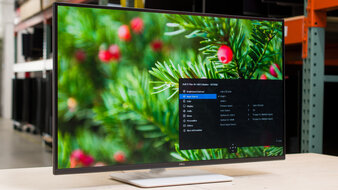
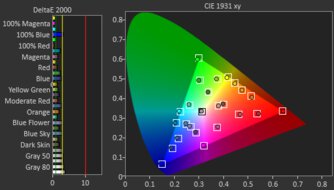
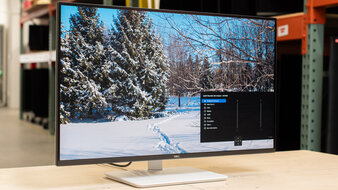
OfficeEditingPC GamingConsole GamingBrightnessResponse TimeHDR PictureSDR PictureColor AccuracySize27"Panel TypeLCDSub-TypeIPSMax Refresh Rate144 HzSee all our test resultsNative Resolution2560 x 1440If you're looking for an even cheaper monitor than the AOC Q27G3XMN, consider the Dell S2725DC, which is a simple 1440p display. It's different from the AOC because it doesn't have a local dimming feature and has a low contrast ratio, so it has much worse picture quality. This means blacks look gray in dark scenes, plus it doesn't support HDR at all, but this doesn't make a big difference due to its limited picture quality anyway. It isn't as bright as the AOC, either, but it's still fine if you want to use it with a few lights around.
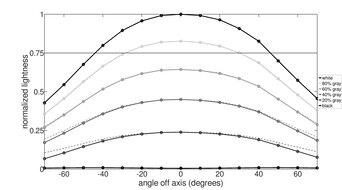
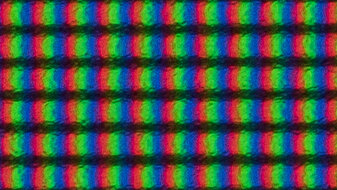
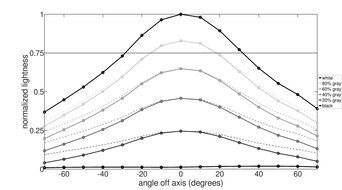
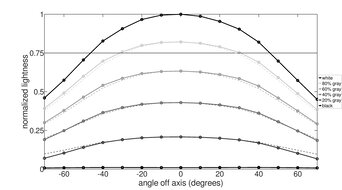
It has a few advantages over the AOC when it comes to work. It has a wider viewing angle, so the image remains more consistent from the sides. This helps if you want to share your screen with someone else. It also includes a USB hub with a USB-C port to which you can connect your laptop to display an image from it. Its 65W of power delivery is enough to keep most laptops fully charged while you're using it, except for power-hungry ones. Like the AOC, it has a few gaming features, like a 144Hz refresh rate, and it has less black smearing than the AOC, but there's still blur with fast-moving objects.








Notable Mentions
-
Dell Alienware AW2725Q:
The Dell Alienware AW2725Q is a 4k QD-OLED that's a lower-cost alternative to the ASUS ROG Swift OLED PG27UCDM. It has a very similar performance in many ways. However, it's less accurate in HDR and doesn't have the ASUS's extra features, like DisplayPort 2.1 bandwidth and a KVM switch.
See our review -
LG 27GM950B-B:
The LG 27GM950B-B is a high-end 5k gaming monitor with Mini LED backlighting. It delivers sharper text and gets brighter than the ASUS ROG Swift OLED PG27UCDM. The LG is a good alternative if you don't want the burn-in risk of an OLED, but it has worse motion handling than the ASUS.
See our review -
ASUS ROG Strix OLED XG27ACDNG:
The ASUS ROG Strix OLED XG27ACDNG is in the same price range as the Dell U2725QE and has better picture quality. However, the ASUS is different because it's focused on gaming with a higher refresh rate and better motion handling. That said, its OLED panel risks burn-in with constant exposure to the same static elements, and it has fewer work-focused features.
See our review -
Dell S2725QS:
The Dell S2725QS is a lower-end model than the Dell S2725QC that performs similarly but doesn't have any USB ports. The S2725QS costs less, so it's a good alternative if you don't need the extra ports.
See our review -
KOORUI S2721PM:
The KOORUI S2721PM is a budget-friendly Mini LED monitor that competes with the AOC Q27G3XMN. The KOORUI gets brighter and has a wider viewing angle, so it's more versatile for work. However, it has a lower contrast ratio, and its local dimming feature is less effective at improving the picture quality. They both trade punches, but the AOC has the advantage in terms of picture quality.
See our review -
ASUS ROG Strix XG27ACS:
The ASUS ROG Strix XG27ACS is an entry-level monitor that competes with the Dell S2725DC. It has better motion handling for gaming, but it has a smaller USB hub.
See our review
Recent Updates
Aug 14, 2026:
We replaced the MSI MPG 274URDFW E16M with the Acer Nitro XV275K P5biipruzx as it's cheaper for nearly the same performance. We also added the KOORUI S2721PM to the Notable Mentions.
Jun 26, 2026:
We replaced the KOORUI S2741LM, which is hard to find, with the MSI MPG 274URDFW E16M. In the Notable Mentions, we replaced the LG 27GX970B-B with the LG 27GM950B-B, which gets brighter and has a higher resolution.
May 05, 2026:
We replaced the ASUS ROG Strix OLED XG27ACDNG with the Dell U2725QE, which has better work-focused features. We also replaced the Acer Nitro XV275K P5biipruzx with the KOORUI S2741LM for consistency with other recommendations. In the Notable Mentions, we removed the Dell Alienware AW2725DF and added the XG27ACDNG and the XV275K.
Apr 02, 2026:
We replaced the MSI G274QPF-QD, which is hard to find, with the Dell S2725DC as the 'Best Cheap 27-Inch Monitor.' In the Notable Mentions, we removed the LG 27GX790A-B and added the LG 27GX790B-B and the Dell Alienware AW2725DF.
Feb 09, 2026:
We verified that all the monitors are available to purchase, and we added the Dell S2725DC to the Notable Mentions.
All Reviews
Our recommendations are based on what we think are the best 27-inch monitors currently available in the United States. They're adapted to be valid for most people in each price range. The rating is based on our review, feedback from visitors, and price. For example, two monitors may perform the same, but the cheaper one will be recommended. We also consider availability, as we don't recommend a monitor that's hard to find.
If you would prefer to make your own decision, here is the list of our 27-inch monitor reviews. Be careful not to get too caught up in the details. Most monitors are good enough to please most people, and the metrics that fare worse are often not noticeable unless you really look for them.