If someone in your household suffers from allergies, it's important to choose a vacuum that contains fine particles rather than reintroducing them into the air as you clean. The overall cleaning performance is also crucial, especially when removing allergens like pet hair and dust.
We've tested more than 110 vacuum cleaners, and below are our recommendations for the best vacuums for allergies based on our test results. Here are the most important things to look for:
-
Filtration System: A HEPA filter traps 99.97% of airborne particles as small as 0.3 microns, including dust, pollen, and pet dander, but the filter is only part of the picture. The vacuum also needs to be well-sealed so air can't bypass it and recirculate allergens, and many brands achieve this with proprietary multi-step systems rather than a traditional HEPA filter.
-
Particle Filtration: This score reflects how well a vacuum actually seals in allergens during use, accounting for both the filter quality and the overall build. Look for a score of 8.0 or higher.
-
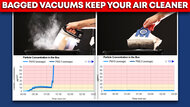
Air Quality During Emptying: Even a vacuum with a great filtration system can release a cloud of dust when you empty the bin or swap the bag. Look for a score of 8.0 or higher here. Bagged vacuums with self-sealing dirtbags tend to score best on this, since the bag itself contains the debris when removed.
-
Cleaning Performance: A good filtration system only helps if the vacuum can actually remove allergens from surfaces where they accumulate. Dust and pet dander that work deep into carpet fibers and upholstery can still act as irritants if your vacuum can't reach them.
-
Recurring Costs: Many of the best vacuum cleaners for allergies are bagged, so you'll need to weigh whether you want to deal with continually purchasing new bags.
For more buying recommendations, look at our lists of the best HEPA vacuums and the best cordless vacuums for pet hair, or for a more hands-off approach, consider our choices for the best robot vacuums for pet hair.