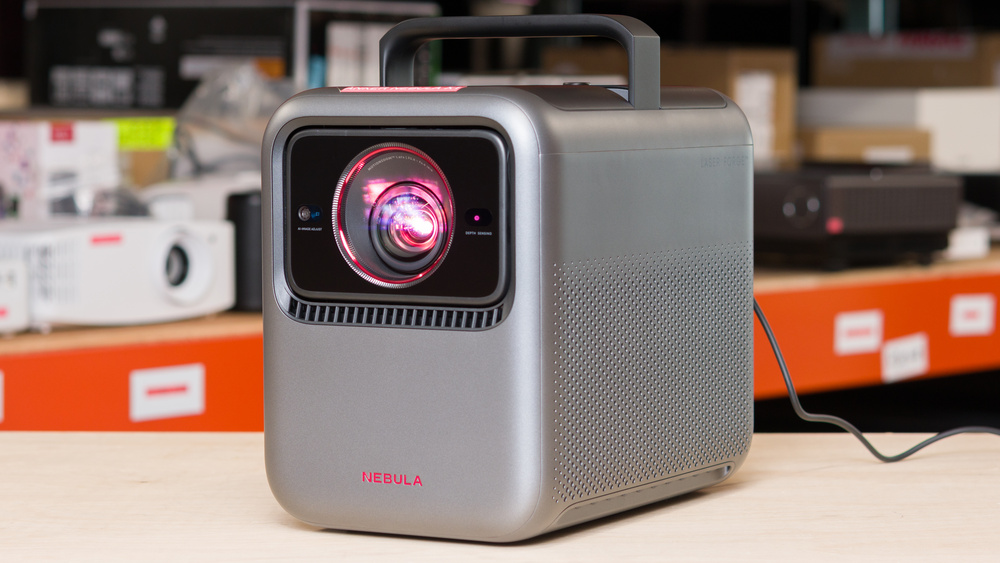
The Anker Nebula X1 is a portable home theater projector primarily marketed for outdoor use. It's a medium-sized projector with a retractable handle for easy portability. It can be purchased with an additional accessory pack containing a carrying case, a set of microphones for hosting duties or karaoke nights, and two extra wireless speakers, transforming the unit into a true 200W speaker setup. Without the extra speakers, the unit itself acts as a 40W speaker.
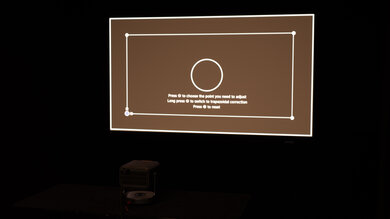
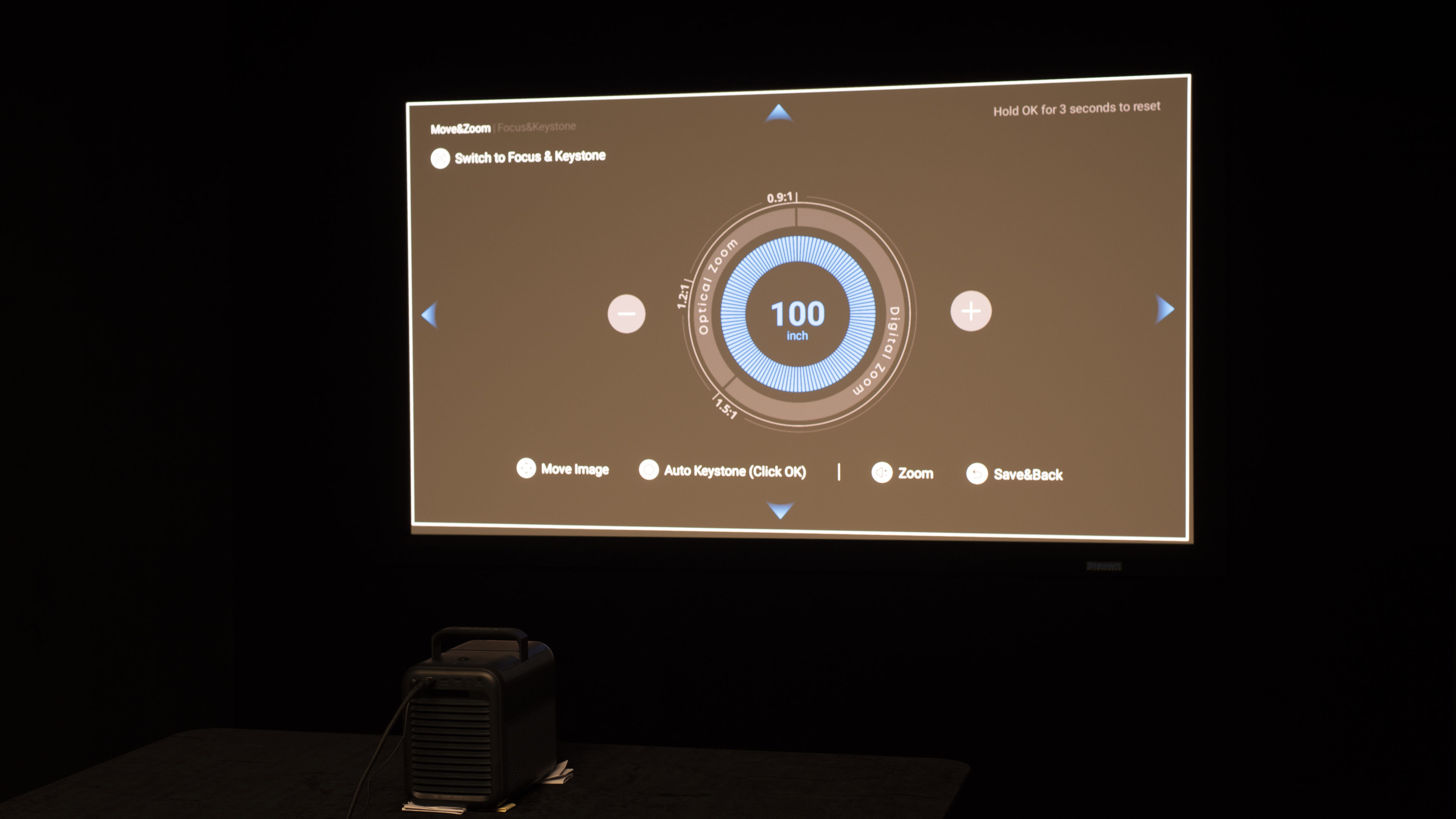
The unit has a full suite of image correction features, such as auto keystone and autofocus, alongside auto screen fit and an automatically tilting lens for easy positioning. The projector comes with Android OS 11, with official Netflix integration, and Dolby Vision support. It's capable of projecting an 80-inch image at a distance of 5.2 to 8.7 feet, up to a 300-inch image at 20 to 32.5 feet.
Our Verdict
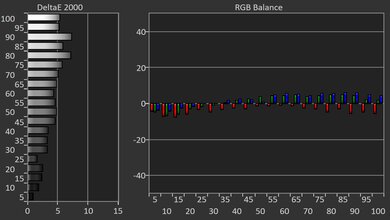
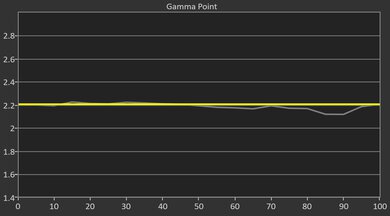
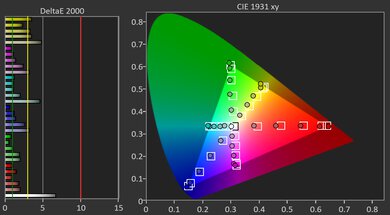
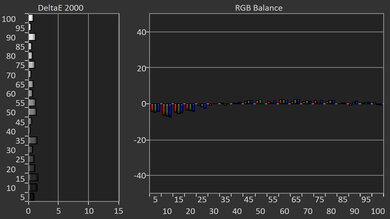
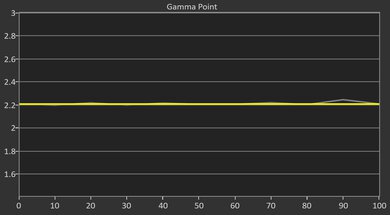
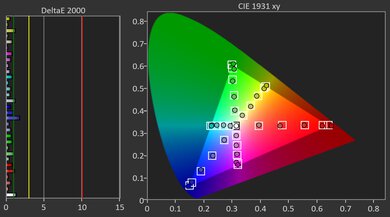
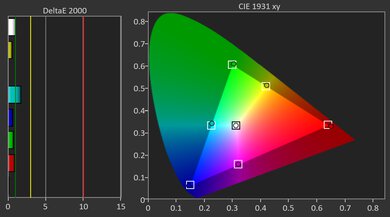
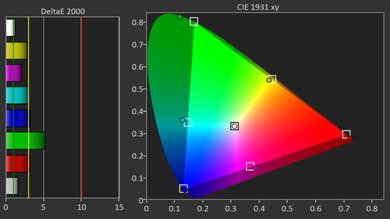
The Anker X1 projector is fantastic for watching movies. It's easily bright enough to be watched outside at night, even with some lights around. Its contrast is excellent, showing deep blacks in most scenes, although its near-blacks are a bit raised. It also has an extremely wide color gamut, even in HDR. The projector is also very accurate right out of the box, although our unit initially had strange visual artifacts, which disappeared after a settings reset. Ultimately, this is an extremely versatile projector that can serve as both a home theater unit and a high-quality portable model.
Easily bright enough for dim conditions.
Deep blacks in most content.
Very wide color gamut.
Fully featured projector, with official Netflix and Dolby Vision support.
A ton of image correction features, alongside a retractable handle, makes for easy portability.
Very easy to calibrate.
Unit initially had strange visual artifacts before a settings reset.
Blacks are a little raised in near-dark scenes.
The Anker X1 is a good choice for living-room and backyard gaming sessions. It has exemplary picture quality, as it's extremely bright and has excellent contrast in most scenes, although blacks are a bit raised in near-dark content. Plus, it's extremely colorful. Finally, it's very accurate out of the box, so you don't need to calibrate it. As for performance, it's capped at 60Hz, but Game Mode keeps controls fast enough for slower single-player titles. Competitive players will still prefer a true 120Hz projector, especially since the unit's input lag is too slow for titles like platformers or most shooters.
Easily bright enough for dim conditions.
Deep blacks in most content.
Very wide color gamut.
A ton of image correction features, alongside a retractable handle, makes for easy portability.
Has Dolby Vision.
Its input lag is just not quick enough for faster titles.
No 120Hz support.
Blacks are a little raised in near-dark scenes.
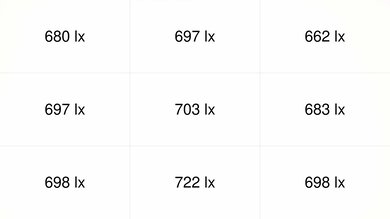
The Anker X1 is an extremely bright projector. It has no trouble lighting up a large 100" screen in a dark room, and it can even handle some ambient light without the image looking washed out. Brightness uniformity is fantastic, so the whole screen appears evenly lit. Additionally, since its color brightness is close to its white brightness, colors remain vivid instead of looking pale.
Very bright image, great for big screens.
Fantastic brightness uniformity with no obvious dim corners.
Color brightness closely matches white brightness, so colors stay vivid.
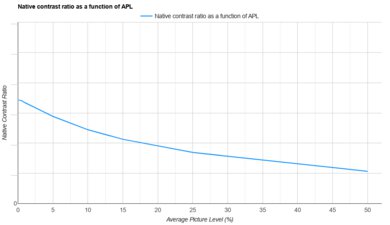
The Anker X1 has excellent contrast. In most mixed and brighter scenes, it keeps solid separation between darker areas and highlights, which helps movies and games look punchy. In the very darkest content with only small highlights, blacks can sit a bit higher, so the deepest near-black scenes won't look quite as rich as on the very best home-theater models, but it still delivers an impressive contrast performance overall.
Contrast stays solid in brighter scenes, so highlights still pop.
Blacks are a little raised in near-dark scenes.
Changelog
-
Updated Jan 14, 2026:
We updated the Native Contrast results after a recent adjustment to our testing. We also touched up the Our Verdict section and the Popular Projector Comparisons box.
-
Updated Jan 14, 2026:
We've modified the text in our Brightness and Native Contrast text boxes as a result of our latest test bench and added a Sequential Contrast test. We've also added Brightness and Contrast performance usages in the Verdict section.
- Updated Jan 14, 2026: We've converted the review to Test Bench 0.11, which renames our Contrast test to Native Contrast, and adds a Sequential Contrast test box. We also added new Brightness and Contrast performance usages in Our Verdict. See the 0.11 changelog.
-
Updated Oct 03, 2025:
We made some minor adjustments before our official TBU 0.10 launch.
Check Price
Differences Between Sizes And Variants
The Anker Nebula X1 projector is currently the only option in Anker's X Series. It can be bought stand-alone or alongside an accessory kit, which includes two microphones, a carrying case, and a set of wireless speakers that transform the projector into a full-blown sound system.
Our unit was manufactured in April 2025.
Popular Projector Comparisons
The Nebula X1 is a tremendous projector with a rather unique usage: a mid-size home theater-grade projector featuring an integrated handle, primarily marketed for use outdoors. Alongside its handle, the unit features a full suite of image correction tools, all designed to ensure easy portability. This means that it combines the strengths of some home theater products, like the Valerion VisionMaster Pro 2 or the Epson Home Cinema 3800, with portable products like the Samsung The Freestyle 2nd Gen or the XGIMI MoGo 2 Pro. Ultimately, the Anker is leagues above any other portable product, making it a compelling option for anyone seeking a high-quality portable projector.
For more, check out our recommendations for the best 4k projectors, the best projectors for home theater, and the best portable projectors. If you're really looking for a product to use outside, consider the best outdoor projectors as well.
The Anker Nebula X1 and Hisense C2 Ultra projectors perform very similarly, with the Anker having a very slight edge in image quality, and the Hisense being better for gamers. The Anker is a bit brighter, with slightly deeper contrast, and is a bit more accurate out of the box, but they're extremely close. They're equally portable, but they approach it differently: the Hisense has a gimbal stand that lets you fully adjust its viewing angle, while the Anker has an integrated handle and a motorized lens. For gaming, it's no contest: the Hisense has high-refresh-rate support and low input lag.
The Valerion VisionMaster Pro 2 and Anker Nebula X1 trade blows, but are meant for different usages. While the Anker is specifically marketed for its portability and outdoor use, with a retractable handle and a full suite of image correction features, the Valerion also comes with a carrying case, making it almost as portable. Still, the Anker offers more options, especially if you buy its accessory pack, which turns the unit into a full-blown sound system. Ultimately, what you're looking for will likely dictate your purchase: those looking for a pure home theater solution will lean toward Valerion, while those seeking a more versatile option will lean toward Anker.
The XGIMI MoGo 2 Pro is far cheaper than the Anker Nebula X1, but it's also significantly worse when it comes to image quality. This isn't a surprise considering the price difference and size difference; the Anker is a heftier, beefier product. It does have a retractable handle and a full suite of image correction features, making it rather easy to carry around regardless of its weight, but the XGIMI is so small that you can easily throw it into a backpack. Ultimately, if you're considering one, you're not likely to be considering the other. If you're looking for the cheapest possible portable projector, the XGIMI is up your alley, but if you're looking for a portable projector that can also double as a home theater option, go for the Anker.
The Anker Nebula X1 offers slightly better image quality than the Epson Home Cinema 3800, but the two are quite different. The Epson is a bare-bones home theater projector with no integrated smart OS and no Wi-Fi support, though it does have an older Bluetooth implementation. The Anker, however, is a fully featured modern projector with Google TV, native Netflix integration, and full wireless support. This makes the Anker a much more attractive proposition for anyone hoping to buy an all-in-one projector, while the Epson is more appealing to old-school home theater lovers who prefer to watch physical media on their unit rather than stream content over the internet. Furthermore, the Anker has a retractable handle and a full suite of image correction features, making it more portable, while the Epson is meant to stay put.
We've independently bought and tested over 75 projectors and published detailed results for each, so you can decide which one to buy. These have all been tested under the same standardized methodology, allowing you to compare them side by side. We still have all these projects in our lab, so we can continually go back and compare them to ensure our reviews are still accurate. All our test methodologies are also public on our website, so you can validate the results yourself.
Throw Calculator
Global Controls
Test Results
for pictures & test results
for pictures & test results
for pictures & test results