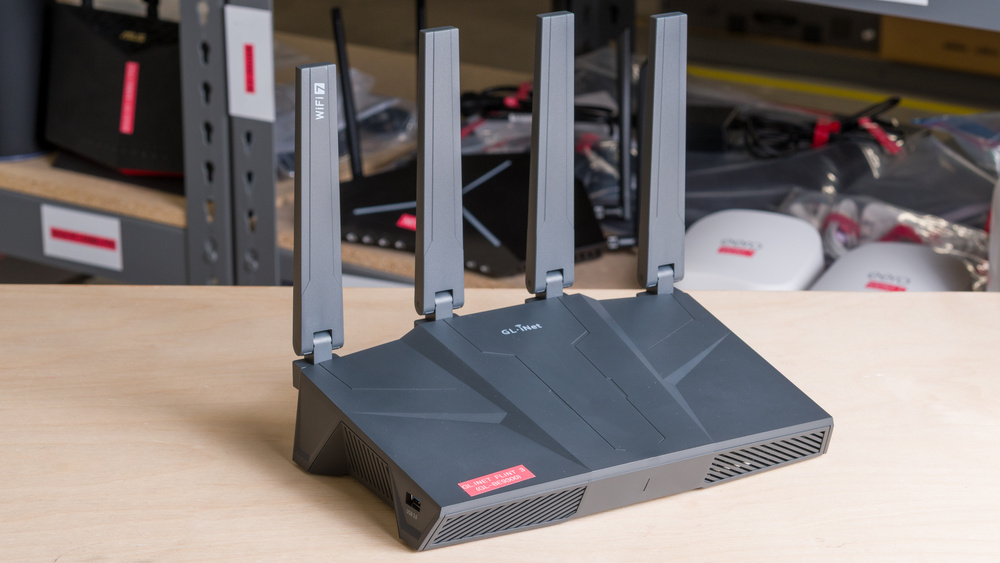
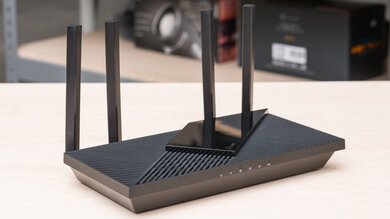
The GL.iNet Flint 3 (GL-BE9300) is a tri-band Wi-Fi 7 router that succeeds the Wi-Fi 6 Flint 2 (GL-MT6000). It has five 2.5Gbps Ethernet ports and a USB 3.0 port. Like other GL.iNet routers, it runs a version of OpenWRT, a highly configurable open-source firmware that's based on Linux. It supports a long laundry list of features, including dual-WAN with failover, cellular tethering, VPN connectivity with Tailscale, ZeroTier, OpenVPN, and WireGuard pre-installed so you can route your entire network through a VPN.
Note: We've removed the Wi-Fi coverage tests and are exploring better ways to convey the results that'll be more helpful to users.
Our Verdict
The GL.iNet Flint 3 is a great router for apartments or smaller homes. It offers excellent wired connectivity with five 2.5Gbps Ethernet ports and a USB 3.0 port, which you can use to connect external storage, or your mobile phone to use your cell network as a backup. Performance-wise, it delivers impressive speeds and good range that's suitable high-bandwidth activities like streaming HDR video on multiple devices. It supports dynamic frequency selection (DFS), so it can access less congested DFS-only channels to give you better speeds in noisy wireless environments. Additionally, it uses a version of OpenWRT, highly configurable firmware that allows for a much higher degree of customization than more mainstream consumer routers. Unfortunately, it's quite large and has a physical design that may not be to everyone's taste.
Great top speeds suitable for bandwidth intensive tasks.
Good range suitable for single or multi-level homes.
Highly configurable and flexible software with a long list of features.
Ample multi-gigabit Ethernet ports.
Large and unsightly.
The GL.iNet Flint 3 is a very good router for multi-level homes. It has good range and excellent speeds that are suitable for multiple users streaming 4k video, downloading large files, and other high-bandwidth tasks simultaneously. It has great wired connectivity too, with five 2.5Gbps Ethernet ports and a USB 3.0 port; the latter lets you connect a storage drive or a cellular adapter (like a mobile phone) to use your cell network for failover or load balancing. Its OpenWRT firmware has a long list of advanced features and configuration options that are considerably more extensive than typical consumer routers. Unfortunately, it's a rather large and bulky machine, so you may have a hard time finding a place for it in your living space.
Great top speeds suitable for bandwidth intensive tasks.
Good range suitable for single or multi-level homes.
Highly configurable and flexible software with a long list of features.
Ample multi-gigabit Ethernet ports.
Large and unsightly.
Standalone coverage can't be expanded with mesh access points.
The GL.iNet Flint 3 performs decently for gaming over Wi-Fi. It maintains excellent top speeds and strong enough coverage to keep large downloads fast throughout most living spaces. The Flint 3's reasonable latency levels track closely with those of similar routers on the market, though, as always, it's recommended to use one of its 2.5Gbps LAN ports for the best gaming performance.
Great top speeds suitable for bandwidth intensive tasks.
Good range suitable for single or multi-level homes.
Reasonable wireless latency for everyday use and casual gaming.
Not recommended for competitive gaming over Wi-Fi.
The GL.iNet Flint 3 delivers excellent wireless speeds that are suitable for an internet connection up to ~2Gbps. It supports Dynamic Frequency Selection (DFS), which provides access to more channels for better speeds in congested wireless environments like apartment buildings.
Great top speeds suitable for bandwidth intensive tasks.
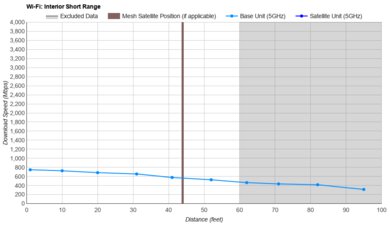
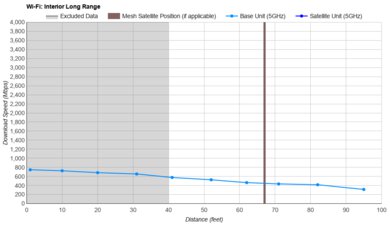
The GL.iNet Flint 3 has good range. While it doesn't have native mesh support, you can configure it as a repeater in the software.
Good range suitable for single or multi-level homes.
Standalone coverage can't be expanded with mesh access points.
The GL.iNet Flint 3 maintains fair latency performance overall. Its connection is stable enough for web browsing, video calls, and casual gaming, with compatible devices on the 6GHz band benefiting from lower jitter and more consistent throughput. As with all Wi-Fi routers, users seeking the lowest possible latency should prioritize a wired connection via one of the Flint 3's multi-gigabit LAN ports.
Reasonable wireless latency for everyday use and casual gaming.
Not recommended for competitive gaming over Wi-Fi.
Changelog
-
Updated May 27, 2026:
We've updated this review with additional text to help contextualize our latest Gaming and Latency usage scores from Test Bench 0.9.
- Updated Apr 22, 2026: We've updated this review to Test Bench 0.9! This update adds wireless latency testing to evaluate router gaming performance. Read the changelog for more info.
-
Updated Mar 30, 2026:
We've added a link to the newly reviewed ASUS ROG Strix GS-BE18000 in the Wi-Fi Specifications section of this review.
-
Updated Jan 20, 2026:
We've added a link to the ASUS RT-BE92U in the Network Ports section of the review, and we've also added a link to the GL.iNet Flint 2 (GL-MT6000) in the Popular Router Comparisons section.
Check Price
Differences Between Sizes And Variants
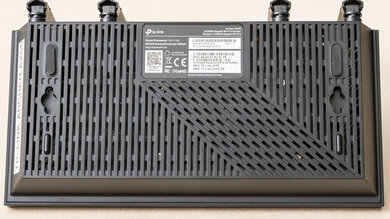
This router doesn't have any variants. See a photo of our unit's label.
Popular Router Comparisons
The GL.iNet Flint 3 is a tri-band Wi-Fi 7 router with 2.4GHz, 5GHz, and 6GHz bands, and it's the successor to the Wi-Fi 6 GL.iNet Flint 2 (GL-MT6000). It features five 2.5Gbps Ethernet ports and a USB 3.0 port. Like its predecessor and other GL.iNet routers, it uses a version of OpenWRT, an open-source, Linux-based firmware that allows for a high degree of configurability out of the box. Some of its extra features include pre-installed VPN protocols like Tailscale and WireGuard, an adblocker, failover, and load balancing with dual WAN and cellular support, and support for a vast array of plug-ins.
This router delivers excellent speeds and has good range. It performs virtually the same as the TP-Link Archer BE550, another entry-level/lower mid-range Wi-Fi 7 router, making it a great value option if you're looking for a highly configurable router with the latest Wi-Fi certification. That said, it lags behind dedicated mesh systems like the TP-Link Deco 7 Pro BE63 and the ASUS ZenWiFi BT10 in the range department.
For more recommendations, check out the best long-range Wi-Fi routers, the best Wi-Fi routers, or the best routers for streaming.
The GL.iNet Flint 2 (GL-MT6000) is the predecessor to the GL.iNet Flint 3 (GL-BE9300). The former is a dual-band Wi-Fi 6 router while the latter is a tri-band Wi-Fi 7 router. The Flint 3 delivers faster top speeds thanks to its speedy 6GHz band, while the Flint 2 actually delivers better long-range performance on the 5GHz band.
The GL-iNet Flint 3 (GL-BE9300) and the TP-Link Archer BE550 are entry-level/lower mid-range tri-band Wi-Fi 7 routers. They deliver very similar performance with excellent top speeds and good range. The GL.iNet has a much more robust and configurable featureset thanks to its OpenWRT firmware, but the TP-Link is compatible with EasyMesh routers and range extenders, helpful if you want to expand your wireless network.
The UniFi Dream Router 7 and the GL.iNet Flint 3 (GL-BE9300) are tri-band Wi-Fi 7 routers. They deliver similar wireless performance with excellent top speeds and good range. Both routers have excellent wired connectivity, albeit with slightly different usages in mind. The GL.iNet's five 2.5Gbps ports make it better suited for home users with lots of traditional Ethernet devices. On the other hand, the UniFi has four 2.5Gbps ports and one 10Gbps SFP+ port, making it better suited as a solution for small businesses or homes with a 10Gbps internet connection. Both routers are highly configurable, but take different approaches. The GL.iNet runs OpenWRT, an open-source, Linux-based firmware, while the UniFi can run the company's full suite of proprietary applications.
The GL.iNet Flint 3 (GL-BE9300) and the GL.iNet Beryl AX (GL-MT3000) are routers from the same manufacturer. The Flint 3 is a full-sized, tri-band Wi-Fi 7 home router, while the Beryl AX is a dual-band, Wi-Fi 6 travel router. The latter is considerably smaller and has low-profile folding antennae, so it's easy to travel with, but it only has two Ethernet ports. Conversely, the Flint 3 has five 2.5Gbps Ethernet ports, so it's better suited if you have a lot of wired devices. Performance-wise, the Flint 3 delivers considerably better speeds and range, thanks in part to its 6GHz band. The little Beryl AX still performs admirably, with good top speeds and decent range that's suitable for smaller homes.
Test Results
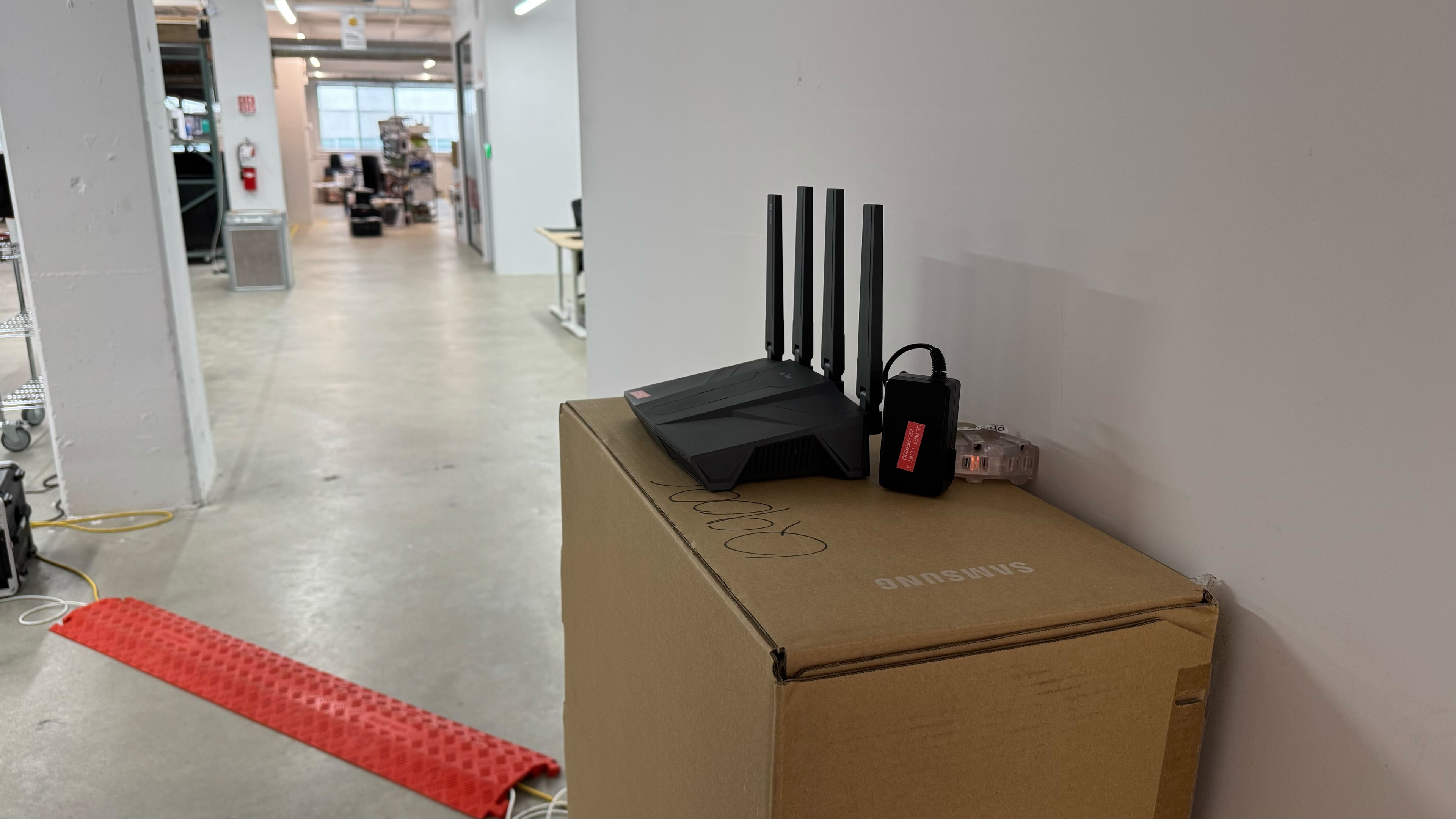

for pictures & test results
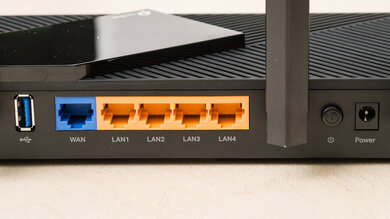
This router supports multi-WAN, meaning you can configure a second WAN port as a failover when the primary WAN connection goes down or to balance the load between the two WAN connections.
If you're looking for a router with a faster, 10Gbps WAN port, check out the ASUS RT-BE92U.
This router's USB port is on the front left side.
for pictures & test results
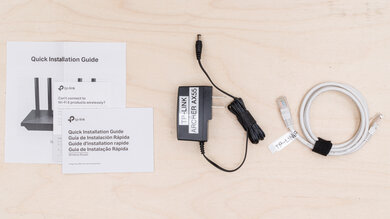
- Ethernet cable
- Power adapter
- User documentation


for pictures & test results
for pictures & test results
If you're looking for a router with similar performance and mesh extendability, check out the ASUS TUF Gaming BE9400.
for pictures & test results
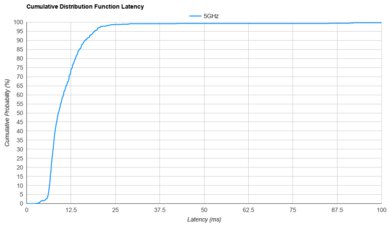
The GL.iNet Flint 3 maintains fair latency performance, generally in line with other routers on the market. Its connection is stable enough for web browsing, video calls, and casual gaming. As with all Wi-Fi routers, users seeking the lowest possible latency should prioritize a wired Ethernet connection.
To take advantage of Wi-Fi 7's theoretically higher throughput and features like MLO, you need Wi-Fi 7-compatible client devices.
If you're interested in a Wi-Fi 7 router with Automated Frequency Coordination (AFC), check out the ASUS ROG Strix GS-BE18000.
for pictures & test results
This router uses alternating multi-link operation (MLO), which is a limited implementation of the technology that establishes a connection with clients on one band at a time. For more information, read our article on the topic.