
Canister vacuums tend to get overlooked, but their performance and versatility make them worth considering. The best canister vacuums feature effective filtration to keep fine dust out of your air, are maneuverable enough to follow you from room to room, and come with a variety of attachments that allow them to suit many different surface types.
We've tested over 110 vacuums, and below are our recommendations for the best canister vacuums you can buy. Our recommendations are based on lab test results for cleaning performance, air quality, and portability. Here's a quick rundown of what to keep in mind as you shop:
- Air Quality: Look for a Particle Filtration score of 8.0 or better for effective dust and allergen control during cleaning. If anyone in your home has allergies, also check the Air Quality During Emptying score.
- Weight: Most canister models fall between 10 and 20 lbs, with a lot of that variance coming down to the type of floorhead they're fitted with. Lighter models are easier to carry upstairs and maneuver in tighter spaces.
- Range: The overwhelming majority of canister models are corded. Look for a cord longer than 30 ft to avoid switching outlets mid-clean in larger rooms.
- Bagged vs. Bagless: Bagged models tend to make for an easier, more hygienic debris disposal process. Bagless models incur lower costs of ownership, since you won't need to replace any disposable dirtbags.
For a deeper explanation of each factor, see our buyer's guide below to help you find the best canister vacuum for you. For more recommendations, see our lists of the best vacuums, the best laminate floor vacuums, the best corded vacuums, and the best multi-surface vacuum cleaners.
-
Best Canister Vacuum Cleaner
 House8.9Small Apartment8.2Air Quality7.7Hard Floor Pickup8.0High-Pile Carpet Pickup6.0Low-Pile Carpet Pickup6.5Pet Hair Pickup9.5See all our test resultsManeuverability7.5
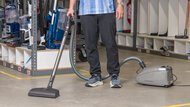
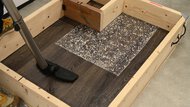
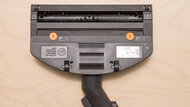
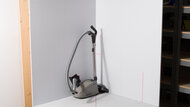
The SEBO Airbelt D4 is the best canister vacuum we've tested, thanks to its high performance, remarkably effective filtration system, and sturdy, easy-to-maintain design. Its powerful 1250W motor easily lifts heavy debris from cracks and pulls embedded material out of carpet fibers. The Premium model comes with two floorheads: a parquet tool with removable front bristles that let it pass over larger debris so it doesn't plow them around, and a powerhead with four levels of height adjustment for different lengths of carpet. This vacuum also feels incredibly well built, with a thick, high-grade plastic body and a heavy, stainless-steel telescopic wand. Its S-Class filtration does a good job trapping fine particles while you clean, and the sealed dirtbag design keeps dust contained when you empty it.
That heavy-duty construction does come at a cost, though. It's a bulky, heavy vacuum, and the stiff hose can make it harder to maneuver in tight spots. On the upside, recurring costs are low thanks to its high-capacity dirtbags and long-lasting filters. One thing to note is that it's usually only available from specialized vacuum retailers or direct from SEBO's website.
-
Best Upper Mid-Range Canister Vacuum
House8.9Small Apartment8.7Air Quality9.8Hard Floor Pickup5.0High-Pile Carpet Pickup7.0Low-Pile Carpet Pickup7.0Pet Hair Pickup9.5See all our test resultsManeuverability7.5The Miele Guard S1 Electro is a great choice if you're looking for a model that keeps the air in your home clean as you vacuum. Its HEPA-rated multi-stage filtration system is among the most effective of any vacuum we've tested, exceeding the performance of the SEBO's S-Class filtration system. Additionally, when you change the bag, you won't reintroduce dirt into the air thanks to their integrated spring-loaded flaps that snap shut when the bag is removed. As far as the vacuum itself, it's considerably lighter and more portable than the SEBO, which makes a real difference when you're carrying it between floors. Its Electrobrush powerhead picks up pet hair effectively, and the Parquet Twister floorhead seals tightly against the floor to pull debris from cracks.
Cleaning performance is where the Miele falls short of our top pick. The straight-suction floorhead tends to push larger debris around on hard floors rather than picking it up, and while the Electrobrush fares better on those surfaces, there's a risk of it scratching your floors. Carpet pickup is decent but doesn't match the SEBO's powered floorhead, particularly on shaggy rugs. Dirtbags are also smaller, so you'll replace them more often, and the shorter power cord limits your reach in bigger rooms.
-
Best Mid-Range Canister Vacuum
House7.9Small Apartment7.6Air Quality8.5Hard Floor Pickup5.0High-Pile Carpet Pickup4.0Low-Pile Carpet Pickup5.0Pet Hair Pickup4.0See all our test resultsManeuverability8.0For a more affordable option from the brand, consider the Miele Classic C1 Pure Suction PowerLine, the brand's last-generation entry-level model in the C1 lineup. It's equipped with a powerful 1200W motor, which has no problem picking up finer debris. You can also retract or extend the vacuum head's bristles for better contact with carpets or to avoid scratching hardwood floors. It maneuvers effortlessly around furniture and weighs noticeably less than the SEBO Airbelt D4 or the Miele Guard S1 Electro, so you won't feel fatigued during longer cleaning sessions. This model comes with the entry-level AirClean filter, which does a pretty good job of capturing allergens. However, you can always swap in a HEPA AirClean or Active AirClean filter for even better air filtration performance.
The downside is that it doesn't have a powered brushroll, so it doesn't perform well on carpets. Larger debris on hard floors can also get pushed ahead of the floorhead rather than picked up, which is something the SEBO's parquet tool handles much better. That said, there are several variants to choose from. If you have more to spend, you might be interested in the Miele Classic C1 Cat & Dog PowerLine. Unlike the Pure Suction Powerline, its hose features an electrosocket, allowing it to use a powered floorhead, which is a must-have feature for homes with thicker carpeting. The parquet tool included with this model is also lighter than the Pure Suction Powerline's SBD 365-3 floorhead, and the Cat & Dog also comes with the Mini Turbo Brush, which is handy for upholstery.
-
Best Cheap Canister Vacuum
House7.6Small Apartment6.5Air Quality4.9Hard Floor Pickup7.0High-Pile Carpet Pickup7.0Low-Pile Carpet Pickup6.5Pet Hair Pickup4.0See all our test resultsManeuverability7.5The best budget-friendly canister vacuum we've tested is the Eureka Mighty Mite. Given its low price point, it's no surprise it isn't as well-built, quiet, or packed with convenience features as a model like the Miele Classic C1. That said, its 12-amp motor puts out a good amount of power for something this cheap, allowing it to easily clear away solid debris on bare floors. You can retract the bristles on its straight suction floorhead to improve contact on low- and medium-pile carpets. Its compact, lightweight design also makes it a breeze to maneuver in tight spots or to pick up and carry around your home.
Unfortunately, this vacuum feels pretty cheap in places, especially its wand, which is made of a pair of plastic tubes that can fall apart if you don't force them together tightly enough. You also can't expect class-leading filtration performance from this vacuum, as some newer Mighty Mite models lack the requisite mounting clips to use aftermarket HEPA filters. The Eureka Whirlwind Bagless Canister is a good option if you want to avoid the expense of replacing filters and dirtbags completely; however, it has an even shorter overall range, so you must swap outlets when cleaning bigger rooms.






Notable Mentions
-
Miele Guard M1 Cat & Dog:
The Miele Guard M1 Cat & Dog is more portable than the Miele Guard S1 Electro, but it uses an air-powered turbo brush, which doesn't perform as well as the S1's electric-powered brushroll on carpets.
See our review -
SEBO Airbelt K3 Premium:
The SEBO AIRBELT K3 Premium offers better performance than the Miele Guard S1 Electro on hard floors and is more maneuverable. But if you have allergies, the Miele offers much better air quality when you use it and empty it.
See our review - BISSELL Zing Bagged Canister: The BISSELL Zing Bagged Canister is a basic, budget-friendly canister vacuum that's easy to use and maintain. It's effective at clearing small debris on carpeted floors but struggles with pet hair and bulky debris compared to the Eureka Mighty Mite. See our review
Recent Updates
Jun 10, 2026:
We've added a buyer's guide to this article to help you identify the main things to watch out for when shopping for a new canister vacuum. We've also ensured all main picks are still available.
Mar 17, 2026:
We added the Miele Guard S1 Electro as our upper mid-range pick and removed the Miele Complete C3 Cat & Dog as a Notable Mention because it's no longer readily available. We added the SEBO AIRBELT K3 Premium and Miele Guard M1 Cat & Dog as Notable Mentions. We also removed the Dyson Cinetic Big Ball Animal.
Nov 11, 2025:
We removed the 'Best Upper Mid-Range' pick and instead mentioned the Miele Classic C1 Cat & Dog PowerLine variant in the 'Best Mid-Range Canister Vacuum' box. We also made small changes for clarity.
Apr 29, 2025:
Due to availability, we changed the Miele C3 Alize for the SEBO D4 Premium as our top pick and removed the Airsign HEPA Vacuum as a Notable Mention. We also made some minor text changes.
Jan 10, 2025:
We've verified our recommendations are available and represent the best choices. We also made small edits for clarity.
What To Consider When Choosing A Canister Vacuum
A few factors determine which model is the best canister vacuum for you. Here are some things to keep in mind as you shop:
Floorheads and Attachments
One of the greatest strengths of canister vacuums is their modularity, as they can accept a wide variety of different floorheads to tackle different surface types. Here's a quick rundown on some of the most common varieties:
- Straight-suction floorheads (sometimes called parquet tools) are meant for cleaning bare surfaces like hardwood, tile, and vinyl.
- Look for floorheads with removable front bristle strips, which allow them to pass over bulky debris without 'snowplowing' it forward and forcing you to lift the head upwards.
- Their simple design makes them fairly easy to clean compared to floorheads with roller brushes.
- Air-driven (often marketed as 'Turbo' brushes) are generally simpler, lighter, and cheaper, but can also jam on thicker carpets, and are mainly suited for dealing with debris on low to medium-pile rugs and carpets, and can scatter messes on hard surfaces.
- Motorized powerheads are heavier and more complex, but generally provide superior performance on thicker carpets, with less of a chance for thicker rugs to stop the roller's rotation. That said, they're also bulky and can scratch delicate hard surfaces.
- Pricier motorized heads also tend to offer a greater array of features, including height adjustment, making it easier to maneuver on surfaces like shag-pile rugs, as well as automatic brushroll cutoff functions, which prevent overheating or damage in the event that pet hair, carpet fibers, or some other obstruction completely jams the roller mechanism.
Many canister models also come bundled with a set of smaller attachments for cleaning furniture, shelving, or any other hard-to-reach areas:
- Motorized mini brush: For upholstery, pet beds, and stair treads.
- Crevice tool: For corners, baseboards, and the gaps between cushions.
- Dusting brush: For shelves, vents, and delicate surfaces.
Weight and Maneuverability
Canister vacuums, especially higher-end models bundled with a powerhead, are typically heavy. While their weight isn't typically felt when pulling the canister along, it can be an impediment in multi-story homes where you might have to carry them up and down stairs.
- Under 10 lbs is exceedingly lightweight for a canister model, and typically means that the canister body and wand are made of lightweight plastic.
- 10 to 15 lbs is the typical weight for a mid-range canister model with an aluminum or high-grade plastic wand, with a lightweight parquet tool or air-driven turbo brush
- 15 to 20 lbs is generally the weight of mid-range models with more premium stainless steel wands, or those that are equipped with motorized turbo tools.
- Over 20 lbs is very heavy, with this weight class typically being occupied by high-end models with sturdy bodies, steel wands, and bulky motorized floorheads.
You'll also want to consider the number of wheels a vacuum body has, with most models on the market having either three or four. Three-wheeled designs are typically found on cheaper models and can tip slightly when making sharp turns, while four-wheeled units provide a more stable platform.
Range
The overwhelming majority of vacuums are corded, so their cleaning range is determined by the length of their power cord. A longer cord means you'll have to switch outlets less often, which matters more the larger your home is.
- Under 30 ft is short.
- 30 to 35 ft is typical.
- Over 35 ft is long.
Bagged vs. Bagless
Whether a vacuum is bagged or bagless has a major impact on how it impacts your home's air quality when you empty it.
- Bagged vacuums collect dust inside a sealed bag that you swap out when it's full. They score much higher on our Air Quality During Emptying test than bagless vacuums, and models with self-sealing dirtbags do even better. The trade-off is that you need to keep buying replacement bags.
- Bagless vacuums collect dust in a reusable bin you empty into the trash. While this means that you don't have to worry about replacing bags, emptying the bin releases a cloud of fine dust, even on models with otherwise excellent filtration. If anyone in your home has allergies, it's best to empty the bin outdoors.
For a more in-depth comparison, read our article on bagged vs. bagless air quality.
All Reviews
Our recommendations are based on what we think are currently the best vacuums with a canister design. We don't just base our results on overall performance but also on factors like availability, price, and reader feedback.
If you'd like to do the work of choosing yourself, here's the list of our canister vacuum reviews. Be careful not to get too caught up in the details. While there's no single best canister vacuum, most are good enough to please almost everyone, and the differences are often not noticeable unless you really look for them.