Novaform ComfortGrande Plus  Mattress Review

Reviewed Aug 12, 2025 at 01:22pm
Writing modified Dec 02, 2025 at 01:46pm
Tested using Methodology v1.1 
Novaform ComfortGrande Plus
6.9
Side Sleeping 
7.2
Back Sleeping 
7.3
Stomach Sleeping 
6.9
Longevity 
6.9
Pressure Relief 
7.3
Support 
7.7
Cooling 
9.2
Motion Dissipation 
 0

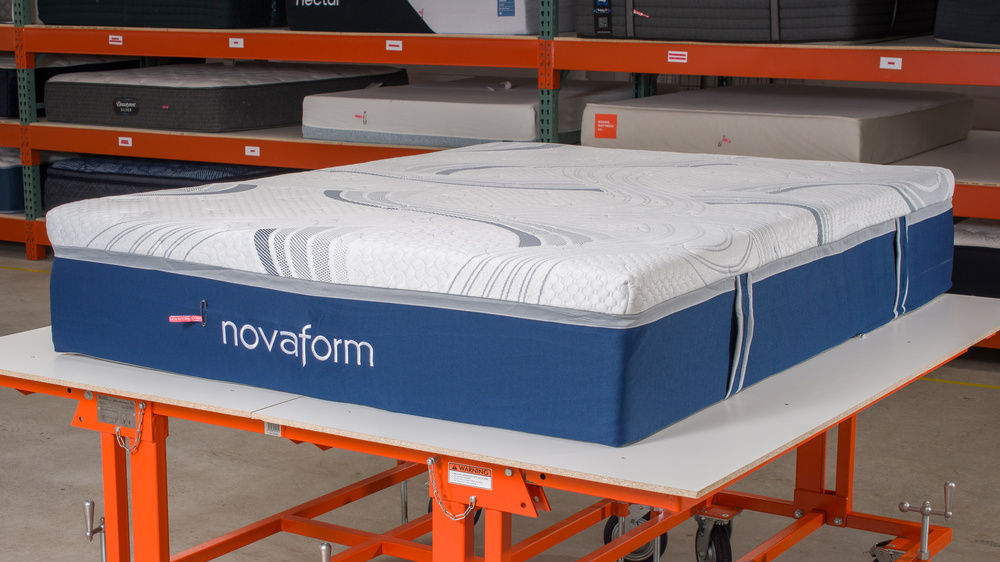
The Novaform ComfortGrande Plus is a budget-friendly mattress available at Costco (U.S.). This all-foam mattress utilizes polyfoam for its support and transition layers, complemented by a memory foam upper comfort layer. The upper comfort layer is made of 'EVENcor GelPLUS memory foam', which is marketed as being more cooling.

Our Verdict

6.9
Side Sleeping 

The Novaform ComfortGrande Plus is a 'Medium-Firm' mattress best-suited for heavier side sleepers. It offers great body conformity for people in that weight category, so your shoulder will sink in enough to relieve pressure. It's also decently supportive. It's not a bad option for average side sleepers either, as it offers satisfactory body conformity. However, it's not suitable for lighter side sleepers, who won't compress it enough for comfortable side sleeping.

Pros
  • Plush upper layers help with pressure relief.

  • Decent body conformity for average people.

  • Great body conformity for heavier people.

Cons
  • Poor body conformity for lighter people.

7.2
Back Sleeping 

The Novaform ComfortGrande Plus is a decent option for average and heavier back sleepers. It offers satisfactory support for people in those weight categories, so when you're sleeping on your back, your hips stay mostly in line with the rest of your body. It also offers good support for lighter individuals, making it suitable for lighter back sleepers. However, you may want something with better pressure relief if you're a lighter person.

Pros
  • Good support for lighter people.

  • Decent support for average and heavier people.

Cons
None
7.3
Stomach Sleeping 

The Novaform ComfortGrande Plus is a decent choice for most stomach sleepers. It has good support for lighter people, which helps keep your spine aligned when sleeping on your stomach. It also offers decent support for people in the average and heavier weight categories, so your hips won't sink in very far compared to the rest of your body. That said, while it's a reasonable option, you might ideally want a more supportive mattress for stomach sleeping.

Pros
  • Good support for lighter people.

  • Decent support for average and heavier people.

Cons
None
6.9
Longevity 

The Novaform ComfortGrande Plus is a moderately durable mattress. The transition layer is made of high-quality polyfoam, which helps prevent sagging for longer compared to good-quality and low-quality foams. The other layers, including the memory foam upper comfort layer and polyfoam support layer, are just dense enough to be considered of good quality.

Pros
  • Uses only good-quality foams.

Cons
None
6.9
Pressure Relief 

The Novaform ComfortGrande Plus provides good pressure relief for individuals who weigh more. If you're in the heavier weight category, you'll compress it enough for comfortable side sleeping. It also offers decent body conformity for average people. However, it offers significantly worse pressure relief for lighter individuals, making it unsuitable for lighter side sleepers. Additionally, its upper comfort layers don't contour closely around your body, resulting in a less hugging feel. That said, your whole body will sink slightly into the upper layers, which helps relieve pressure, especially in lighter areas like your knees.

Pros
  • Plush upper layers help with pressure relief.

  • Decent body conformity for average people.

  • Great body conformity for heavier people.

Cons
  • Poor body conformity for lighter people.

7.3
Support 

The Novaform ComfortGrande Plus offers good support for lighter people. The heavier parts of your body won't sink in very far compared to the rest of your body, making it well-suited for back and stomach sleeping. It also offers decent support for people in the average weight category and above. While some firm mattresses offer better support, this one will still help keep your spine mostly aligned when you sleep on your back or stomach.

Pros
  • Good support for lighter people.

  • Decent support for average and heavier people.

Cons
None
7.7
Cooling 

The Novaform ComfortGrande Plus has good cooling. It doesn't feel warm when you first get in bed, and dissipates heat well all night. While it's not quite cooling enough for habitually hot sleepers, it won't make most people feel overheated.

Pros
  • Will keep most sleepers cool.

Cons
None
9.2
Motion Dissipation 

The Novaform ComfortGrande Plus boasts excellent motion dissipation performance, making it a suitable option for light sleepers and those sharing a bed with a partner. Its all-foam design absorbs motion, and you'll only feel bigger movements near the source. Motion dissipates quickly, so you'll feel the initial shock but not like you bounce around whenever someone moves.

Pros
  • Fantastic motion dissipation, so movements aren't likely to wake you.

Cons
None
6.4
Responsiveness 

The Novaform ComfortGrande Plus has adequate responsiveness. This mattress features a memory foam upper comfort layer that slowly recovers its shape after compression. This helps create a hugging feeling, but can also make you feel stuck in place, especially because it's not very bouncy either.

Pros
None
Cons
  • Slow responsiveness creates a sluggish feel.

  • 6.9
    Side Sleeping
  • 7.2
    Back Sleeping
  • 7.3
    Stomach Sleeping

  • Performance Usages

  • 6.9
    Longevity
  • 6.9
    Pressure Relief
  • 7.3
    Support
  • 7.7
    Cooling
  • 9.2
    Motion Dissipation
  • 6.4
    Responsiveness
  • Changelog

    1.  Updated Dec 12, 2025: 

      We rewrote portions of the review to align with Test Bench 1.1, including adding text to the new test boxes and for the newly added verdicts. We also modified some of the side-by-side comparisons.

    2.  Updated Dec 12, 2025: We converted this review to Test Bench 1.1. We've added new tests, including Body Conformity, Support, and Comfort Layers Envelopment, and also added scoring to the Bounciness test. Our usage scores have also changed, with new usages 'Side Sleeping,' 'Back Sleeping,' and 'Stomach Sleeping' replacing the 'Sleeping' verdict. We've also added 'Pressure Relief' and 'Support' performance usages. You can find more details in the full changelog.
    3.  Updated Oct 31, 2025: 

      Compared its responsiveness performance to the Puffy Royal's.

    4.  Updated Oct 23, 2025: 

      Compared its cooling performance to the Novaform Legacy's.

    Check Price

    QueenComfortGrande Plus
    Amazon.com
    QueenComfortGrande Plus
    Walmart.com
    QueenComfortGrande Plus
    BestBuy.com
    QueenComfortGrande Plus
    Novaform

    Differences Between Sizes And Variants

    The Novaform ComfortGrande Plus comes in Twin, Full, Queen, King, and California King sizes. We tested the 'Queen' variant, and you can see a picture of our unit's label here. Our results are only valid for that variant.

    This mattress has been discontinued and replaced with the Novaform ComfortGrande Advanced, which uses a different type of memory foam ('EVENcor GelMAX') and may perform differently.

    If you have experience with the Novaform ComfortGrande Plus or another variant, we invite you to share your experience in the comments.

    Popular Mattress Comparisons

    The Novaform ComfortGrande Plus is a medium-firm mattress with a medium-firm feel. Compared to similar mattresses in the same price range, such as the Nectar Classic and Zinus Original Green Tea, it offers better cooling and motion isolation. All of its foam layers are made from good-quality foam, which sets it apart from other budget-friendly mattresses. However, if you like the feel of memory foam but want a livelier mattress that allows for easier movement, you might prefer a hybrid mattress with memory foam, such as the Nectar Classic Hybrid.

    If you're looking for a recommendation, check out the best mattresses.

    Novaform Serafina Pearl

    The Novaform ComfortGrande Plus is generally superior to the Novaform Serafina Pearl for most individuals. The ComfortGrande offers improved motion dissipation and edge support, with comparable cooling performance. That said, the Serafina has a more responsive feel, making it easier to move around in your sleep.

    Tempur-Pedic TEMPUR-Adapt

    You may prefer either the Tempur-Pedic TEMPUR-Adapt or the Novaform ComfortGrande Plus. The Novaform is a firmer mattress that uses better-quality foam, making it more durable. The Tempur-Pedic is a similar all-foam mattress, but it has a less responsive feel, which can make you feel stuck in place. It's also more contouring, and you might prefer it if you want a mattress that feels like a hug.

    Sealy Posturepedic Plus Mount Auburn

    The Novaform ComfortGrande Plus and the Sealy Posturepedic Plus Mount Auburn have different strengths. They're both medium-firm and have somewhat low responsiveness, which creates a slow-moving feel. The Novaform is an all-foam mattress with very little bounce, making it more difficult to move around on, but it offers fantastic motion isolation, which may make it a preferred choice for light sleepers. The Sealy is bouncier, allowing you to change sleeping positions more easily, and it offers significantly better edge support, which is ideal if you want to maximize the comfortable sleeping surface or need solid sides to facilitate getting in and out of bed.

    Purple Mattress

    You might prefer either the Purple Mattress or the Novaform ComfortGrande Plus. Both are medium-firm and best suited for light and average back and stomach sleepers. The Novaform uses memory foam, so it contours but moves slowly. It offers better motion isolation, making it much better for sleeping with a partner. The Purple is very responsive, so you never feel stuck in place. It stands out for its fantastic cooling and is a much better option for hot sleepers.

    Show more 
    Lifting the Covers On Mattress Performance
    Lifting the Covers On Mattress Performance

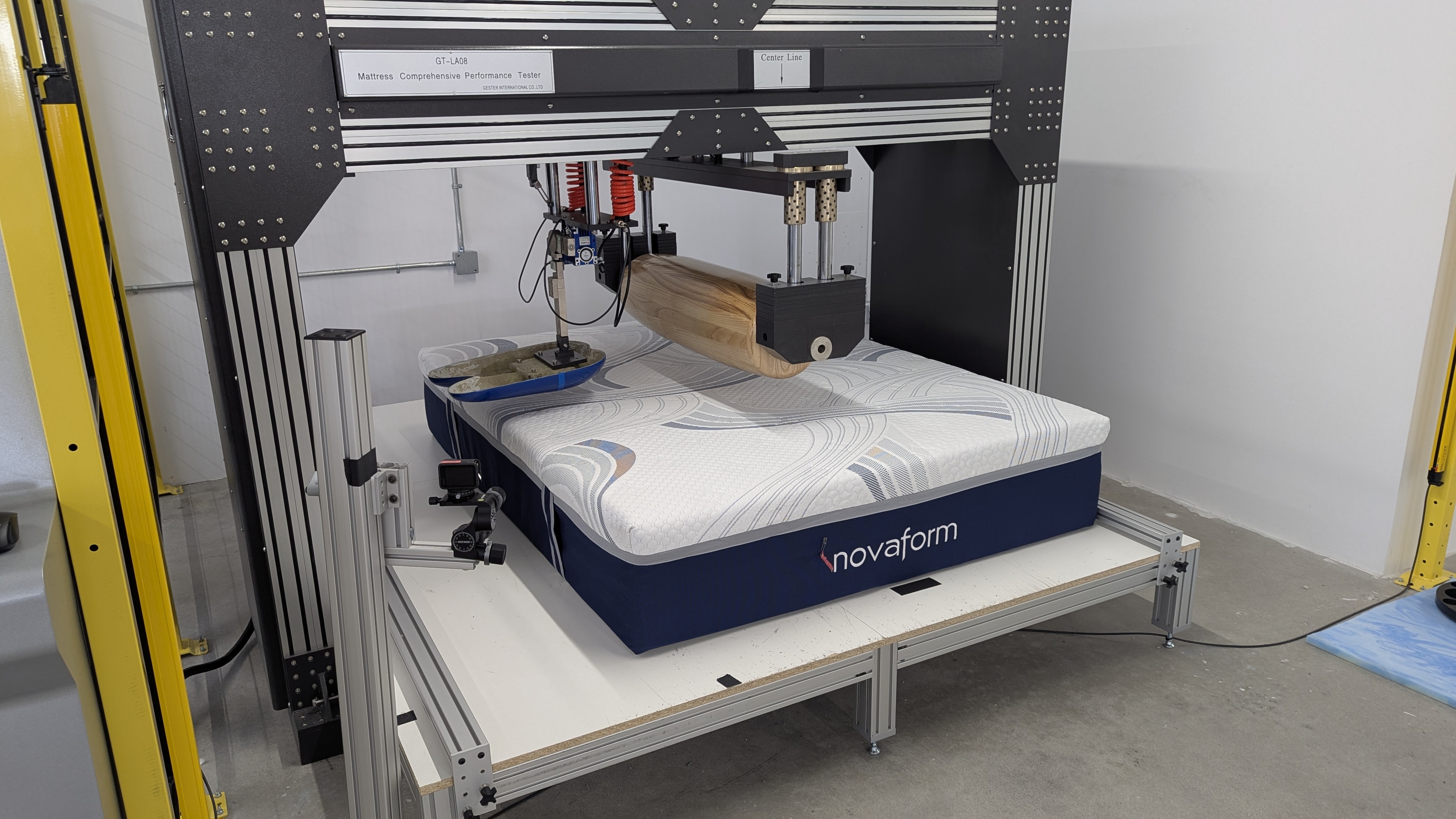
    We've recently started testing mattresses. We use objective data and repeatable testing for key characteristics like firmness, cooling, and motion isolation, to ensure each mattress gets the same treatment. Since we buy all of our mattresses, we can tear them down layer by layer and isolate the mechanical properties of every component: quilted tops, foams, coils, and any special materials. Our approach gives us unprecedented insight into how each product design decision contributes to a mattress's overall performance and feel, and allows us to tailor our results to different body types and sleeping positions.

    Test Results

    perceptual testing image
    Sort:
    RATINGS
    Category:
    All
    Design
    Style
    Mattress Type
    Foam
    Bed-In-A-Box
    Yes
    Quilted Top Layer
    No
    Grab Handles
    Yes
    Thickness34.9 cm (13.7")

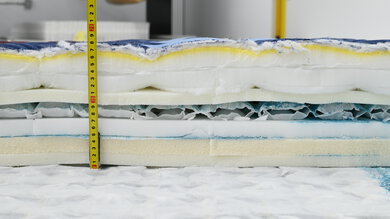
    This is a 14-inch (35.6 cm) mattress, although ours measured a little less, at 13.7 inches (34.9 cm). You may need to use deep-pocket fitted sheets.

    Performance
    Firmness
    See details on graph tool
    See details on graph tool
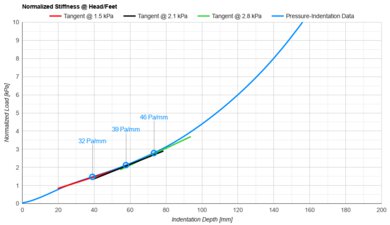
    Normalized Stiffness @ Head/Feet
    52 Pa/mm
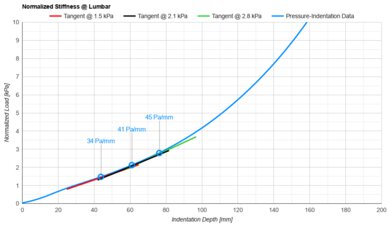
    Normalized Stiffness @ Lumbar
    52 Pa/mm
    Firmness Level
    Medium-Firm (52 Pa/mm)

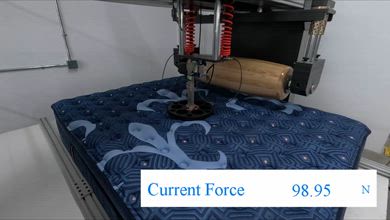
    It's a medium-firm mattress, so it's best-suited for average back and stomach sleepers. It might offer enough pressure relief for lighter back and stomach sleepers, while heavier people may want something firmer. Most side sleepers will want a plusher mattress, such as the similarly designed Novaform Serafina Pearl, for extra pressure relief in the shoulder area.

    6.8
    Body Conformity
    See details on graph tool
    Indent @ 50 kg (110 lb)
    40 mm (1.6")
    Indent @ 80 kg (172 lb)
    60 mm (2.4")
    Indent @ 110 kg (242 lb)
    75 mm (3.0")

    This mattress offers great body conformity for people in the heavier weight category. If you're sleeping on your side, your arm and shoulder will sink in enough to relieve pressure. It also performs decently for average people. However, its 'Medium-Firm' feel means it offers poor body conformity for lighter people.

    7.3
    Support
    See details on graph tool
    Indent Difference @ 50 kg (110 lb)
    16 mm (0.6")
    Indent Difference @ 80 kg (172 lb)
    21 mm (0.8")
    Indent Difference @ 110 kg (242 lb)
    21 mm (0.8")

    This mattress offers different levels of support depending on your weight. It performs best for lighter people, who will be well-supported, so if you sleep on your back or stomach, your hips will stay in line with the rest of your body. While it's less supportive for average and heavier people, it still offers satisfactory support for people in both weight categories. This makes it more suitable for average and heavier back/stomach sleepers than some 'Medium-Firm' mattresses.

    4.2
    Bounciness
    Maximum Rebound Height
    4.0 cm (1.6")

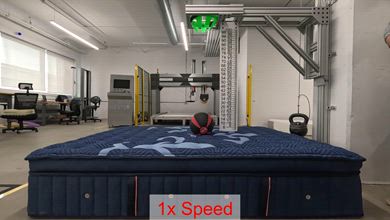
    This all-foam mattress has very little bounce, which gives it a slightly sluggish feel and makes changing sleeping positions feel more difficult.

    7.3
    Comfort Layers Envelopment
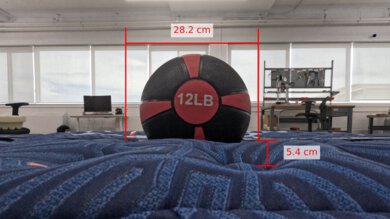
    Sinking Depth
    4.8 cm (1.9")
    Diameter Of Distortion
    28.3 cm (11.1")

    This mattress feels decently enveloping. The upper comfort layers aren't very contouring, so less of the mattress's sleeping surface is in contact with your body, resulting in a less hugging feel. However, your whole body will sink into it quite a bit, so its upper comfort layers feel plush, which helps with pressure relief.

    6.9
    Responsiveness
    Response Time
    1.4 s

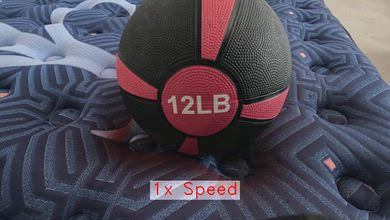
    The Novaform ComfortGrande Plus is fairly responsive. It's not the slowest-moving mattress, as some models like the Nectar Classic are noticeably less responsive. Still, it feels sluggish, which helps create a hugging feeling but also makes it more difficult to move around in your sleep.

    If you prefer a highly responsive mattress, it might be worth considering the DreamCloud Hybrid (Canadian Version) or Puffy Royal, which are less likely to make you feel stuck in place.

    9.2
    Motion Isolation
    See details on graph tool
    See details on graph tool
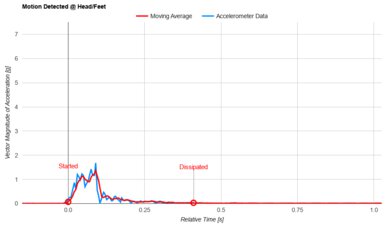
    Peak Acceleration @ Head/Feet
    0.58 g
    Dissipation Time @ Head/Feet
    0.25 s
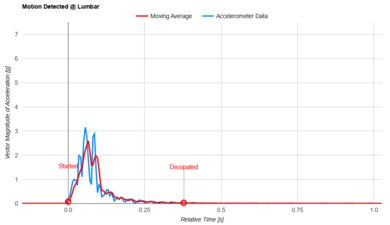
    Peak Acceleration @ Lumbar
    1.97 g
    Dissipation Time @ Lumbar
    0.23 s

    It has fantastic motion isolation. You'll only feel movements near where they originate, and may not feel smaller movements at all. Motion dissipates quickly, so you never feel like the mattress wobbles when someone rolls over, or a pet jumps into bed.

    7.4
    Edge Support
    See details on graph tool
    See details on graph tool
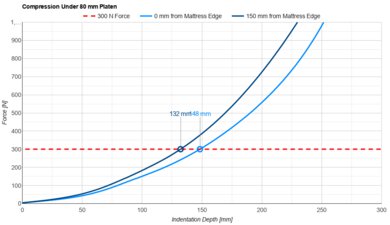
    Naturalistic Loading Pad Indentation
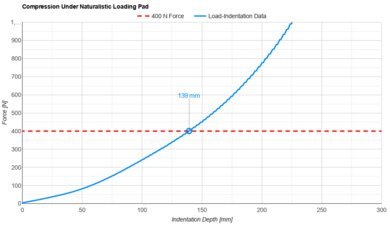
    139 mm
    Small Platen Indentation @ 0 mm From Edge
    157 mm
    Small Platen Indentation @ 150 mm From Edge
    129 mm
    Increased Indentation @ Mattress Edge
    29 mm

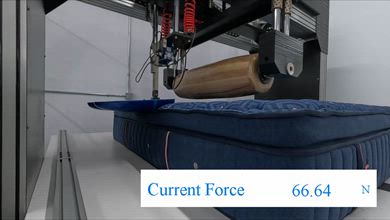
    The Novaform ComfortGrande Plus has decent edge support. The edges compress when you sit on the very edge, creating a slight ramp that can make you feel like you're sliding off the mattress. If you want a mattress with better edge support, the Sealy Posturepedic Plus Mount Auburn has a significantly better performance and a similar firmness level.

    7.7
    Cooling
    See details on graph tool
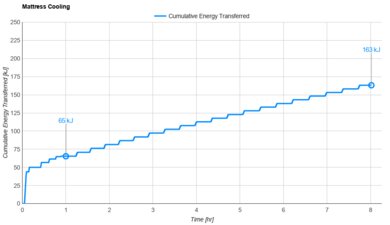
    Energy Transferred Over 1st Hour
    64 kJ
    Energy Transferred Over 8 Hours
    157 kJ

    It has a good cooling performance. It doesn't feel overly warm when you first go to bed, and dissipates heat well overnight. It's cooling enough to keep most people comfortable. However, if you're a hot sleeper, you may want a mattress with even better cooling, such as the Novaform Legacy.

    Components
    Cover
    Sleeping Surface Material
    Polyester, Nylon, Polyethylene, Spandex
    Removable
    No
    Machine Washable
    No

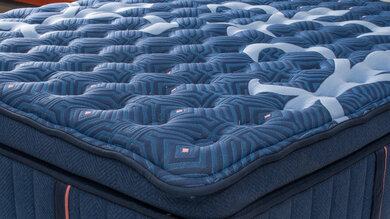
    The sleeping cover is made from a blend of materials, comprising 46% polyester, 37% nylon, 16% polyethylene, and 1% spandex. It has a zipper, but according to the manufacturer, it shouldn't be removed.

    Edge Construction
    Edge Component
    None

    This mattress has nothing built into its edges for reinforcement. Its edge support is just okay, so it's not ideal for people with mobility issues who want a mattress with sturdy edges.

    Foam Layer Material
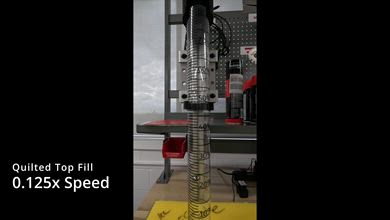
    Quilted Top FillN/A
    Upper Comfort Foam @ Head/FeetMemory Foam
    Upper Comfort Foam @ LumbarMemory Foam
    Lower Comfort Foam @ Head/FeetN/A
    Lower Comfort Foam @ LumbarN/A
    Transition FoamPolyfoam
    Support FoamPolyfoam

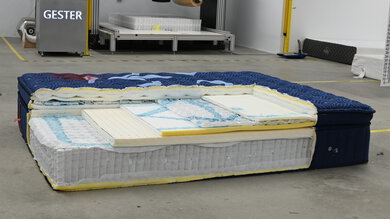
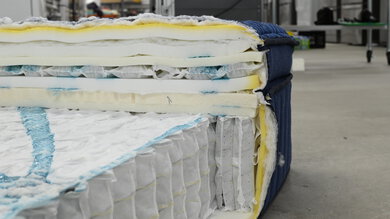
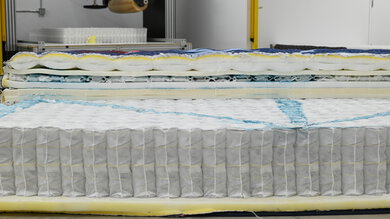
    This all-foam mattress features a fairly simple design: its upper layer is composed of memory foam, which provides pressure relief and adds to the mattress's contouring. The polyfoam transition layer is firmer, but it helps prevent you from sinking into the much firmer support polyfoam layer.

    6.9
    Foam Layer Mass Density
    Quilted Top FillN/A
    Quilted Top Fill Foam Density vs. Reference
    N/A
    Upper Comfort Foam @ Head/Feet50 kg/m³ (3.1 lb/cu.ft.)
    Upper Comfort Foam @ Head/Feet Density vs. Reference
    0.8
    Upper Comfort Foam @ Lumbar50 kg/m³ (3.1 lb/cu.ft.)
    Upper Comfort Foam @ Lumbar Density vs. Reference
    0.8
    Lower Comfort Foam @ Head/FeetN/A
    Lower Comfort Foam @ Head/Feet Density vs. Reference
    N/A
    Lower Comfort Foam @ LumbarN/A
    Lower Comfort Foam @ Lumbar Density vs. Reference
    N/A
    Transition Foam36 kg/m³ (2.3 lb/cu.ft.)
    Transition Foam Density vs. Reference
    1.4
    Support Foam28 kg/m³ (1.8 lb/cu.ft.)
    Support Foam Density vs Reference
    0.9

    All of the foam used in the mattress is dense enough to be considered good-quality foam. The most durable layer is the transition layer, which is made of dense, high-quality polyfoam that will resist sagging for longer than lower-quality foams. The upper comfort layer and support layer foams both just meet the standard for good quality foam. This will help prevent sagging for longer compared with low-quality foams, but mattresses with high-quality foams will be more durable. 

    Foam Layer Thickness
    Quilted Top
    N/A
    Upper Comfort Foam @ Head/Feet7.5 cm (3.0")
    Upper Comfort Foam @ Lumbar7.5 cm (3.0")
    Lower Comfort Foam @ Head/FeetN/A
    Lower Comfort Foam @ LumbarN/A
    Transition Foam7.0 cm (2.8")
    Support Foam21.0 cm (8.3")

    The upper comfort layer of memory foam is 3 inches (7.5 cm) thick, and since it's quite soft, it contributes to the mattress's moderate sinking. However, you won't sink very far since the polyfoam layer below has a medium firmness. This 2.8-inch (7 cm) transition layer helps prevent you from feeling the much firmer support layer directly. This 8.3-inch (21 cm) layer of polyfoam adds support for the heavier parts of your body.

    Spring Layer Dimensions
    Comfort Layer Height
    N/A
    Comfort Layer Coil Density
    N/A
    Comfort Layer Coil Gauge
    N/A
    Support Layer Height
    N/A
    Support Layer Coil Density
    N/A
    Support Layer Coil Gauge @ Head/Feet
    N/A
    Support Layer Coil Gauge @ Lumbar
    N/A
    Foam Layer Firmness
    See details on graph tool
    See details on graph tool
    Quilted Top Fill 25% IPD
    N/A
    Upper Comfort Foam @ Head/Feet 25% IPD
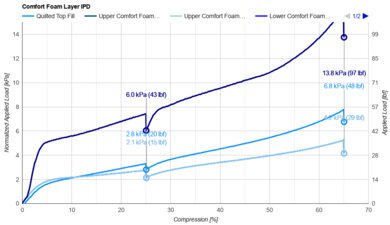
    2.0 kPa
    Upper Comfort Foam @ Lumbar 25% IPD
    2.0 kPa
    Lower Comfort Foam @ Head/Feet 25% IPD
    N/A
    Lower Comfort Foam @ Lumbar 25% IPD
    N/A
    Transition Foam 25% IPD
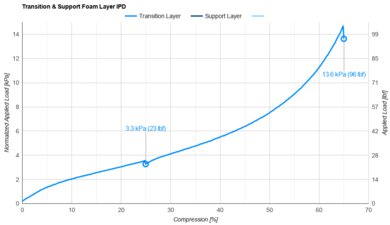
    3.0 kPa
    Support Foam 25% IPD
    4.1 kPa

    The memory foam upper comfort layer is soft, so you sink easily into it. The polyfoam layer below is medium-firm, providing support for the heavier parts of your body and preventing you from feeling the firm support layer directly when you compress the upper layer fully.

    Spring Layer Firmness
    Normalized Comfort Layer Stiffness @ Head/Feet
    N/A
    Normalized Comfort Layer Stiffness @ Lumbar
    N/A
    Normalized Support Layer Stiffness @ Head/Feet
    N/A
    Normalized Support Layer Stiffness @ Lumbar
    N/A
    Foam Layer Resilience
    Quilted Top FillN/A
    Upper Comfort Foam @ Head/Feet4%
    Upper Comfort Foam @ Lumbar4%
    Lower Comfort Foam @ Head/FeetN/A
    Lower Comfort Foam @ LumbarN/A
    Transition Foam40%
    Support Foam43%

    The memory foam upper comfort layer has very low resilience, or bounce. It's slow-moving and doesn't offer much 'push back', which is normal for memory foam. The other polyfoam layers are made of much bouncier foams, which helps make the mattress a bit more responsive.

    Spring Layer Bounciness
    Comfort Spring Layer Maximum Rebound Height
    N/A
    Support Spring Layer Maximum Rebound Height
    N/A