
When choosing the best keyboard for your needs, the first thing to decide is what you care about most. We split our recommendations into three categories: everyday keyboards for general use, mechanical keyboards for people who want more control over typing feel and customization, and competitive gaming keyboards for players who want the fastest, most responsive performance in fast-paced games.
If you're unsure which direction makes the most sense for you, or if you have questions about keyboard sizes or switch types, we have a buyer's guide at the bottom of this page to help you choose between our recommendations.
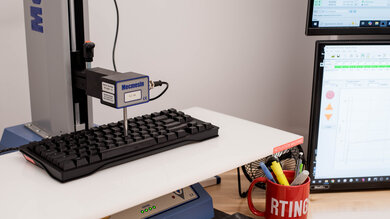
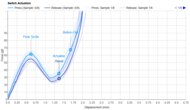
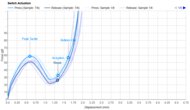
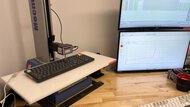
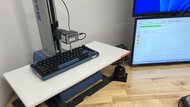
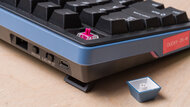
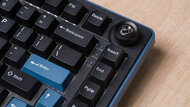
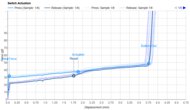
We test dozens of keyboards each year, and to maintain independence, we buy every unit ourselves. Our reviews go beyond subjective typing impressions or quick gaming sessions. Each keyboard is put through the same standardized test bench, so you can directly compare our results. We use specialized tools like a Mecmesin force tester to measure switch force curves and a Beagle 480 USB analyzer to capture input data for latency testing. Multiple teams contribute to each review in a process that can take days or even weeks from start to finish.
-
Best Keyboard For Everyday Use
 GamingOfficeMobile/TabletProgrammingEntertainment / HTPCRaw PerformanceSize:Full-size (100%)Connectivity:WirelessSee all our test resultsBluetooth Multi-Device Pairing:
We recommend the Logitech MX Keys S as the best keyboard for everyday use for most people, whether it's for browsing, office work, or even casual gaming. Its design is very slim, and it uses scissor switches, so it feels very similar to typing on a good laptop. While it's surprisingly lightweight and easy to move between desk setups, Logitech also makes a smaller version of this keyboard called the Logitech MX Keys Mini, which combines all those same qualities into a smaller package that's easier to slip into bags or move around your home or office.
The MX Keys S connects wirelessly with a USB dongle or Bluetooth, which makes it easy to connect to or switch between multiple devices. It has high-quality materials, smooth finishes, and an attractive look that blends into desktop setups. These switches are also very quiet, perfect for use in noise-sensitive environments.
Some interesting additional features this keyboard offers are white backlighting and clear shine-through legends on the keycaps. This makes all legends easy to read in dim lighting and can really help if you find you need to look at your keyboard to see the legends while typing. You can even set the backlighting to adjust automatically to the level of ambient light in your room, so the legends are always easy to read without adjusting the brightness manually. Battery life is also quite strong. Even with the backlighting on, most people can get around a week of use between charges, or up to a maximum of five months if you turn the backlighting off. Ultimately, this keyboard offers the best blend of build quality, wireless flexibility, and typing quality that most people will enjoy.
If you want more recommendations for an everyday keyboard, check out our full articles for the Best Office Keyboards or the Best Keyboards for Typing.
-
Best Budget Keyboard For Everyday Use
GamingOfficeMobile/TabletProgrammingEntertainment / HTPCRaw PerformanceSize:Full-size (100%)Connectivity:WirelessSee all our test resultsBluetooth Multi-Device Pairing:The Keychron B6 Pro and its smaller cousin, the Keychron B1 Pro, are our budget picks for everyday use. Choosing between them comes down to whether you'd like the full-size B6 Pro, which is wider but includes a numpad, or the compact B1 Pro, which doesn't include a numpad but is much more portable, making it great for travel or pairing with a tablet or phone. Just like our best pick, the Logitech MX Keys S above, these keyboards have a slim design, versatile wireless connectivity, and scissor switches that feel similar to typing on a laptop.
The main trade-off compared to the more expensive Logitech is that they feel cheaper. The plastic doesn't feel quite as nice, the typing quality feels a bit less premium, and the flatter keycaps don't guide your fingertips into the center of each key in the same way. The overall package also feels a bit flimsier, and it's much easier to bend or twist them if you apply too much pressure, which can be a concern if you're planning on frequently taking them on the go.
Another major feature these keyboards lack is backlighting. This means they may look a bit less premium, and you won't be able to read the legends in darker rooms, but it also gives these keyboards even better battery performance than the Logitech MX Keys S, with the potential to get as much as eight months of daily use between recharges. That's great if you really prefer not having to think about charging your devices very often.
For more budget recommendations, check out our choices for the Best Budget and Cheap Keyboards.
-
Best Mechanical Keyboard
GamingOfficeMobile/TabletProgrammingEntertainment / HTPCRaw PerformanceSize:Full-size (100%)Connectivity:WirelessSee all our test resultsBluetooth Multi-Device Pairing:We recommend the NuPhy Node Series keyboards as the best mechanical keyboard options for most people for everyday use, work, or gaming. They're available in a compact 75% size or a full-size version with a numpad, and you can choose between several switch types and low-profile or high-profile designs. That makes them a great option if you want several choices at purchase that can dramatically change how the keyboard feels right out of the box.
Mechanical keyboards offer a customizable typing experience, and that's the main selling point here. Some people prefer a thinner, low-profile keyboard for ergonomic reasons. Like the Logitech MX Keys S or Keychron B1/B6 Pro keyboards above, the low-profile versions sit lower on your desk, so they're comfortable to type on without a wrist rest. The high-profile versions have a more classic keyboard profile, with slightly deeper key presses that better emphasize the feel of your chosen switches. However, you may want to consider a wrist rest if you plan on typing on a taller keyboard for long stretches.
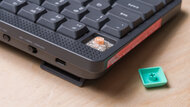
You get to choose between smooth linear switches or tactile switches if you prefer a bit more resistance and satisfying feedback. They also offer a "silent" switch type, which is essentially a dampened linear switch that's much quieter, making it a good choice if you're interested in mechanical keyboards but worried about noise. These keyboards are also hot-swappable, meaning you can pull out the switches and replace them with a different set later.
If you're not a fan of the Node, you can also check out the rest of our picks for the Best Mechanical Keyboards.
-
Best Budget Mechanical Keyboard
GamingOfficeMobile/TabletProgrammingEntertainment / HTPCRaw PerformanceSize:Compact (75%)Connectivity:WirelessSee all our test resultsBluetooth Multi-Device Pairing:The Ducky OK-M is our recommendation for anyone looking for a mechanical keyboard at a budget price. It stands out for offering a surprisingly satisfying typing quality that matches the more expensive NuPhy Node Series above. The main downside by comparison is that it doesn't quite have the same caliber of build quality. It still feels good and reasonably sturdy overall, but it doesn't quite match the NuPhy in terms of fit and finish or the overall quality of its materials.
The other trade-off is that it offers slightly fewer switch options at purchase. It's only available with two types of switches: linear or tactile, and it doesn't offer a silent switch option like the NuPhy, so it will be a bit louder. But if you're interested in doing a little tinkering in the future, you can always buy a different set of switches and swap them in later, as this keyboard lets you pull out and replace the switches yourself, just like the NuPhy Node boards.
That being said, this keyboard is still available in three size options: a smaller 65% size that has arrow keys but lacks a numpad and function row, a compact 75% size that includes the keys most people need, and a 98% size, which keeps the numpad but removes a couple of navigation keys and packs everything more tightly together. Admittedly, the size options may sound a bit confusing, but as always with choosing keyboard sizes, it's best to ask yourself which keys you use most often and make sure the size you choose has them.
Take a look at our full Best Budget Mechanical Keyboard article if you want some even cheaper options.
-
Best Competitive Gaming Keyboard
GamingOfficeMobile/TabletProgrammingEntertainment / HTPCRaw PerformanceSize:Compact (75%)Connectivity:WirelessSee all our test resultsBluetooth Multi-Device Pairing:The Lemokey P1 HE is the keyboard we recommend for competitive gaming because it mixes excellent latency performance with the customization potential of Hall effect switches. These switches let you adjust how sensitive each key is, so you can make your keypresses register with very little movement. They also unlock features like Rapid Trigger. Instead of needing to travel back up to a fixed reset point before you can press them again, the switches only need to move upward an extremely short distance before immediately resetting. We want to stress that these are still pretty niche features, and you don't need them to enjoy games or even compete at a high level. That said, they can give you a bit of an edge in some games, particularly in scenarios like counter-strafing in Counter-Strike 2.
Beyond its impressive Hall effect feature set and very low, consistent latency, this keyboard stands out for its remarkably good build quality and solid aluminum case, which gives it a more premium feel than most gaming keyboards at this price. It also supports wireless connectivity, which is still fairly rare for a Hall effect keyboard in this price range. Its typing quality is excellent, too, and many people will find it just as enjoyable to type on as some of the best mechanical keyboards. We struggle to point out any obvious flaws with this board, though it still won't be ideal for everyone. Unlike some of the other options on this list, it's only available in a compact 75% size, so it isn't a good fit if you need a numpad. But if that isn't an issue, we expect most competitive gamers will be very satisfied with it for the price, even if they don't dive too deeply into its customization options or more advanced Hall effect features.
The Lemokey P1 HE is our top pick, but check out our full Best Gaming Keyboard article for some more options!
-
Best Budget Competitive Gaming Keyboard
GamingOfficeMobile/TabletProgrammingEntertainment / HTPCRaw PerformanceSize:Full-size (100%)Connectivity:WiredSee all our test resultsBluetooth Multi-Device Pairing:The Corsair K70 Core is our recommendation for the best budget gaming keyboard for playing competitive titles. This is a full-size keyboard, and it doesn't have any other size variants available. Its latency performance is just as outstanding as the Lemokey P1 HE, but it uses more traditional mechanical switches rather than adjustable Hall effect switches. Apart from being significantly more affordable, the real advantage of this keyboard for competitive gaming is that you can plug it in and know you're getting outstanding raw performance without tweaking sensitivity settings or dialing in different options to match your playstyle, which can often be a struggle we hear from people first using Hall effect keyboards.
Anyone using this keyboard won't be held back by the device itself. That said, there are a few trade-offs compared to the Lemokey P1 HE, mostly in build quality and overall typing quality. This keyboard feels cheaper, with a plastic chassis rather than a solid aluminum case, and some of the larger keys rattle a little bit. It also lacks wireless connectivity, so you'll have to deal with another cable on your desk. Unlike some other options on this list, it's only available in a full-size model, so it isn't a good fit if you want something more compact. Lastly, while the included wrist rest offers good support and places your hands at a comfortable angle for long gaming sessions, it feels cheap and is made entirely of hard plastic.
If you're not a fan of the K70 CORE, check out our Best Budget Gaming Keyboard article for some more options.









Recent Updates
May 22, 2026:
We've overhauled the structure of this recommendation article to make it more approachable, with clearer categories and more explicit trade-offs between our picks. We've also added a short buyer's guide to help you better understand the main differences between keyboards and choose the right one for your needs.
Mar 03, 2026:
We made a few changes to the list. We moved the AULA F99/F75 from the mid-range to the budget pick, with the Logitech Signature K650 as an alternative. We added the Keychron V5 Max as our mid-range pick and the Logitech Alto Keys K98M as an alternative. We also added the Keychron B33/B36 as alternatives to our cheap pick, the Logitech Pebble Keys 2 K380.
Nov 04, 2025:
We replaced the Logitech G715 with the Lemokey P1 HE as our pick for the Best Keyboard For Work And Play. It's better built, its latency is lower, and it includes Hall effect switches. We also replaced the Razer Huntsman Mini with the MonsGeek Fun60 Ultra as a Notable Mention alternative to the Lemokey P1 HE for a more gaming-focused pick.
Apr 18, 2025:
We've replaced the Epomaker TH80 Pro with the AULA F99 as our mid-range recommendation. It's similarly priced, easier to find in stock, and offers a much softer gasket-mounted design for a better overall typing experience. We're also monitoring pricing as trade conditions evolve — if you spot anything unusual, let us know in the comments.
Feb 13, 2025:
We've verified each of our recommendations and aren't making any changes to our lineup with this update.
How To Choose The Right Keyboard For Your Needs
If you feel a bit lost or aren't sure where to start, this quick guide will walk you through the main things to consider.
What are you using your keyboard for?
It's a simplification, but most keyboards fall into two broad groups:
-
Everyday keyboards for desktop use, work, and casual gaming:
Unless we specifically identify a keyboard as a "gaming keyboard," all the keyboards we discuss in this list fall into the category of an everyday-use keyboard. Nearly every keyboard available today has what most people need for office work, web browsing, and playing single-player or social multiplayer games. Mechanical keyboards can fall into this category or the next, depending on their design.
-
Competitive gaming keyboards:
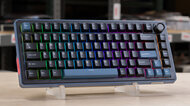
Keyboards for competitive gaming often have flashy RGB lighting, but above all else, they prioritize latency performance. This really only matters if you play competitive games, especially shooters like Counter-Strike 2, Valorant, or Call of Duty. For most people, though, all modern gaming keyboards are fast enough that raw latency numbers simply don't matter as much as they did several years ago.
What size keyboard do you want?
Keyboards come in a lot of different sizes, but choosing between them mostly comes down to which keys you use regularly. The main advantage of a full-size keyboard is that you get all the keys you'd expect, including dedicated arrow keys and a numpad.
If you don't need a numpad, you may want to consider a smaller keyboard, like a compact 75% model. It's partly an aesthetic choice, but some people also prefer smaller keyboards because they leave more space for mouse movement on desks. Some compact models are also designed for use on the go, like on trains or in cafes, so they're easier to slip into a bag and carry around. The real trick in deciding is asking yourself which keys you'd actually miss if you didn't have them. We have a guide on the difference between keyboard sizes if you'd like more help.
What about switches?
Should you get a more basic keyboard with scissor or membrane switches, or a mechanical keyboard, which has individual mechanical switches under each key? Ultimately, it's all a matter of preference.
- Membrane switches are found on many basic office keyboards. They're usually very quiet, but some people find that they feel a little mushy.
- Scissor switches are technically a kind of membrane switch. These are what you find on most laptop keyboards. They're stable and often very quiet, so they're common on everyday and office keyboards. If you like typing on a laptop, you'll probably like scissor switches.
- Mechanical switches offer the greatest variety in typing feel. Depending on the switch, they can feel light, heavy, smooth, tactile, quiet, or loud. They're the best choice if you care most about typing feel or customization. If you're unsure whether a mechanical keyboard is right for you, we recommend visiting a local store with mechanical keyboards on display so you can try them yourself. If you still aren't sure what switch type is right for you, we have a more in-depth guide on choosing between membrane and mechanical keyboards to help.
You may also hear about other switch types, like Hall effect switches, which have become very popular on gaming keyboards because they let you adjust how sensitive each keypress is. If you're curious for more information, we also have a primer on what Hall effect keyboards are.
What about wireless keyboards?
One of the highest-volume searches for people looking for keyboards is "best wireless keyboard." We don't specifically have a category for best wireless keyboards in this article because nearly all the keyboards we recommend here are already wireless. Instead, we focus on differences like build quality, typing quality, and value. However, if a keyboard stands out for its battery life, we're careful to point that out in our recommendation.
All Reviews
Our recommendations above are what we think are currently the best computer keyboards for most people. We factor in the price, feedback from our visitors, and availability.
If you would like to do the work of choosing yourself, here's the list of all our keyboard reviews. Be careful not to get too caught up in the details. While no keyboard is perfect for every use, most are good enough to please almost everyone, and the differences are often not noticeable unless you really look for them.