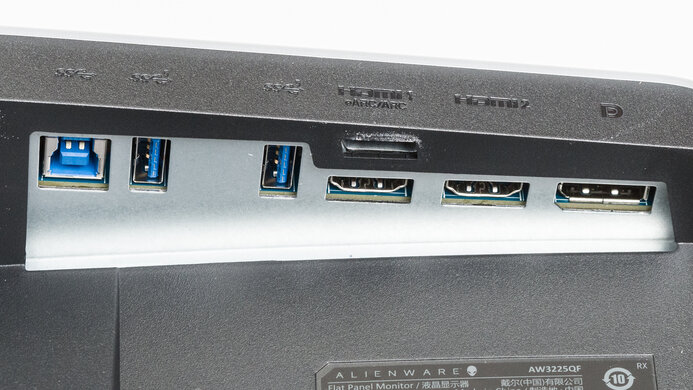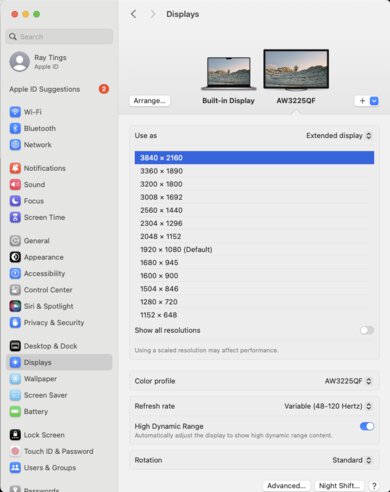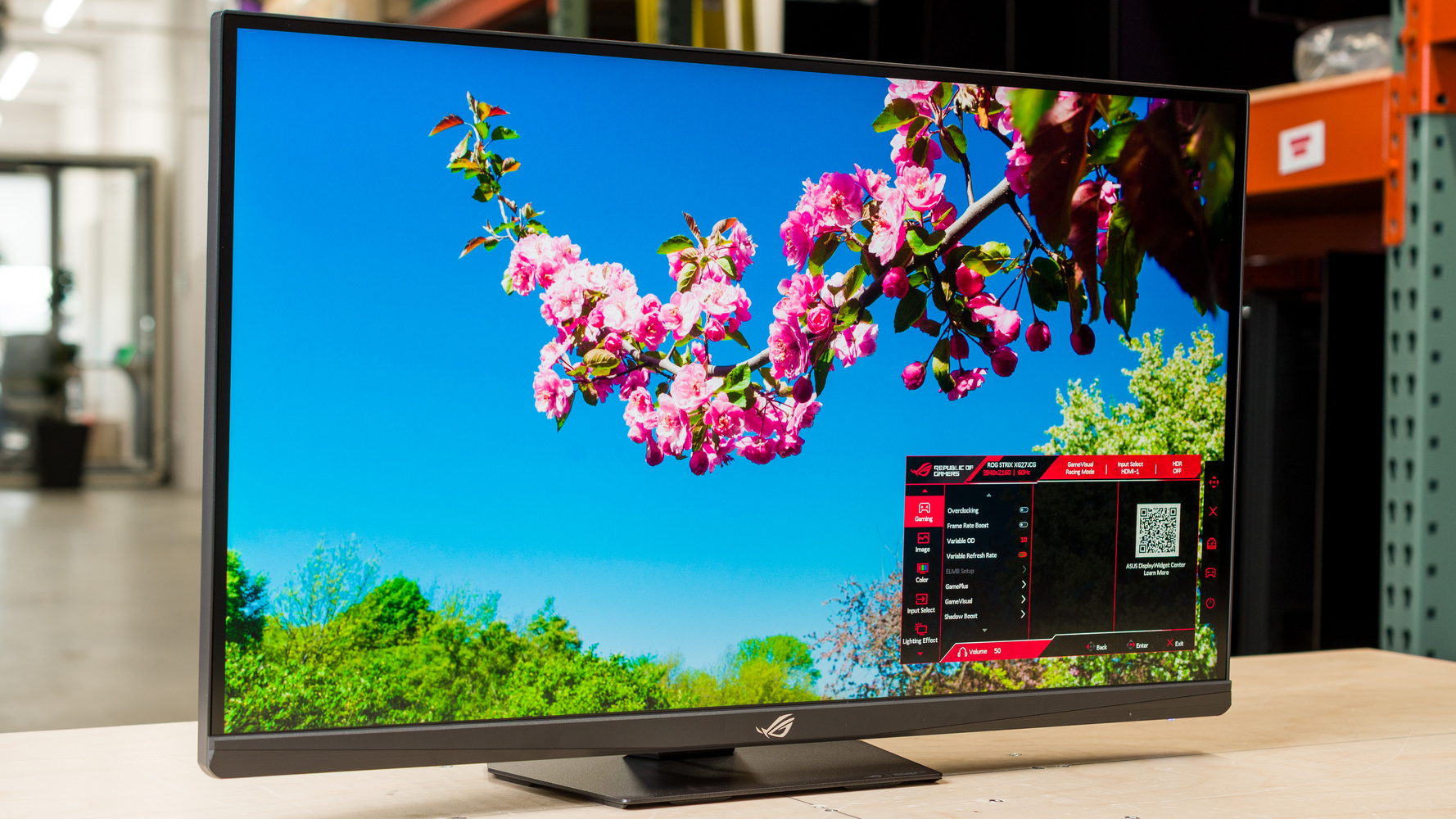
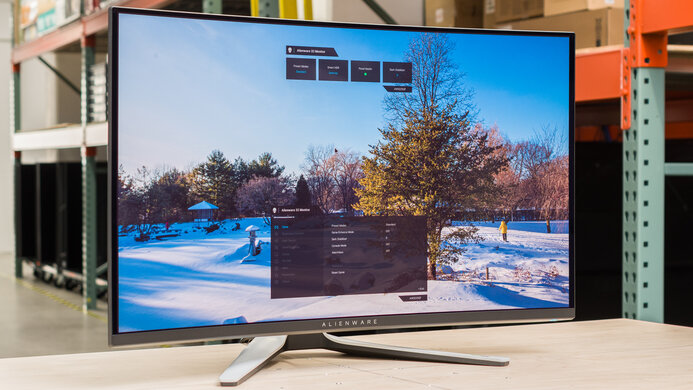
The ASUS ROG Strix 5K XG27JCG is a 27-inch, 5k gaming monitor. As a gaming alternative to the Apple Studio Display 2026, it competes against other models with the same specs and features, like the Samsung Odyssey G80HF S27HG80 and the Philips Evnia 27M2D5901A, as well as 5k Mini LED options, like the LG 27GM950B-B. This monitor has a Fast IPS panel with edge-lit local dimming, and it features a native 165Hz refresh rate that you can boost to 180Hz with an overclock. It also has a dual-mode feature to change it to 1440p @ 330Hz, giving you versatility for playing different types of games. There's FreeSync Premium Pro and G-SYNC Compatibility to reduce screen tearing, as well as HDMI 2.1 bandwidth, but it's limited to DisplayPort 1.4 ports. Plus, it has ELMB 2 backlight strobing to reduce persistence blur at low refresh rates. Lastly, it has a small USB hub with a USB-C port that supports DisplayPort Alt Mode, which is helpful if you want to connect a laptop, but it's limited to 15W of power delivery.
Our Verdict
The ASUS ROG Strix XG27JCG is good for PC gaming. It has a high 5k resolution that delivers detailed images. It has a native 165Hz refresh rate that you can overclock to 180Hz in this 5k mode, and it has a 1440p dual mode with a higher 330Hz refresh rate, giving you versatility to play different types of games. Motion looks sharp for the most part, although there's some inverse ghosting with fast-moving objects. It also supports all common VRR formats to reduce screen tearing, and it has low input lag for a responsive feel. It comes with a versatile backlight strobing feature that you can use with VRR, but it causes image duplication. The biggest downside is that it has limited picture quality, especially in HDR, as blacks look gray due its low contrast ratio. It also has a terrible edge-lit local dimming feature that causes haloing around bright objects and doesn't make highlights pop in HDR.
Sharp motion for the most part.
Low input lag for a responsive feel.
5k @ 180Hz & 1440p @ 330Hz modes.
HDMI 2.1 ports.
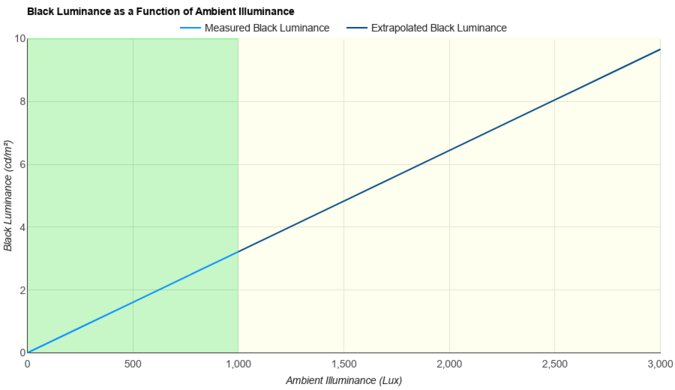
Bright enough to fight some glare.
Supports all common VRR formats.
Inverse ghosting with fast-moving objects.
Low native contrast ratio.
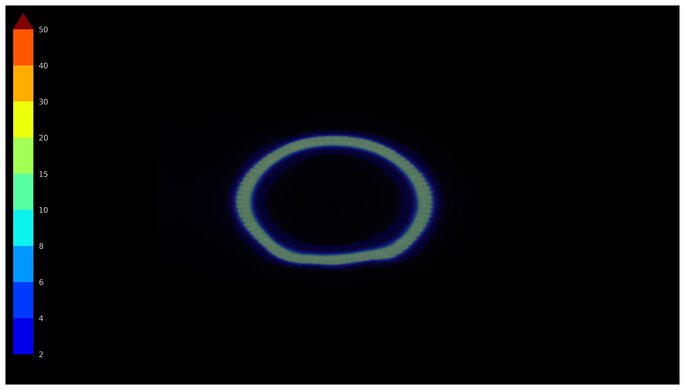
Terrible edge-lit local dimming feature.
Highlights don't pop in HDR.
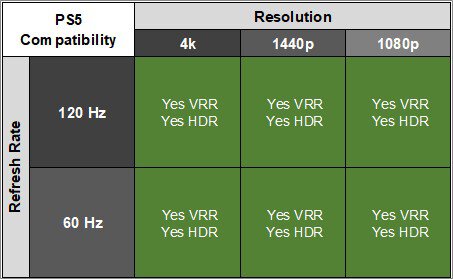
The ASUS ROG Strix XG27JCG is great for console gaming. Despite having a 5k resolution, it supports all common signals from gaming consoles, including 4k @ 120Hz. It handles fast-moving content well, but there's some inverse ghosting, particularly at lower refresh rates. Gaming feels responsive as it has low input lag, and its VRR support reduces screen tearing. However, it fails to deliver an impactful HDR gaming experience as blacks look gray, its terrible edge-lit local dimming feature causes haloing around bright objects, and highlights don't pop, either.
Sharp motion for the most part.
Low input lag for a responsive feel.
HDMI 2.1 ports.
Supports all common signals from gaming consoles.
Bright enough to fight some glare.
Supports all common VRR formats.
Inverse ghosting with fast-moving objects.
Low native contrast ratio.
Terrible edge-lit local dimming feature.
Highlights don't pop in HDR.
The ASUS ROG Strix XG27JCG is excellent for office use. Text looks extremely sharp thanks to its 5k resolution and high pixel density. It also gets fairly bright, enough to fight some glare, but visibility is still a problem in sunny rooms, as reflections are distracting. It comes with a few productivity features, including a small USB hub and a KVM switch, and its ergonomic stand makes it easy to adjust. While it supports DisplayPort Alt Mode over USB-C, its 15W of power delivery means it can't keep your laptop fully charged while you're using it.
Remarkable text clarity.
Bright enough to fight some glare.
Ergonomic stand.
USB hub with a KVM switch.
Reflections are distracting in sunny rooms.
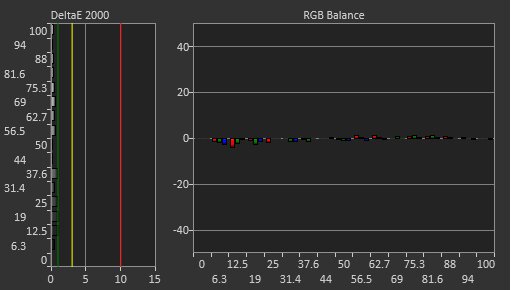
The ASUS ROG Strix XG27JCG is very good for editing content. It's mostly accurate before any sort of calibration, but it has a cold color temperature that you need to fix with a full calibration. It has limited picture quality otherwise, especially if you want to edit content in HDR because blacks look gray and highlights don't pop, either. On the plus side, its high 5k resolution delivers detailed images with sharp text. It also has an ergonomic stand that's easy to adjust, and it has a few features to help with productivity, like a small USB hub and a KVM switch.
Remarkable text clarity.
Bright enough to fight some glare.
Mostly accurate out of the box.
Ergonomic stand.
USB hub with a KVM switch.
Low native contrast ratio.
Terrible edge-lit local dimming feature.
Reflections are distracting in sunny rooms.
Cold color temperature before calibration.
The ASUS ROG Strix XG27JCG has great brightness. It fights glare well, especially in HDR, but it fails to make small highlights pop against the rest of the image.
Bright enough to fight some glare.
Highlights don't pop in HDR.
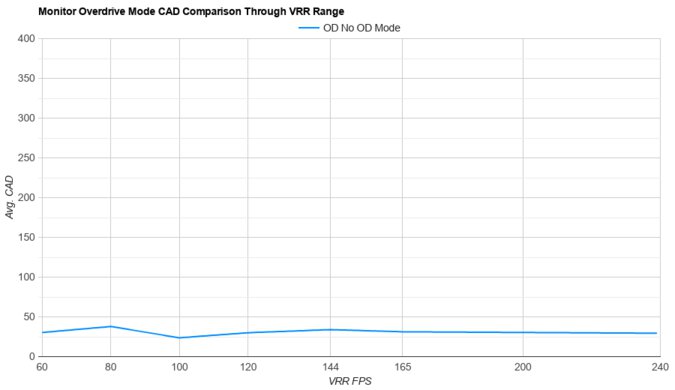
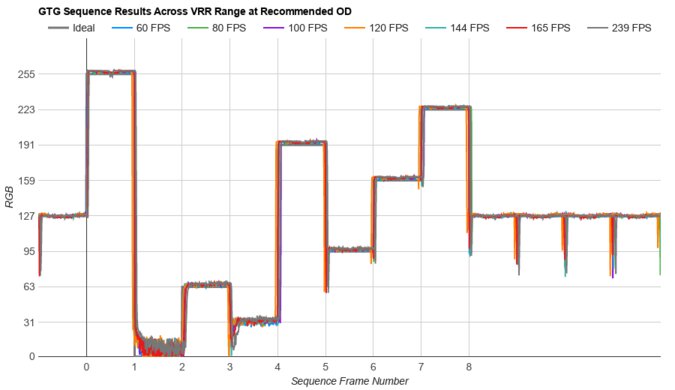
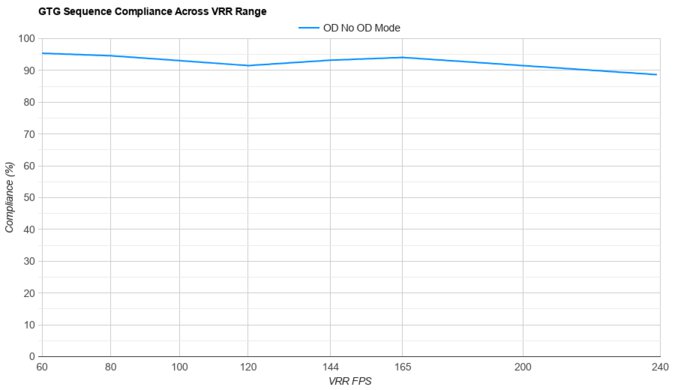
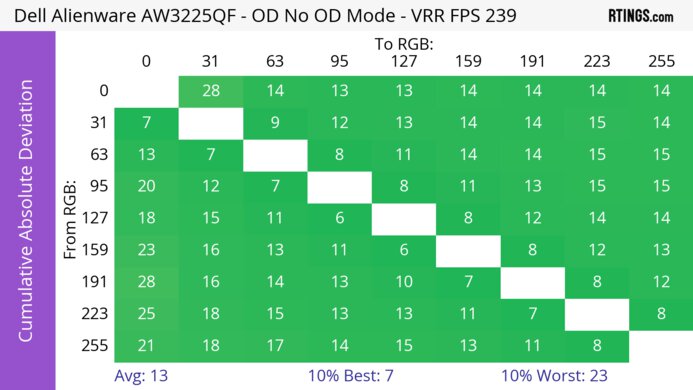
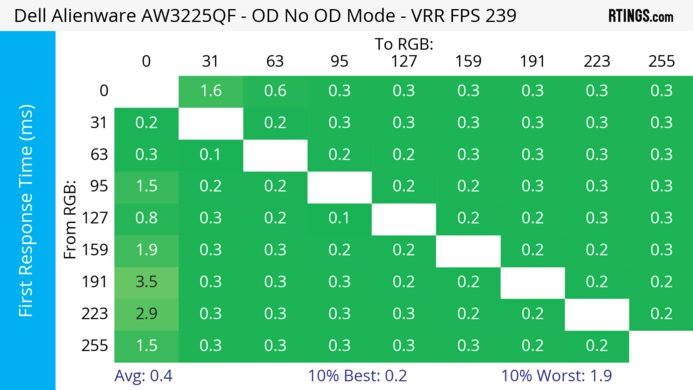
The ASUS ROG Strix XG27JCG has a very good response time. Motion looks sharp for the most part, but there's inverse ghosting, particularly at low refresh rates.
Sharp motion for the most part.
Inverse ghosting with fast-moving objects.
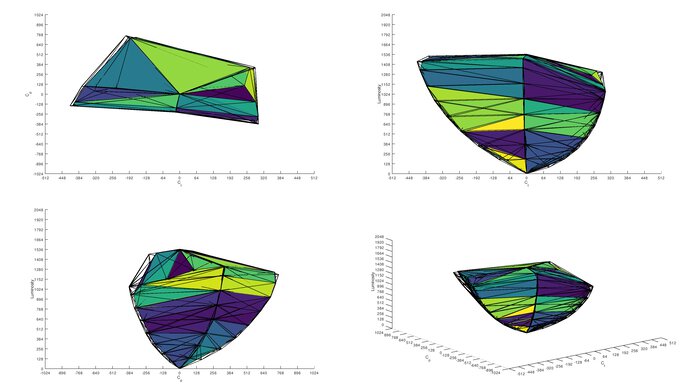
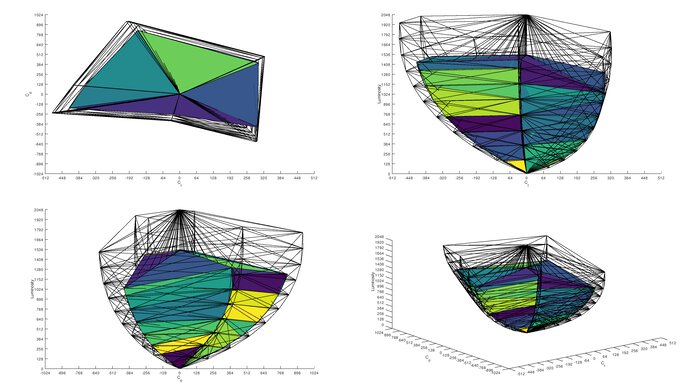
The ASUS ROG Strix XG27JCG has disappointing HDR picture quality. Blacks look gray due to the monitor's low contrast ratio, and its terrible edge-lit local dimming feature causes haloing around bright objects. While it displays a wide range of colors, it doesn't properly display the darkest colors.
Displays wide range of colors.
Low native contrast ratio.
Terrible edge-lit local dimming feature.
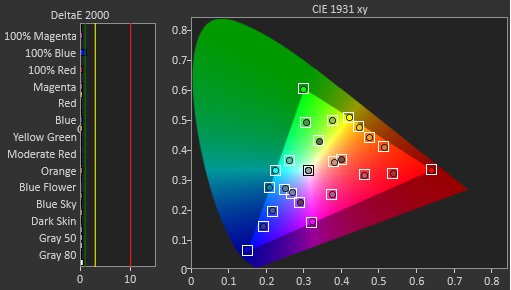
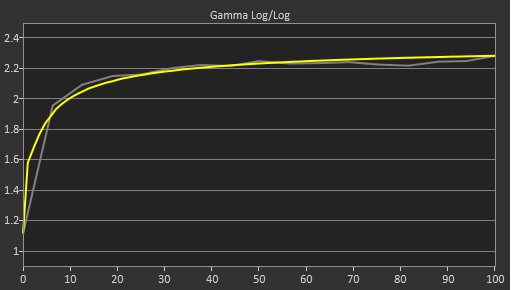
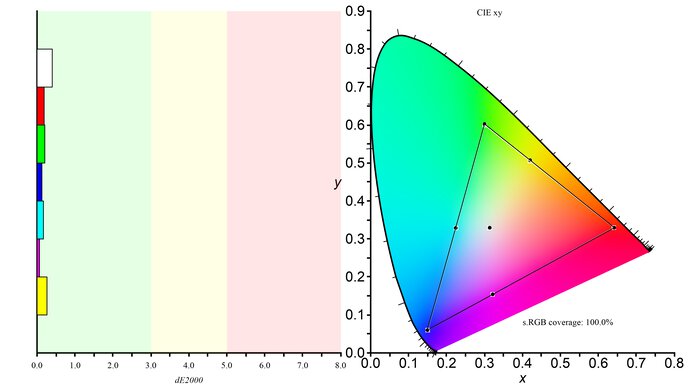
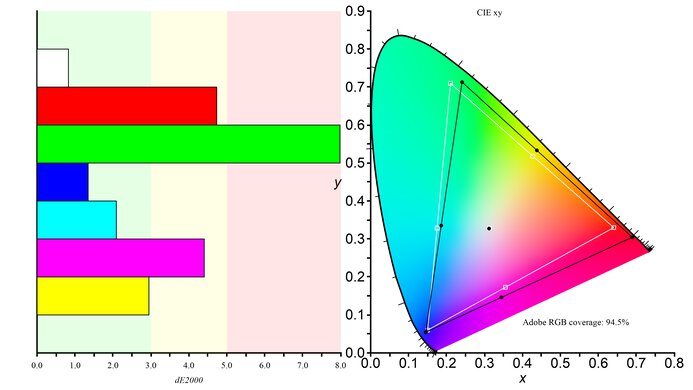
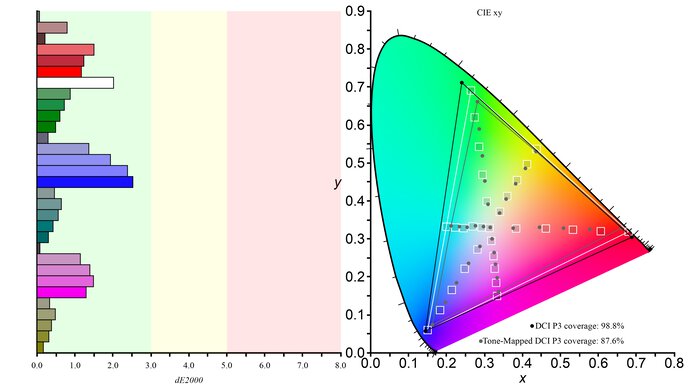
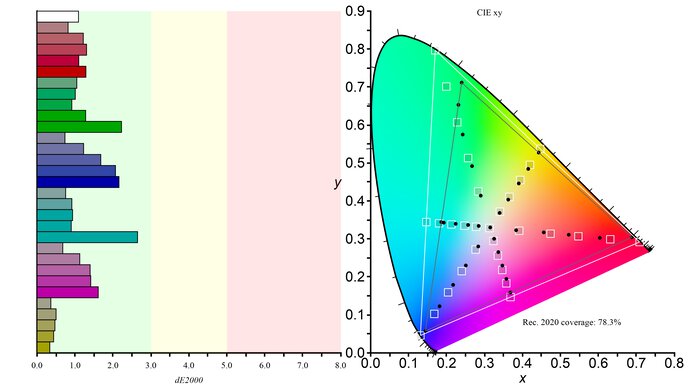
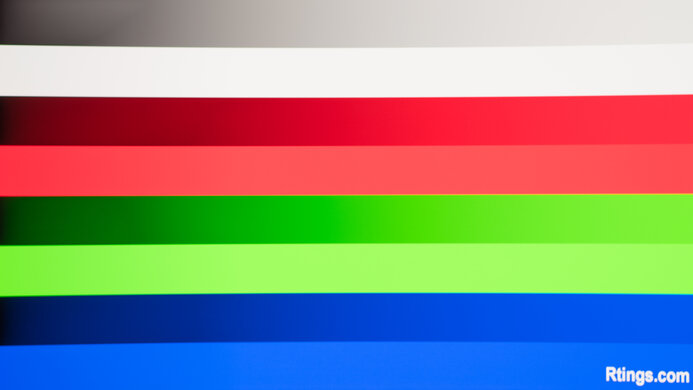
The ASUS ROG Strix XG27JCG has okay SDR picture quality. It displays a wide range of colors in common color spaces. However, the biggest downside is that it has a low contrast ratio, making blacks look gray.
Displays wide range of colors.
Low native contrast ratio.
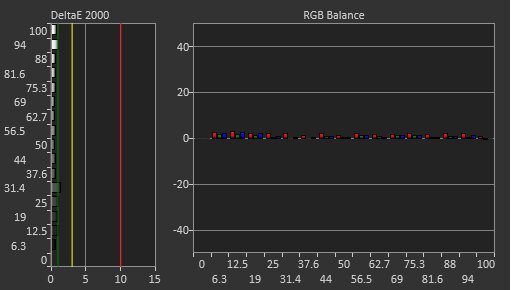
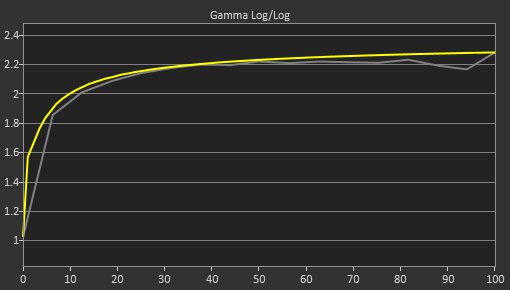
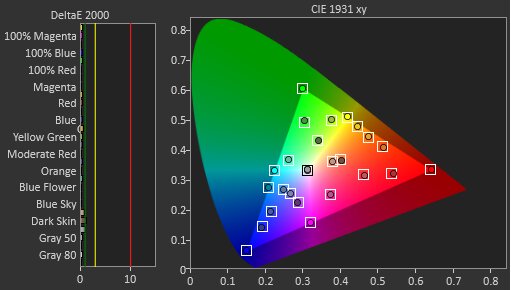
The ASUS ROG Strix XG27JCG has excellent color accuracy. It's mostly accurate out of the box, but it has a cold color temperature that you need to fix with a full calibration.
Mostly accurate out of the box.
Cold color temperature before calibration.
Performance Usages
Check Price
Differences Between Sizes And Variants
We bought and tested the 27-inch ASUS ROG Strix XG27JCG, which is the only size available. The results are only valid for this model.
| Model | Size | Panel Type | Refresh Rate | Resolution |
|---|---|---|---|---|
| XG27JCG | 27" | IPS |
180Hz (330Hz dual mode) |
5k (1440p dual mode) |
Our unit's label indicates it was manufactured in December 2025 in China. We tested it with firmware MCM101.
Popular Monitor Comparisons
The ASUS ROG Strix 5K XG27JCG is a 5k gaming monitor that delivers sharper images with more detail compared to 4k displays. With a native 165Hz refresh rate that you can overclock to 180Hz refresh rate, and a 1440p @ 330Hz dual mode, it offers versatility for playing different types of games. It has typical gaming features, including VRR support and HDMI 2.1 bandwidth, and it also has ELMB 2/ELMB SYNC to reduce persistence blur, which you can use at the same time as VRR. Plus, it has consistently good motion handling at any refresh rate, but there's still some inverse ghosting with fast-moving objects.
As it isn't a premium, high-end model, there are some clear downsides to it. It has limited picture quality, particularly in HDR, as blacks look gray, and its edge-lit local dimming feature causes distracting haloing around bright objects. You'd have to get a Mini LED option, like the Apple Studio Display XDR or the LG 27GM950B-B, if you want better picture quality, but those cost more. While it doesn't offer the best overall performance, it's a useful 5k gaming monitor that doesn't break the bank.
Also see our recommendations for the best 5k monitors, the best 27-inch gaming monitors, and the best high refresh rate monitors.
The ASUS ROG Strix 5K XG27JCG and the Apple Studio Display XDR are different types of 5k monitors. The ASUS has many more gaming features, including a 165Hz refresh rate, a 1440p @ 330Hz dual mode, and improved motion handling. The Apple has the advantage in picture quality, as it features Mini LED backlighting. This helps it display deeper blacks with brighter highlights than on the ASUS. The Apple monitor also has features to make full use of a Mac computer, like Thunderbolt support and a video output for daisy chaining a second screen. The Apple is also available in different screen coatings, including a glossy coating that has clearer images compared to the ASUS.
The ASUS ROG Strix 5K XG27JCG and the ASUS ProArt Display PA27JCV are different types of 5k monitors. The XG27JCG is focused on gaming as it has a higher native 165Hz refresh rate, and it includes a 1440p @ 330Hz dual mode. Plus, the XG27JCG has better motion handling with fast-moving content. The advantage of using the PA27JCV is that it has a bigger USB hub with higher power delivery over USB-C, making it the better choice if you want to connect a laptop. The PA27JCV also gets brighter in SDR and has much better reflection handling, so visibility is less of an issue in well-lit rooms.
The ASUS ROG Strix 5K XG27JCG and the ASUS ROG Strix Pulsar XG27AQNGV are different types of gaming monitors. The XG27JCG has a higher native 5k resolution, resulting in more detailed images, and it has a 1440p @ 330Hz dual mode, similar to the 360Hz refresh rate of the XG27AQNGV. Although they each use ULMB 2 for their backlight strobing, the XG27AQNGV uses a more versatile PULSAR mode that you can use at the same time as VRR over a wide refresh rate range. The XG27AQNGV also has better motion handling at any refresh rate. However, the XG27JCG is more versatile for work because it comes with a USB-C port and a KVM switch, which the XG27AQNGV doesn't have, and it helps if you want to connect a laptop.
The ASUS ROG Strix 5K XG27JCG and the Apple Studio Display 2026 are different types of 5k monitors. The ASUS has many more gaming features, including a 165Hz refresh rate, a 1440p @ 330Hz dual mode, and improved motion handling. The ASUS also supports HDR, which the Apple monitor doesn't, but it doesn't add much due to the ASUS's limited picture quality. The advantage of the Apple monitor is that it has features to make full use of a Mac computer, like Thunderbolt support and a video output for daisy chaining a second screen. The Apple is also available in different screen coatings, including a glossy coating that has clearer images compared to the ASUS.
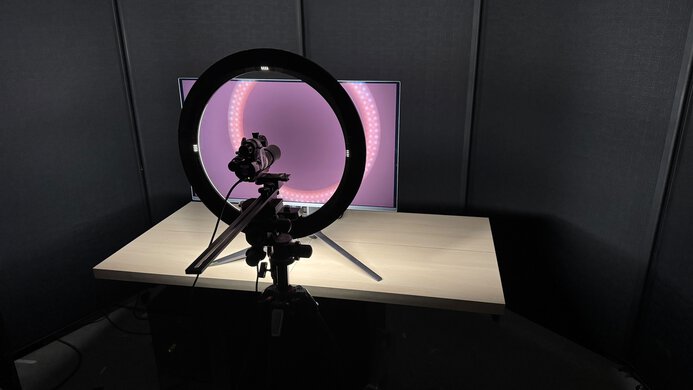
We buy and test more than 30 monitors each year, all of which we purchase ourselves, without cherry-picked units or samples. We put a lot into each unbiased, straight-to-the-point review, and there's a whole process from purchasing to publishing, involving multiple teams and people. We do more than just use the monitor for a week; we use specialized, custom tools to measure various aspects and deliver objective, data-driven results. We also consider multiple factors before making any recommendations, including the monitor's cost, its performance compared to the competition, and whether it's easy to find.
Test Results
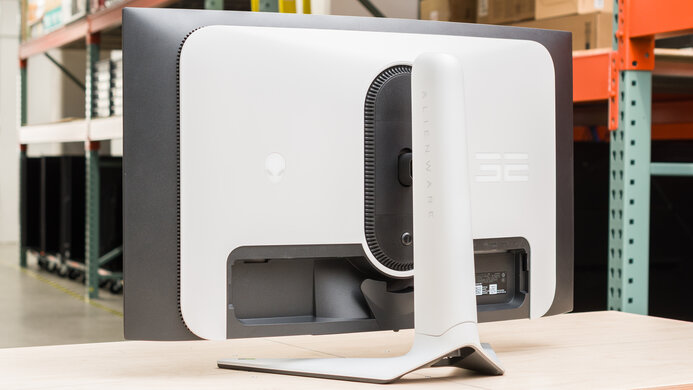
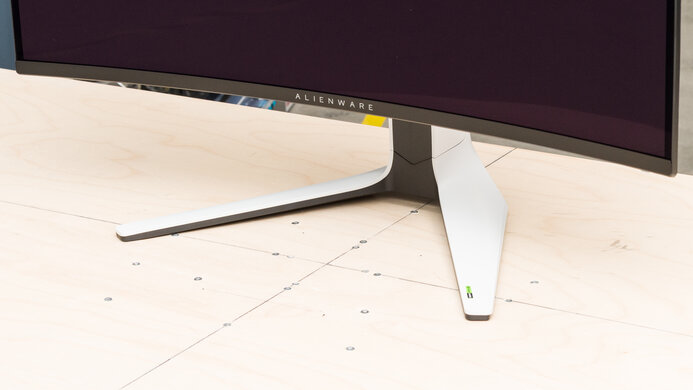
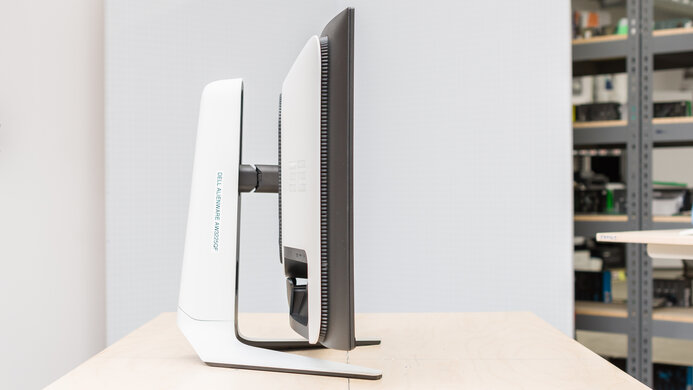
for pictures & test results
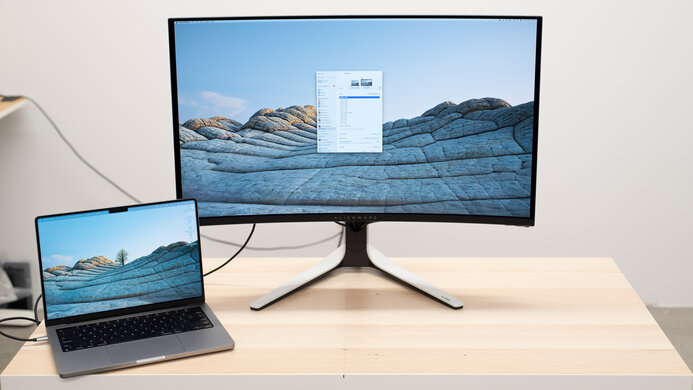


for pictures & test results

for pictures & test results
for pictures & test results
for pictures & test results
for pictures & test results
for pictures & test results
for pictures & test results
for videos & test results

for pictures & test results
for pictures & test results
for pictures & test results









for pictures & test results