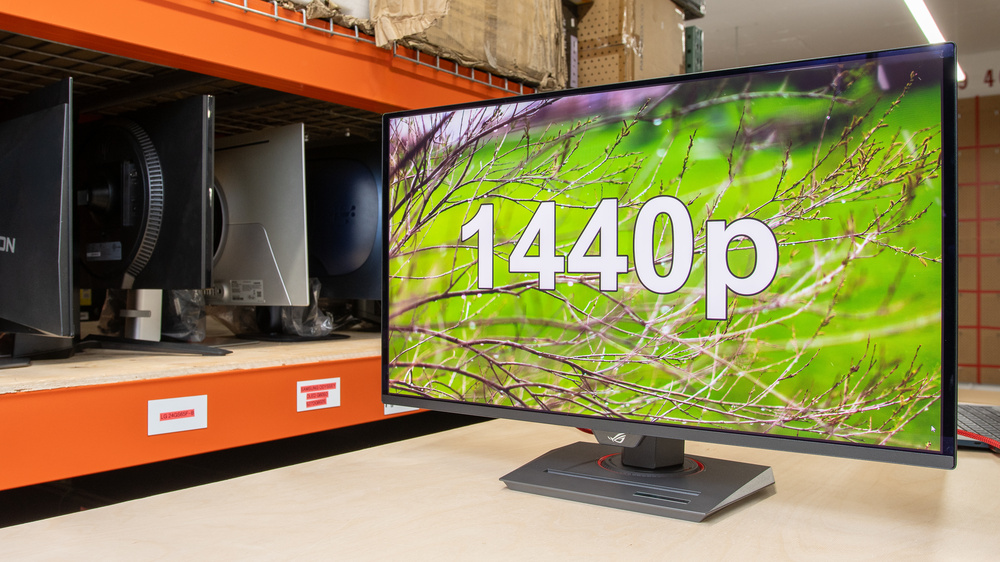
One of the most common monitor resolutions is 1440p. It offers a sweet spot between providing better image clarity than 1080p displays and requiring less processing power than a 4k monitor. Many include gaming features like high refresh rates and VRR support, and they can also include productivity features like ergonomic stands and USB hubs. While many 1440p monitors are focused on gaming, most are good enough for work, too.
The most common size for a 1440p display is 27 inches, but you can still find them with smaller 24-inch or larger 32-inch screens, and choosing the right size is a personal preference. They're available at different price points, with the highest-end models having the most features. Once you know your budget, consider the monitor's performance for what you need; for example, high brightness and a wide viewing angle are useful for work use, while sharp motion and low input lag are important for gaming.
We've bought and tested more than 385 monitors, and below are our recommendations for the best 2k monitors available. Check out our picks for the best 1440p 144Hz monitors, the best 1440p gaming monitors, or, if you want a higher resolution, the best 4k monitors.
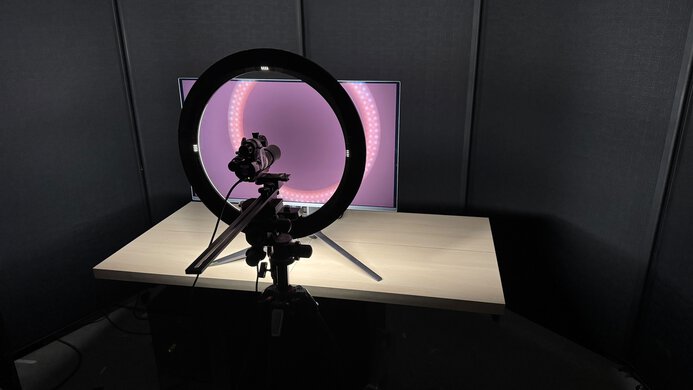
We buy and test more than 30 monitors each year, all of which we purchase ourselves, without cherry-picked units or samples. We put a lot into each unbiased, straight-to-the-point review, and there's a whole process from purchasing to publishing, involving multiple teams and people. We do more than just use the monitor for a week; we use specialized, custom tools to measure various aspects and deliver objective, data-driven results. We also consider multiple factors before making any recommendations, including the monitor's cost, its performance compared to the competition, and whether it's easy to find.
-
Best 1440p Monitor
 PC GamingConsole GamingOfficeEditingBrightnessResponse TimeHDR PictureSDR PictureColor AccuracySize27"Panel TypeOLEDSub-TypeQD-OLEDMax Refresh Rate360 HzSee all our test resultsNative Resolution2560 x 1440
The best 1440p monitor we've tested is the ASUS ROG Strix OLED XG27ACDNG. It's a gaming-focused 27-inch display that's versatile for other uses. It's fantastic for gaming as it offers a high 360Hz refresh rate and incredible motion handling, so there's minimal motion blur with fast-moving objects. On top of that, it delivers stunning picture quality thanks to its QD-OLED panel. It displays deep blacks in dark rooms without haloing, and HDR content also looks remarkable. It gets bright enough to make highlights pop and for colors to look vivid.
It has a few perks for other uses besides gaming, too. It comes with an ergonomic stand, so it's easy to place in an ideal position, has a USB-C port with DisplayPort Alt Mode, and a KVM switch that makes it easy to multitask and switch between different computers. Unfortunately, there are downsides to OLED: they have lower text clarity than IPS monitors with the same pixel density. It doesn't get bright enough to fight intense glare, either. You can consider the ASUS ROG Swift OLED PG27AQWP-W if you want a brighter OLED, but it costs more and lacks a USB-C port.
-
Best Upper Mid-Range 1440p Monitor
PC GamingConsole GamingOfficeEditingBrightnessResponse TimeHDR PictureSDR PictureColor AccuracySize27"Panel TypeOLEDSub-TypeWOLEDMax Refresh Rate280 HzSee all our test resultsNative Resolution2560 x 1440If you prefer something cheaper than the ASUS ROG Strix OLED XG27ACDNG, check out the LG 27GX700A-B. It's an OLED like the ASUS, so it displays the same deep and inky blacks. It has a few advantages over the ASUS because it uses a newer Tandem OLED panel that gets much brighter. It's a better choice to use in a well-lit room than the ASUS because of this. It also does a better job at maintaining low black levels in bright rooms, so you get those deep blacks that it's known for, no matter the environment you have it in.
There are some downsides to using this monitor, though. It achieves this higher brightness by overbrightening the image, so HDR content is less accurate than on the ASUS. It also has vertical banding in dark scenes that can get distracting. While it's a fantastic gaming monitor thanks to its low input lag and sharp motion, it has a lower 280Hz refresh rate than the ASUS. However, that doesn't make much of a difference unless you're a competitive gamer who needs the highest refresh rate. Besides that, it doesn't have as many features as the ASUS, as it lacks a KVM switch and has a smaller USB hub, so it's worse for productivity.
-
Best Mid-Range 1440p Monitor
PC GamingConsole GamingOfficeEditingBrightnessResponse TimeHDR PictureSDR PictureColor AccuracySize27"Panel TypeLCDSub-TypeIPSMax Refresh Rate240 HzSee all our test resultsNative Resolution2560 x 1440If you don't have the budget for a premium OLED or you're concerned about the risk of burn-in, the LG 27GR83Q-B is a good alternative. Like the LG 27GX700A-B, it's a 27-inch monitor that's focused on gaming thanks to its 240Hz refresh rate, but it's versatile for other uses, too. The biggest difference with the 27GX700A-B is that it has much worse picture quality because it lacks an OLED panel. It has a much lower contrast ratio and doesn't have a local dimming feature, so blacks look gray, highlights don't pop, and colors look washed out. This is the downside to getting a cheaper monitor. Luckily, an advantage is that you won't have to worry about the screen burning in if you want to use it every day for work.
It has a few work-friendly features, too, like its ergonomic stand and two USB ports. It's also fine if you want to use it in a room with a few lights, as it gets bright enough to reduce glare. It's even a decent choice for gaming, as its high refresh rate provides a smooth experience. Although it doesn't have the same crisp motion as an OLED, motion still looks consistently sharp at any refresh rate.
-
Best Budget 1440p Monitor
PC GamingConsole GamingOfficeEditingBrightnessResponse TimeHDR PictureSDR PictureColor AccuracySize27"Panel TypeLCDSub-TypeVAMax Refresh Rate180 HzSee all our test resultsNative Resolution2560 x 1440As you look for budget 1440p displays, you'll notice that many are basic displays with limited features. That said, the AOC Q27G3XMN is an entry-level option that punches above its weight versus the competition regarding picture quality. It uses Mini LED backlighting, which is rare for a low-cost display. This means it has better picture quality than the LG 27GR83Q-B because its local dimming feature helps it display deep blacks with bright highlights that pop. You can also consider the similar AOC Q27G40XMN if you want something with even better local dimming, but it's harder to find than the Q27G3XMN, as it's only available in the US.
This monitor has a lower 180Hz refresh rate than the LG, so it's not as good for competitive gaming with high frame rates. It also has a good enough response time for gaming, but there's smearing, particularly with dark, fast-moving objects. It's very basic besides that, as it doesn't have a USB hub like the LG. It's still fine if you want to use it for work, as it has good text clarity and fights glare well, but it has a narrow viewing angle that makes it harder to share the screen with someone sitting next to you.
-
Best Cheap 1440p Monitor
PC GamingConsole GamingOfficeEditingBrightnessResponse TimeHDR PictureSDR PictureColor AccuracySize27"Panel TypeLCDSub-TypeIPSMax Refresh Rate144 HzSee all our test resultsNative Resolution2560 x 1440If you want something even cheaper than the AOC Q27G3XMN, check out the Dell S2725DC. It's a rather basic and simple model that has worse picture quality than the AOC because it has a much lower contrast ratio and doesn't have a local dimming feature. This means blacks look gray, and it's not something you should consider for HDR gaming. It doesn't get as bright as the AOC, either, but it's still fine if you want to use it in a room with a few lights around.
It has a 144Hz refresh rate, which helps with gaming, but there's more blur than on the AOC. It's actually designed as an office monitor, so it's more versatile than the AOC. Its ergonomic stand makes it easy to adjust to your preferred position, whether you're gaming with a friend or showing your coworker a document. It even has a USB-C port with DisplayPort Alt Mode, making it easy to quickly connect your laptop. Its 65W of power delivery is also enough to charge your laptop while you're using it.









Notable Mentions
-
LG 27GX790B-B:
The LG 27GX790B-B is a high-end gaming monitor with a higher refresh rate than the ASUS ROG Strix OLED XG27ACDNG. This makes the LG a better gaming monitor, especially for competitive gaming, but it's less versatile for other uses as it lacks a KVM switch.
See our review -
ASUS ROG Strix OLED XG27AQWMG:
The ASUS ROG Strix OLED XG27AQWMG uses the same Tandem OLED panel as the LG 27GX700A-B and is similar overall. The main difference is that the ASUS has a glossy coating, resulting in clearer images. This makes it a good alternative if you want this coating, but it's harder to find than the LG.
See our review -
Dell Alienware AW2723DF:
The Dell Alienware AW2723DF is a mid-range model that competes with the LG 27GR83Q-B. It's similar for the most part and you can sometimes find it for less, but it doesn't get as bright.
See our review -
Dell Alienware AW3225DM:
The Dell Alienware AW3225DM is a 32-inch alternative to the AOC Q27G3XMN. The main downside is that the Dell has worse picture quality, but it's still versatile for different uses, like work and gaming.
See our review -
ASUS ROG Strix XG27ACS:
The ASUS ROG Strix XG27ACS is a cheap monitor that's an alternative to the Dell S2725DC if you want something with better motion handling. Unfortunately, though, it has a smaller USB hub and less power delivery over USB-C than the Dell.
See our review
Recent Updates
Mar 26, 2026:
We replaced the Dell Alienware AW2723DF with the LG 27GR83Q-B for consistency with other recommendations, and the MSI G274QPF-QD with the easier-to-find Dell S2725DC. In the Notable Mentions, we removed the LG 27GX790A-B, the ASUS ROG Strix OLED XG27AQDMG, the Gigabyte MO27Q28G, and added the LG 27GX790B-B, the ASUS ROG Strix OLED XG27AQWMG, the ASUS ROG Strix XG27ACS, and the AW2723DF.
Feb 06, 2026:
In the Notable Mentions, we replaced the Dell P2423D and the ASUS ROG Swift PG279QM with the LG 27GR83Q-B and the Gigabyte MO27Q28G.
Nov 20, 2025:
We replaced the ASUS ROG Strix OLED XG27AQDMG with the LG27GX700A-B, which gets brighter. We also added the Dell Alienware AW2723DF as the 'Best Mid-Range 1440p Monitor' to give another option. In the Notable Mentions, we removed the LG 27GS95QE-B and the Gigabyte GS27QC, and added the LG 27GX790A-B, ASUS ROG Swift PG279QM, and the XG27AQDMG.
Aug 14, 2025:
We added the MSI G274QPF-QD as 'Best Cheap' and the Dell Alienware AW3225DM to the Notable Mentions.
Jun 27, 2025:
Replaced the MSI MPG 271QRX QD-OLED with the ASUS ROG Strix OLED XG27ACDNG, as the MSI is hard to find.
All Reviews
Our recommendations are based on what we think are the best 2k monitors currently available. They're adapted to be valid for most people in each price range. The rating is based on our review, factoring in price and feedback from our visitors.
If you'd prefer to make your own decision, here's the list of all of our 1440p monitor reviews. Be careful not to get too caught up in the details. Most monitors are good enough to please most people, and the things we fault monitors on are often not noticeable unless you really look for them.